CM Dhami: Sanskrit University Coming to Jageshwar Dham

Synopsis
Chief Minister Pushkar Singh Dhami has announced that Jageshwar Dham in Almora will be beautified without disturbing its original form and that a Sanskrit University will be established at the ancient Shaivite site shortly, combining heritage preservation with classical-education promotion.
Key Takeaways
CM Pushkar Singh Dhami announced beautification and infrastructure development at Jageshwar Dham on 16 July 2026 .
The state has pledged that the original architectural character of the temple complex will not be altered.
A Sanskrit University is proposed to be built at Jageshwar in Almora district .
Jageshwar Dham comprises more than 100 Shiva temples dating to the 7th–12th centuries CE .
The initiative extends Uttarakhand's heritage-sensitive redevelopment model — previously applied at Kedarnath and Badrinath — to the Kumaon region.
ASI clearances and state budget allocations will be critical next steps before construction can begin.
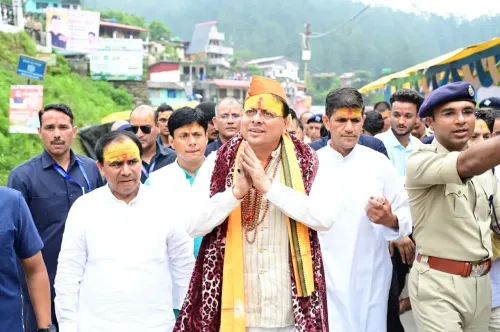
The Chief Minister's Office of Uttarakhand announced on Thursday, 16 July 2026 that Chief Minister Pushkar Singh Dhami has reaffirmed the state government's commitment to beautifying and upgrading infrastructure at Jageshwar Dham in Almora district without altering its original character, and that a Sanskrit University will be established at the site shortly.
Context
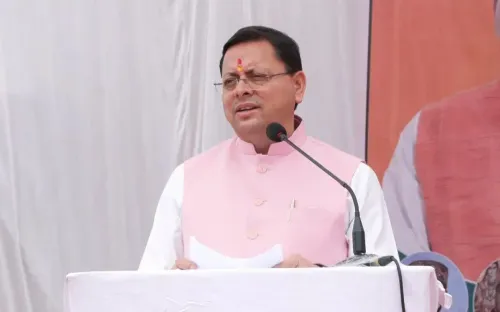
Addressing the announcement, CM Dhami stated — 'मूल स्वरूप के साथ बिना किसी छेड़छाड़ के जागेश्वर धाम का सौंदर्यीकरण एवं आधारभूत सुविधाओं का विकास किया जा रहे है' — ['Beautification and development of basic facilities at Jageshwar Dham is being carried out without any tampering with its original form.'] He added: 'We are going to construct a Sanskrit University in Jageshwar very soon.'
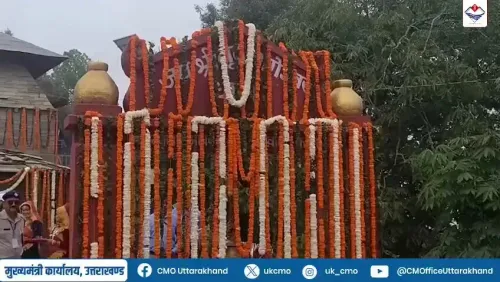
Jageshwar Dham, a cluster of more than 100 ancient Shiva temples dating to the 7th–12th centuries CE, is one of the most significant Shaivite pilgrimage sites in the country. Located in the Almora district of Uttarakhand, it draws pilgrims and heritage tourists from across India.
Policy Backdrop
The announcement fits within a broader redevelopment framework the Uttarakhand government has pursued since 2021, which prioritises heritage-sensitive upgrades at major pilgrimage sites. Similar principles have guided infrastructure works at Kedarnath and Badrinath, where the state has sought to improve pilgrim amenities while preserving the architectural integrity of historic shrines.
Parallel to infrastructure development, Uttarakhand has positioned itself as a hub for classical-language learning and traditional knowledge. A Sanskrit University at Jageshwar would extend this agenda into the Kumaon region, complementing existing Sanskrit institutions in the state and aligning with national-level efforts to promote classical languages in higher education.
Stakeholders and Impact
Pilgrims visiting Jageshwar Dham stand to benefit from improved roads, sanitation, and visitor facilities that the beautification drive promises, without the disruption of the temple complex's centuries-old layout. Sanskrit scholars and students, particularly from hill districts, could gain access to specialised higher education closer to home if the proposed university materialises.
Local residents of Almora district are expected to see ancillary economic activity — hospitality, transport, and small trade — grow as pilgrim footfall increases alongside improved infrastructure. Preservation advocates will be watching closely to ensure that development works comply with the Archaeological Survey of India's guidelines for protected monument zones.
What's Next
Key milestones to watch include state budget allocations for the Sanskrit University campus, the issuance of tenders for Jageshwar infrastructure works, and any environmental or Archaeological Survey of India (ASI) clearances required before construction begins. The government's use of the word 'shortly' (शीघ्र) signals intent but stops short of a specific deadline.
If the university project advances on schedule, Jageshwar could emerge as a twin-purpose destination — a living heritage site and an academic centre for Sanskrit studies — setting a template that other pilgrimage towns in the Himalayan state may follow.
Point of View
A combination that generates both electoral goodwill and long-term institutional presence in hill districts. The explicit assurance of 'no tampering with the original form' is a calculated signal to conservation stakeholders and the Archaeological Survey of India, pre-empting potential objections. Positioning Jageshwar, a relatively under-developed Kumaon site, alongside Kedarnath and Badrinath suggests the government is broadening its religious-tourism portfolio beyond the Garhwal circuit. Whether the Sanskrit University moves from announcement to foundation stone will be the real test of political intent versus policy delivery.
NationPress
16 Jul 2026
Frequently Asked Questions
What is the Sanskrit University proposed for Jageshwar Dham?
Chief Minister Pushkar Singh Dhami has announced a new Sanskrit University to be built at Jageshwar in Almora district, Uttarakhand, aimed at promoting classical Sanskrit education in the region. No specific timeline or funding figure has been officially confirmed yet.
Where is Jageshwar Dham located?
Jageshwar Dham is located in Almora district of Uttarakhand. It is a cluster of more than 100 ancient Shiva temples dating to the 7th–12th centuries CE and is one of India's most important Shaivite pilgrimage sites.
Will the development work change the look of Jageshwar temple complex?
According to CM Dhami, the beautification and infrastructure development at Jageshwar Dham will be carried out without any alteration to the original form of the temple complex. The government has explicitly committed to heritage-sensitive development.
What other pilgrimage sites has Uttarakhand redeveloped?
Uttarakhand has undertaken heritage-sensitive infrastructure upgrades at Kedarnath and Badrinath since 2021, improving pilgrim facilities while preserving the historic architectural character of those shrines. Jageshwar appears to be the next site in this programme.
What approvals are needed before work at Jageshwar can begin?
Because Jageshwar Dham is an archaeologically protected site, clearances from the Archaeological Survey of India and potentially environmental authorities will be required before major construction or beautification work can commence, alongside state budget allocations.