CM Dhami secures Centre's nod signal for IISER, AIIA in Uttarakhand
Synopsis
Uttarakhand CM Pushkar Singh Dhami announces that the Centre has given positive assurances on three major proposals: establishing an IISER and an AIIA in the state, and declaring the Uttarkashi-Tilwara motor road a National Highway, with formal decisions to follow prescribed procedures.
Key Takeaways
Uttarakhand CM Pushkar Singh Dhami disclosed on 12 November 2026 that the Centre has provided positive assurances on three development proposals for the state.
The proposals include establishing an IISER (Indian Institute of Science Education and Research) and an AIIA (All India Institute of Ayurveda) in Uttarakhand.
The state also sought National Highway status for the Uttarkashi–Kamd–Ayarkhal–Budhakedar–Chamiyala–Ghansali–Tilwara motor road.
The IISER and AIIA proposals will be processed through prescribed central procedures; the highway declaration awaits finalisation of a new national highway policy.
No formal approvals or timelines have been confirmed — the Centre's response constitutes an assurance, not a sanction.
The assurances align with the central government's broader track record of expanding IISER campuses from 2006 onward and highway upgrades under the Bharatmala Pariyojana .
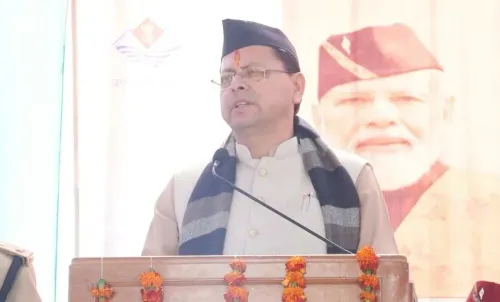
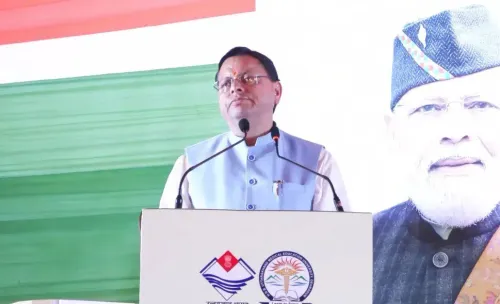
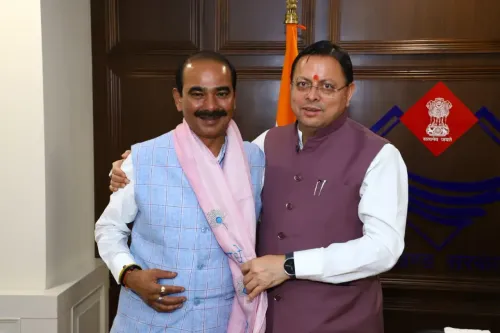
Three major development proposals — a premier science institute, a national Ayurveda institution, and a mountain highway upgrade — have received positive assurances from the central government, Uttarakhand Chief Minister Pushkar Singh Dhami announced on Thursday, 12 November 2026, crediting Prime Minister Narendra Modi's leadership for the forward movement.
Three proposals, one green signal from New Delhi
In his post, CM Dhami outlined three specific requests his government had placed before the Centre: the establishment of an Indian Institute of Science Education and Research (IISER) in Uttarakhand, the setting up of an All India Institute of Ayurveda (AIIA) in the state, and the declaration of the Uttarkashi–Kamd–Ayarkhal–Budhakedar–Chamiyala–Ghansali–Tilwara motor road as a National Highway. The Centre, he said, has responded with a 'positive assurance' — skaratmak aashwasan — on all three.
The IISER and AIIA proposals will be processed through their respective prescribed procedures, while the highway declaration will be taken up once a new national highway policy is finalised, Dhami noted. The acknowledgement stops short of a formal sanction — but in the deliberate language of centre-state negotiations, a named assurance carries real weight.
What IISER and AIIA would mean for Uttarakhand
IISERs are central government autonomous institutions, the first of which were established from 2006 onward, designed to push the frontier of science education and original research. Currently no IISER exists in the Himalayan hill states; landing one would represent a generational shift in higher-education access for students from Uttarakhand and the broader region.
An AIIA — the national apex institute for Ayurvedic education, research, and clinical services under the Ministry of AYUSH — would position Uttarakhand, long a hub of traditional medicine and medicinal herb cultivation, as a formal centre for Ayurveda's modern institutional development. For practitioners and students of Ayurveda across the hill districts, it would mean specialised training and research capacity that currently requires travel to distant cities.
The Uttarkashi-to-Tilwara road: a highway in waiting
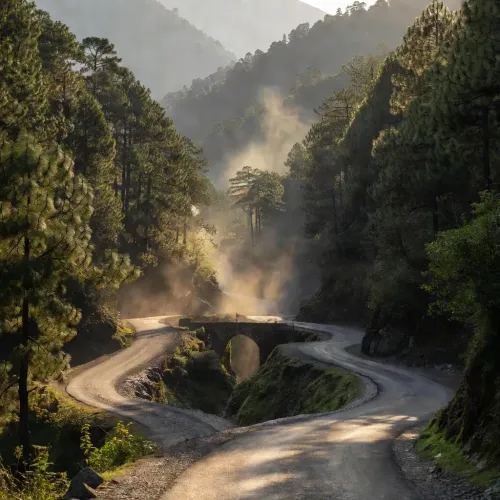
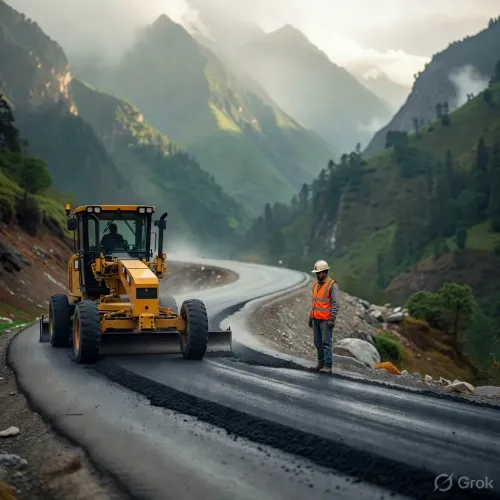
The proposed motor road stretching from Uttarkashi through Kamd, Ayarkhal, Budhakedar, Chamiyala, Ghansali to Tilwara winds through some of Uttarakhand's most remote and religiously significant terrain, including areas near the Kedarnath pilgrimage corridor. National Highway status would unlock dedicated central funding, improved maintenance standards, and faster upgrades — directly improving connectivity for hill communities who depend on these routes for daily movement, emergency access, and trade.
The Centre's condition — that the highway declaration will follow finalisation of a new national highway policy — places the timeline outside the state government's control, but the assurance that the proposal is 'in the queue' once that policy lands is itself a step forward. The Bharatmala Pariyojana, launched in 2015, has been the backbone of national highway expansions and similar declarations across states.
A template of centre-state coordination
What Dhami's post captures is a well-worn but consequential rhythm in Indian federal governance: a state chief minister formally requesting central institutions and infrastructure upgrades, the Centre processing those requests through its own policy machinery, and a public acknowledgement of assurances that keeps pressure alive and signals political alignment. Other BJP-governed states have pursued comparable requests for IISERs and AYUSH institutions through the same channel.
For Uttarakhand — a state whose economy leans heavily on pilgrimage tourism, horticulture, and hydropower, and whose youth face significant migration pressures due to limited higher-education and employment opportunities — these three proposals, if converted into formal approvals, could anchor a meaningful shift in the state's institutional profile.
The next moves lie in New Delhi's procedural pipeline. When that new highway policy lands, and when the IISER and AIIA files reach their respective decision committees, Uttarakhand will find out whether Thursday's assurances turn into ground-breaking ceremonies.
Point of View
Even before formal approvals materialise. The conditionality attached (prescribed procedures for IISER and AIIA; a pending policy for the highway) is standard federal language, but it also means the state government cannot set a delivery deadline. Historically, assurances at the chief-ministerial level have translated into actual approvals on varying timescales, making this announcement the opening of a process rather than its conclusion. The pattern fits a broader BJP strategy of deploying centre-state coordination as a visible governance narrative ahead of electoral cycles.
NationPress
12 Nov 2026
Frequently Asked Questions
Will Uttarakhand get an IISER?
The Centre has given a positive assurance that the IISER proposal for Uttarakhand will be considered through prescribed procedures, but no formal approval or timeline has been announced yet.
What is the AIIA and why does Uttarakhand want one?
The All India Institute of Ayurveda (AIIA) is the national apex institution for Ayurvedic education, research and clinical care under the Ministry of AYUSH. Uttarakhand, with its strong tradition of medicinal herb cultivation and traditional medicine, has requested one to build institutional capacity in the state.
Which road is proposed as a National Highway in Uttarakhand?
The Uttarkashi–Kamd–Ayarkhal–Budhakedar–Chamiyala–Ghansali–Tilwara motor road has been proposed for National Highway status. The Centre has assured that the proposal will be considered after a new national highway policy is finalised.
What did CM Dhami say about PM Modi and Uttarakhand development?
CM Dhami credited PM Narendra Modi's leadership and the Centre's cooperation for giving a positive direction to efforts around higher education, Ayurveda, research and road infrastructure expansion in Uttarakhand.
How many IISERs exist in India and where are they?
India has several IISERs established by the central government from 2006 onward in cities including Pune, Kolkata, Mohali, Bhopal, Thiruvananthapuram, Tirupati, and Berhampur, among others. Currently no IISER exists in the Himalayan hill states.