CM Himanta Addresses Wangala Festival at Garo Heritage Village
Synopsis
Assam Chief Minister Dr. Himanta Biswa Sarma addressed the public at Garo Heritage Village in West Garo Hills on 12 November 2026, attending the landmark 50th Wangala Festival — the Garo community's most celebrated harvest festival — reinforcing Assam-Meghalaya cultural ties.
Key Takeaways
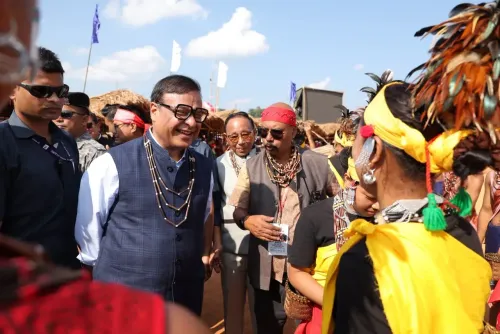
Himanta Biswa Sarma addressed the gathering at Garo Heritage Village, West Garo Hills, Meghalaya on 12 November 2026 .
The occasion was the 50th Wangala Festival , the annual harvest celebration of the Garo tribe marking the end of the agricultural season.
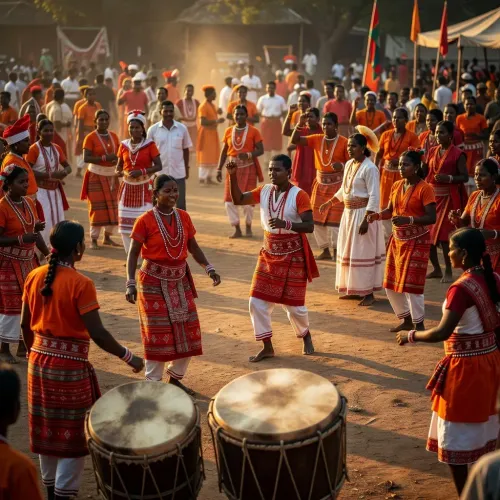
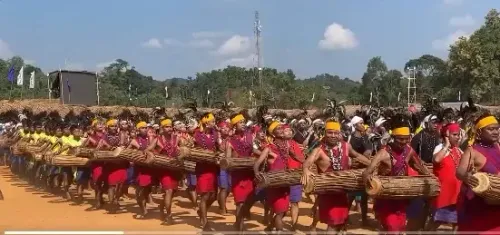
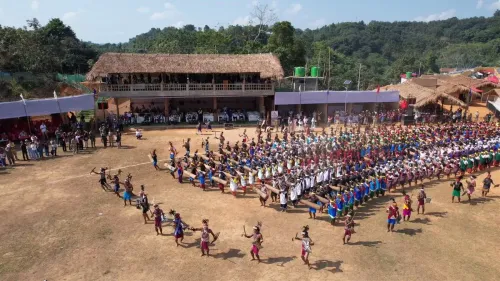
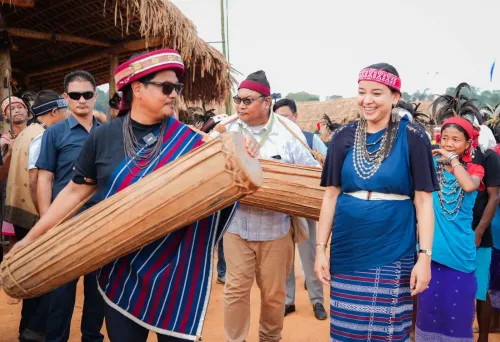
Wangala honours Saljong , the Garo sun god of fertility, through traditional dances, drumming, and rituals.
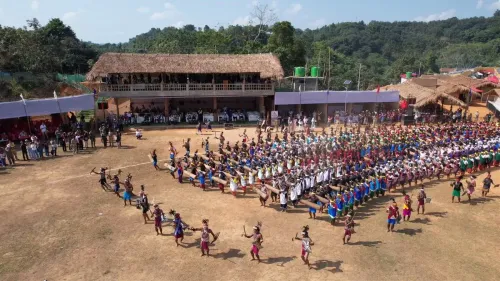
Garo Heritage Village in West Garo Hills district is a dedicated cultural site for preserving Garo traditions and heritage.
Assam and Meghalaya share strong cultural and economic linkages; Assam CMs have a tradition of attending major tribal festivals across the border.
The 50th edition marks a half-century of institutionalised preservation of Wangala as a marker of Garo and Northeast tribal identity.
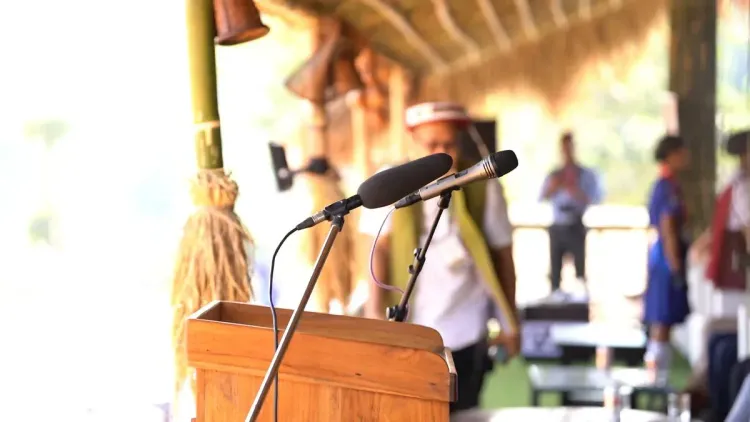
Fifty editions deep, the Wangala Festival still pulses with the same drum-beat that the Garo people have carried through generations — and this year, Assam Chief Minister Dr. Himanta Biswa Sarma crossed the border to be part of it. On Thursday, 12 November 2026, Sarma addressed the gathering at Garo Heritage Village in West Garo Hills, Meghalaya, on the sidelines of the landmark 50th Wangala Festival celebrations.
What the 50th Wangala means for Garo identity
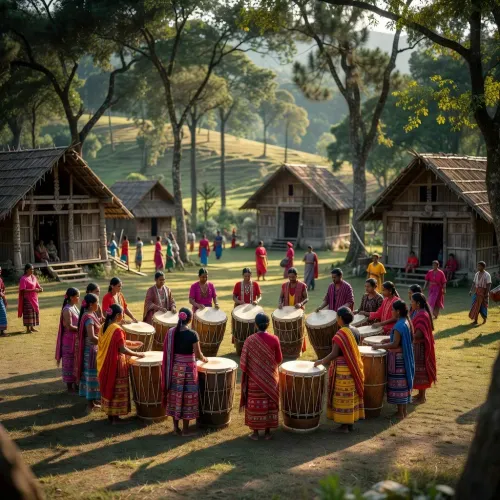
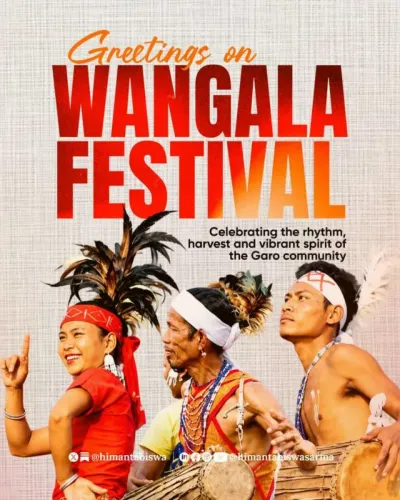
Wangala is not simply a harvest festival — it is the Garo community's most sacred annual assertion of who they are. Celebrated at the close of the agricultural season, the festival honours Saljong, the sun god of fertility, with traditional dances, drumming, and rituals that have survived colonial disruption and rapid modernisation alike. Reaching its 50th institutional edition marks a half-century of organised preservation of these traditions, cementing Wangala as a living cultural landmark in India's Northeast.
Garo Heritage Village in West Garo Hills district serves as the cultural anchor for this effort — a dedicated site built to protect and display Garo art, architecture, and customs for future generations.
Sarma's presence and the Assam-Meghalaya cultural bridge
Assam and Meghalaya share more than a border — they share overlapping tribal histories, trade corridors, and a Northeast identity that has often been stronger in lived experience than in administrative lines. Chief Ministers of Assam have periodically attended major festivals in Meghalaya as a signal of that regional solidarity, and Sarma's appearance at Wangala continues that tradition.
Sarma, who has led Assam since May 2021, has positioned cultural diplomacy with neighbouring states as part of a broader Northeast integration agenda under the BJP-led government. His presence at a milestone edition of Wangala — the 50th — carries weight beyond routine courtesy.
Northeast's harvest festivals and the push for tribal recognition
Across India's Northeast, harvest festivals — from Bihu in Assam to Hornbill in Nagaland to Wangala in Meghalaya — have increasingly become platforms where state governments signal intent on tribal welfare, tourism development, and cultural preservation. The 50th Wangala arrives at a moment when indigenous communities across the region are pressing for stronger institutional recognition of their traditions.
Whether the milestone edition produces any formal cultural or tourism cooperation between Assam and Meghalaya will be closely watched in the coming days.
The drums of Wangala have beaten for fifty years — the question now is what the next fifty will build on top of them.
Point of View
Where tribal festivals double as platforms for signalling regional solidarity and administrative goodwill. With Assam-Meghalaya boundary tensions having occasionally flared in recent years, a high-profile presence at a milestone cultural event carries quiet diplomatic utility. The institutionalisation of Wangala over fifty years also reflects a broader Northeast push to elevate indigenous harvest festivals into state-backed cultural assets — linking tribal identity to tourism and soft-power. Whether this visit translates into concrete bilateral cooperation on culture or tourism remains the practical test.
NationPress
12 Nov 2026
Frequently Asked Questions
What is the Wangala Festival?
Wangala is the most important annual harvest festival of the Garo tribe of Meghalaya, celebrated at the end of the agricultural season to honour Saljong, the sun god of fertility, through traditional dances, drumming, and community rituals.
Where is the Wangala Festival held?
The festival is traditionally associated with West Garo Hills district in Meghalaya, with the institutional celebrations held at Garo Heritage Village in that district.
Why did Assam CM Himanta Biswa Sarma attend the Wangala Festival in Meghalaya?
CM Sarma addressed the gathering at Garo Heritage Village on the sidelines of the 50th Wangala Festival, continuing a tradition of Assam chief ministers attending major tribal festivals in neighbouring Meghalaya as a gesture of regional goodwill and cultural solidarity.
What is the significance of the 50th Wangala Festival?
The 50th edition marks a half-century of organised, institutionalised celebrations of Wangala, underscoring long-running efforts to preserve and promote Garo cultural identity and indigenous harvest traditions in Northeast India.
What is Garo Heritage Village?
Garo Heritage Village is a cultural site in West Garo Hills, Meghalaya , dedicated to the preservation and display of Garo art, architecture, and traditions, and serves as the primary venue for major Wangala Festival events.