CM Dhami Submits SIR Enumeration Form, Urges Uttarakhand Voters
Synopsis
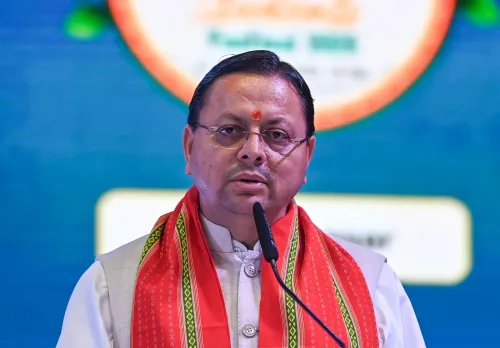
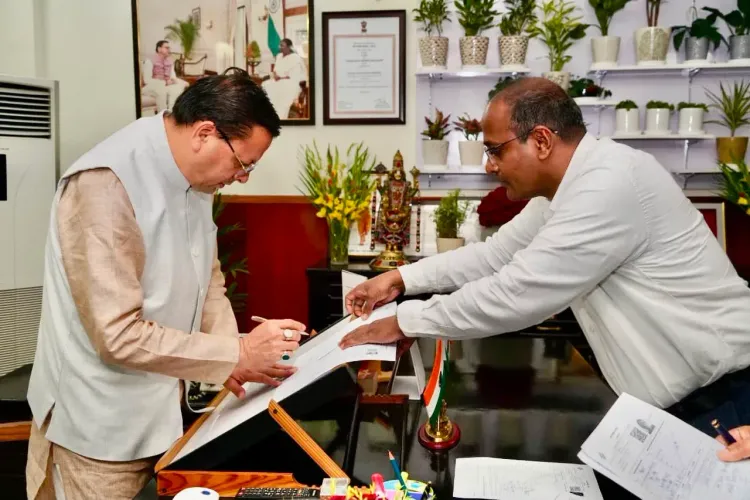
Uttarakhand Chief Minister Pushkar Singh Dhami submitted a voter enumeration form to the Chief Electoral Officer at the state secretariat on June 8, 2026, participating in the Election Commission of India's Special Intensive Revision drive. He urged all residents of the state to fill their forms on time to strengthen democracy.
Key Takeaways
CM Pushkar Singh Dhami personally submitted a voter enumeration form to the Chief Electoral Officer at the Uttarakhand secretariat on June 8, 2026 .
The submission was made under the Special Intensive Revision (SIR) programme run by the Election Commission of India .
The SIR campaign aims to make the voter list 'more pure, updated and error-free' by collecting physical enumeration forms from citizens.
CM Dhami publicly appealed to all residents of Uttarakhand to actively participate and submit their forms on time.
Under the Representation of the People Act, 1950 , the ECI periodically orders such intensive revisions, including house-to-house enumeration drives.
A claims-and-objections phase is expected to follow before the revised electoral rolls are finalised and published.
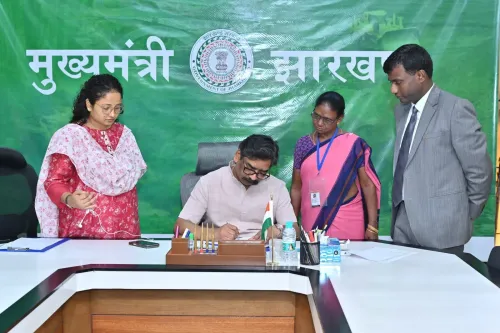
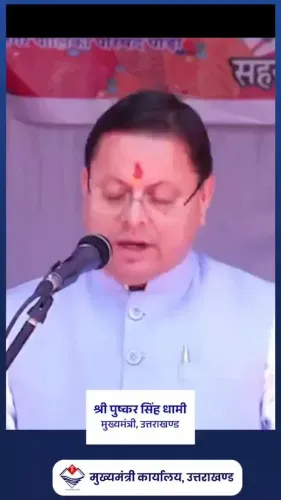
Uttarakhand Chief Minister Pushkar Singh Dhami submitted a voter enumeration form to the Chief Electoral Officer at the state secretariat on Monday, June 8, 2026, participating in the Special Intensive Revision (SIR) campaign launched by the Election Commission of India to clean up and update electoral rolls across the country.
Posting on X, CM Dhami wrote: 'सचिवालय में विशेष गहन पुनरीक्षण SIR कार्यक्रम के तहत गणना फॉर्म भरकर मुख्य निर्वाचन अधिकारी को सौंपा' — 'Filled the enumeration form under the Special Intensive Revision SIR programme at the secretariat and submitted it to the Chief Electoral Officer.' He added that the campaign is being run by the Election Commission of India with the objective of making the voter list 'more pure, updated and error-free.'
Context
The Special Intensive Revision (SIR) is a periodic exercise mandated under the Representation of the People Act, 1950, through which the Election Commission of India orders state-level authorities to conduct house-to-house enumeration and collect physical forms to verify, add, or delete voter entries. The exercise targets duplicates, ineligible entries, and unregistered eligible citizens simultaneously.
Uttarakhand's Chief Electoral Officer is the nodal authority overseeing the campaign in the state, collecting enumeration forms from citizens and officials alike before feeding verified data into the digitised electoral roll database.
Policy Backdrop
The Election Commission has a long-standing practice of ordering intensive revisions ahead of major electoral cycles. Uttarakhand previously underwent a special summary revision of its rolls ahead of the 2022 Legislative Assembly elections, which helped add new voters and prune ineligible entries from the list. Such exercises combine physical form submission with digital verification to improve roll accuracy.
By personally submitting a form and making the act visible on social media, CM Dhami is using his office to signal institutional cooperation with the constitutional body — a gesture that carries symbolic weight in encouraging public participation, particularly in a state with dispersed hill constituencies where enumeration coverage can be uneven.
Stakeholders and Impact
The primary beneficiaries of an accurate electoral roll are voters across Uttarakhand, who gain assurance that their names appear correctly and that ineligible entries do not dilute the value of legitimate votes. Political parties across the spectrum have a direct stake in clean rolls, as errors can affect outcomes in closely contested constituencies.
CM Dhami's public appeal — 'प्रदेशवासियों से अपील है कि आप सभी इस महत्वपूर्ण अभियान में सक्रिय सहभागिता करते हुए समय पर गणना फॉर्म भरें' ('I appeal to the people of the state to actively participate in this important campaign and fill the enumeration form on time') — is aimed at improving form-submission rates, especially in rural and remote areas of the state where outreach has historically been challenging.
What's Next
Following the enumeration phase, the Election Commission typically opens a claims-and-objections window, allowing citizens to challenge incorrect entries or apply for inclusion before the revised rolls are finalised and published. Completion rates of enumeration forms across Uttarakhand's 13 districts will be a key metric watched by electoral observers.
If participation in the SIR campaign is high, the resulting voter list will form the foundational document for any future election in the state — reinforcing the Election Commission's goal of a transparent and inclusive democratic process.
Point of View
CM Dhami is performing a dual role: complying with a constitutional body's directive and using that compliance as a civic mobilisation tool. The gesture fits a broader BJP pattern of senior leaders visibly endorsing Election Commission exercises, lending administrative legitimacy to what can otherwise be a low-visibility bureaucratic campaign. For Uttarakhand, where hill terrain makes enumeration coverage patchy, a top-down push from the Chief Minister's office could meaningfully improve form-submission rates. The move also pre-empts any opposition narrative about ruling-party indifference to clean electoral rolls.
NationPress
22 Oct 2026
Frequently Asked Questions
What is the Special Intensive Revision SIR of voter lists?
The Special Intensive Revision (SIR) is a periodic exercise ordered by the Election Commission of India under the Representation of the People Act, 1950, to update electoral rolls by adding new eligible voters, removing duplicates, and deleting ineligible entries through house-to-house enumeration and physical form collection.
Why did CM Dhami submit an enumeration form at the secretariat?
CM Pushkar Singh Dhami submitted the enumeration form to the Chief Electoral Officer at the Uttarakhand secretariat to participate in the ECI's SIR campaign and to publicly encourage residents of the state to do the same.
Who is overseeing the SIR campaign in Uttarakhand?
The Chief Electoral Officer of Uttarakhand is the state-level authority managing the Special Intensive Revision campaign, collecting enumeration forms and coordinating with the Election Commission of India.
What happens after the enumeration forms are collected?
After the enumeration phase, the Election Commission typically opens a claims-and-objections window where citizens can challenge incorrect entries or apply for inclusion before the final revised electoral rolls are published.
Why is an accurate voter list important for Uttarakhand?
An accurate electoral roll ensures that every eligible voter's name is correctly listed and that ineligible or duplicate entries do not affect election outcomes, which is particularly significant in Uttarakhand where several constituencies are closely contested.