CM Dhami Holds Development Talks With NITI Aayog Team
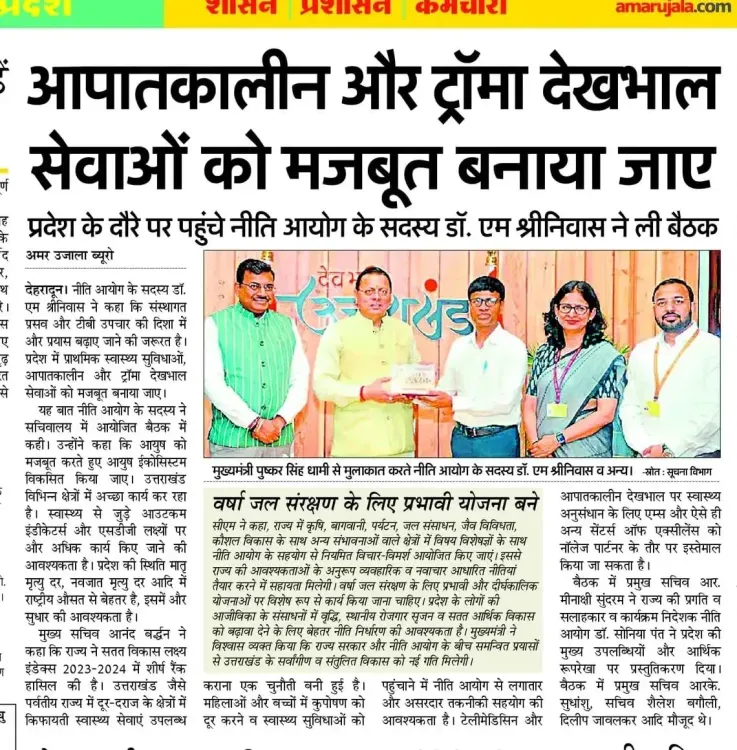
Synopsis
Chief Minister Pushkar Singh Dhami met a NITI Aayog team on 9 July 2026 for wide-ranging discussions on Uttarakhand's development. The consultation, a key channel for hill-state policy alignment, covered multiple subjects critical to the state's growth agenda under cooperative federalism.
Key Takeaways
CM Pushkar Singh Dhami held detailed discussions with a NITI Aayog team on 9 July 2026 on state development subjects.
NITI Aayog , established in January 2015 , replaced the Planning Commission to foster cooperative federalism between the Centre and states.
Such consultations for Uttarakhand typically address connectivity, sustainable tourism, disaster resilience, and climate adaptation.
Outcomes can influence Union Budget allocations, centrally sponsored scheme modifications, and state-level action plans.
Follow-up joint action plans or sector-specific roadmaps may be released in coming weeks.
The next NITI Aayog Governing Council meeting will be a key platform to elevate state priorities to the national agenda.
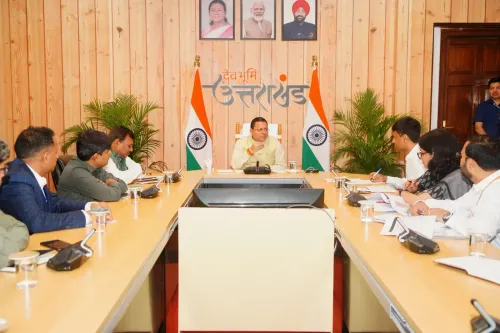
The Chief Minister's Office of Uttarakhand announced on Thursday, 9 July 2026 that Chief Minister Pushkar Singh Dhami held detailed discussions with a team from NITI Aayog on various subjects related to the development of the state.
Context
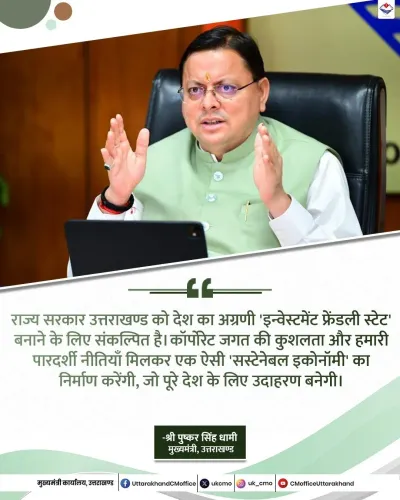
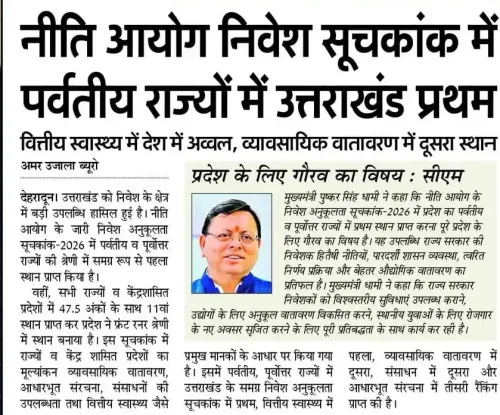
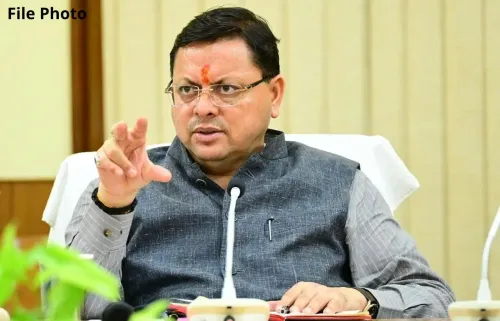
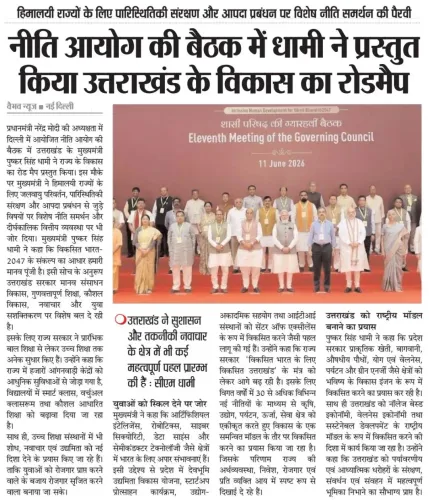
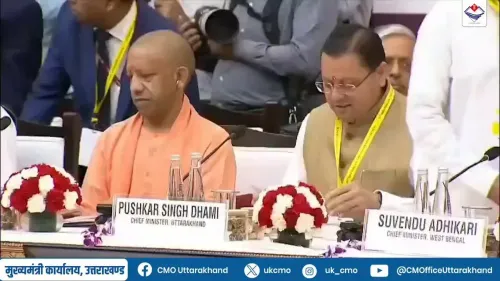
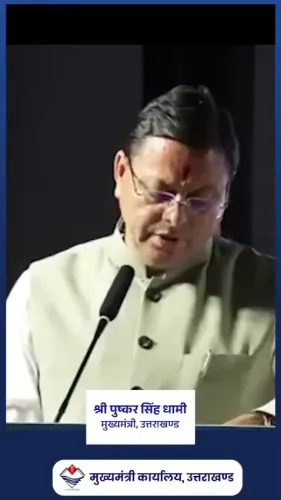
The Chief Minister's Office posted on X, stating: 'मुख्यमंत्री श्री पुष्कर सिंह धामी ने नीति आयोग की टीम के साथ राज्य के विकास के विभिन्न विषयों पर की विस्तृत चर्चा' — 'Chief Minister Pushkar Singh Dhami held detailed discussions with the NITI Aayog team on various subjects related to the development of the state.' The meeting was accompanied by four images released by the office, indicating a formal, structured engagement.
Dhami, who has served as Uttarakhand's Chief Minister since 2021 under the BJP, has consistently prioritised state infrastructure, tourism, and sustainable development. Such consultations with the national policy body form a key channel through which hill states articulate their specific developmental needs.
Policy Backdrop
NITI Aayog was constituted in January 2015 to replace the Planning Commission and promote cooperative federalism, enabling state governments to engage directly with the Centre on development planning. Unlike its predecessor, NITI Aayog functions as a policy think tank rather than a fund-allocation body, making these consultations significant for shaping state-specific roadmaps.
For a hill state like Uttarakhand, engagements with NITI Aayog typically span challenges unique to the Himalayan geography — connectivity, climate resilience, disaster management, and sustainable tourism. The state has also been an active participant in NITI Aayog's Aspirational Districts Programme and SDG localisation frameworks.
Stakeholders and Impact
The primary stakeholders in such discussions include the Uttarakhand state administration, sector-specific development agencies, and communities dependent on tourism, agriculture, and infrastructure projects across the state's 13 districts. Outcomes of NITI Aayog consultations often feed into Union Budget allocations, centrally sponsored scheme modifications, and state action plans.
For Uttarakhand — a state that faces recurring challenges from flash floods, glacial lake outburst floods, and seasonal migration — alignment with national policy frameworks can unlock targeted central support and technical assistance for long-term resilience planning.
What's Next
Observers will watch for the release of any joint action plans or sector-specific roadmaps emerging from the consultation. The next NITI Aayog Governing Council meeting, which brings together Chief Ministers from across India, will also be a key forum where priorities discussed in bilateral state-level meetings are elevated to the national agenda.
As Uttarakhand continues to position itself as a model for sustainable hill-state development, structured engagement with national planning institutions like NITI Aayog remains central to translating local priorities into policy and funding commitments at the Union level.
Point of View
Maintaining a visible and productive relationship with the Centre's premier policy body carries both developmental and political weight. The meeting fits a broader pattern of state governments using NITI Aayog as a lever to secure tailored support for geographically and ecologically distinct regions. The absence of a specific agenda in the public communication leaves room for the state to frame the narrative around outcomes it chooses to highlight.
NationPress
8 Oct 2026
Frequently Asked Questions
Why did CM Dhami meet NITI Aayog?
CM Pushkar Singh Dhami met a NITI Aayog team on 9 July 2026 for detailed discussions on various subjects related to Uttarakhand's development, in line with the cooperative federalism model that allows states to align local priorities with national policy frameworks.
What is NITI Aayog and what does it do?
NITI Aayog is India's premier policy think tank, established in January 2015 to replace the Planning Commission. It promotes cooperative federalism by enabling state governments to participate in development planning at the national level.
What development issues does Uttarakhand discuss with NITI Aayog?
Uttarakhand's consultations with NITI Aayog typically cover connectivity, sustainable tourism, disaster resilience, climate adaptation, and participation in programmes such as the Aspirational Districts Programme and SDG localisation.
Who is Pushkar Singh Dhami?
Pushkar Singh Dhami is the Chief Minister of Uttarakhand, serving since 2021 and representing the BJP. He has focused on state infrastructure, tourism, and sustainable development during his tenure.
What happens after a state meets NITI Aayog?
Following consultations, states may receive joint action plans, sector-specific roadmaps, or enhanced support under centrally sponsored schemes. Key priorities can also be raised at the NITI Aayog Governing Council meeting attended by Chief Ministers from across India.