CM Dhami unveils 11-ft Hanuman statue in Banbasa, renames Patni Tiraha
Synopsis
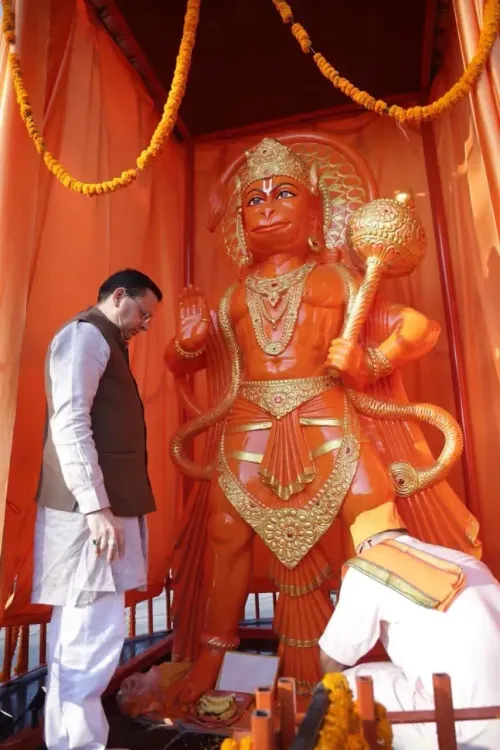
Uttarakhand Chief Minister Pushkar Singh Dhami unveiled an 11-foot Hanuman statue at Patni Tiraha in Banbasa, Champawat, participated in a Sundarkand paath, and announced the junction's renaming as Hanuman Chowk, calling Sanatan culture 'our priceless heritage.'
Key Takeaways
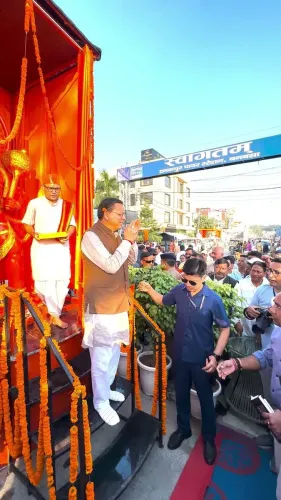
CM Pushkar Singh Dhami unveiled an 11-foot statue of Lord Hanuman at Patni Tiraha, Banbasa in Champawat district on 18 October 2026 .
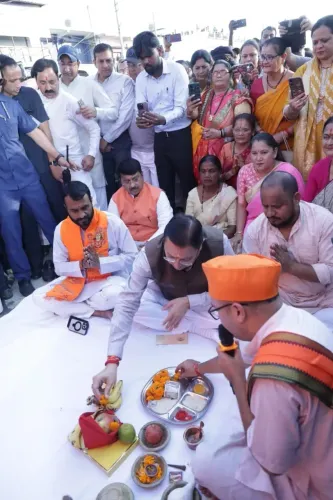
The CM participated in a Sundarkand paath alongside local devotees at the site.
Patni Tiraha has been officially renamed Hanuman Chowk following an announcement by the CM.
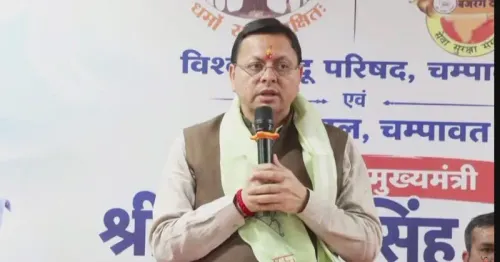
Dhami described Sanatan culture as 'our identity and priceless heritage,' framing cultural preservation as a shared intergenerational responsibility.
The event is part of a broader pattern of the Uttarakhand BJP government supporting religious installations and public-space renamings since 2022 .
Champawat is the constituency from which CM Dhami won a by-election in 2022 , giving the district particular political significance for him.
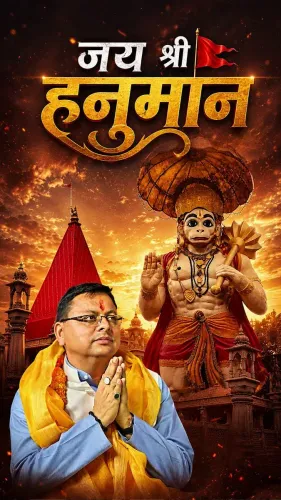
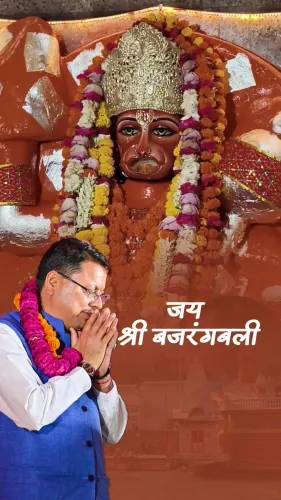
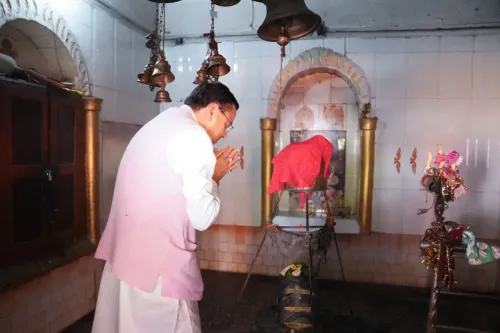
A 11-foot statue of Lord Hanuman rose above the crossroads of Banbasa, Champawat on Sunday, 18 October 2026, as Uttarakhand Chief Minister Pushkar Singh Dhami performed the formal unveiling and joined devotees in a Sundarkand paath — a communal recitation from the Ramcharitmanas. Before the prayers had ended, he made it official: Patni Tiraha would henceforth be known as Hanuman Chowk.
Sharing the moment on X, CM Dhami wrote: 'Sanatan sanskriti hamari pehchaan aur hamari amulya dharohar hai' — 'Sanatan culture is our identity and our priceless heritage' — framing the occasion as a collective responsibility to preserve traditions, religious faith, and cultural values for future generations.
A border town gets a new landmark
Banbasa sits at the edge of Champawat district, close to the Indo-Nepal border crossing, making it a transit point for pilgrims and traders alike. The installation of a prominent Hanuman idol at a busy tiraha — a three-way intersection that anchors daily public life — places a devotional landmark at one of the town's most visible nodes. The renaming to Hanuman Chowk embeds that religious identity into the town's street-level geography.
BJP's pattern of statues and renamings across Uttarakhand
This is not an isolated gesture. Since 2022, the Uttarakhand government under CM Dhami has backed public religious installations and temple-related works across multiple districts, part of a broader BJP-state pattern of supporting deity statue projects and renaming public spaces with culturally significant names. The moves are presented as efforts to preserve traditional practices and, in Uttarakhand's case, align with the state's aggressive push to deepen religious tourism.
The Sundarkand paath — devoted to Hanuman's heroic journey to Lanka in Valmiki's Ramayana — carries particular resonance in the hill state, where temples dedicated to Hanuman dot pilgrimage corridors from the plains to the high Himalayas. A chief minister joining the recitation in person, rather than sending a representative, signals the political weight attached to such community religious events.
Cultural conservation as governance language
CM Dhami's post framed the event in the language of intergenerational duty — not just devotion, but stewardship. 'Protecting our traditions, religious beliefs, and cultural values and passing them on to future generations is the responsibility of all of us,' he wrote. That framing positions cultural preservation alongside infrastructure or welfare as a deliverable of governance — a rhetorical move increasingly common in BJP-ruled states where religious heritage is woven into the development narrative.
For Champawat — a district that CM Dhami has represented as MLA and where he has announced several flagship projects since winning a by-election there in 2022 — events like Sunday's carry extra personal resonance, reinforcing a bond between the CM and the constituency that first returned him to office.
The chowk has a new name. The question now is what infrastructure and footfall follow the signboard.
Point of View
Champawat is not just any district; it is the constituency that rescued his political career in 2022, making every high-profile visit there a layered exercise in gratitude, consolidation, and message-making. The 'intergenerational stewardship' framing is notable: it moves the conversation beyond temple politics into a longer civilisational narrative that is harder to contest on purely political grounds. As Uttarakhand gears up for continued investment in religious tourism, these district-level cultural events function as soft groundwork — building community buy-in well before any budget line is drawn.
NationPress
18 Oct 2026
Frequently Asked Questions
Where was the Hanuman statue unveiled by CM Dhami?
The statue was unveiled at Patni Tiraha in Banbasa , a town in Champawat district , Uttarakhand, on 18 October 2026.
What is the new name of Patni Tiraha in Banbasa?
Patni Tiraha has been renamed Hanuman Chowk following an announcement by Uttarakhand Chief Minister Pushkar Singh Dhami at the statue unveiling event.
How tall is the Hanuman statue at Banbasa?
The newly installed statue of Lord Hanuman at Banbasa is 11 feet tall .
What is Sundarkand paath and why did CM Dhami participate in it?
Sundarkand paath is a communal recitation of the Sundarkand chapter of the Ramcharitmanas, which narrates Hanuman's journey to Lanka. CM Dhami participated alongside local devotees as part of the statue consecration event, framing it as an expression of Sanatan cultural heritage.
Why is Champawat significant for CM Pushkar Singh Dhami?
Champawat is the constituency from which CM Dhami won a by-election in 2022 after initially losing his Khatima seat, making it personally and politically significant for him.