CM Dhami Launches Three-Tier Nine-Point Policy for Viksit Bharat 2047
Synopsis
Chief Minister Pushkar Singh Dhami has announced a three-tier, nine-point policy framework to align Uttarakhand's development agenda with PM Modi's Viksit Bharat 2047 vision, signalling a structured state-level push toward India's centenary development goals.
Key Takeaways
The Chief Minister's Office of Uttarakhand announced the policy initiative on 27 May 2026 .
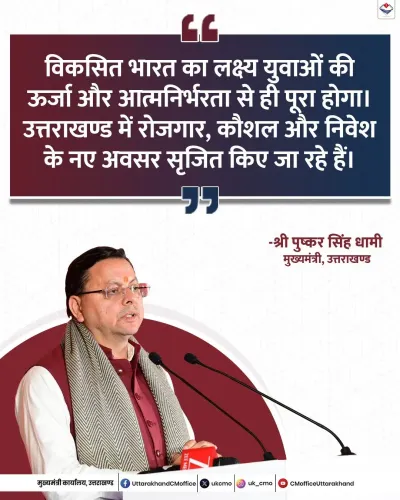
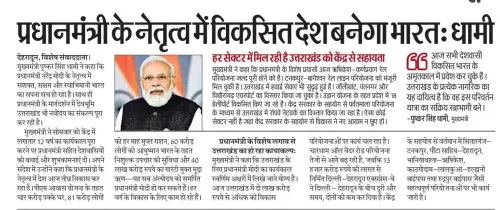
CM Pushkar Singh Dhami stated the government is working continuously to realise PM Modi's Viksit Bharat 2047 vision.
A three-tier, nine-point policy has been formally launched to structure this alignment.
Viksit Bharat 2047 was first articulated by PM Modi in his Independence Day address in August 2022 .
Detailed components of the nine-point policy and specific budget allocations are yet to be publicly disclosed.
The framework is expected to address Uttarakhand 's distinct priorities including hill-area development, sustainable tourism, and disaster-resilient infrastructure.
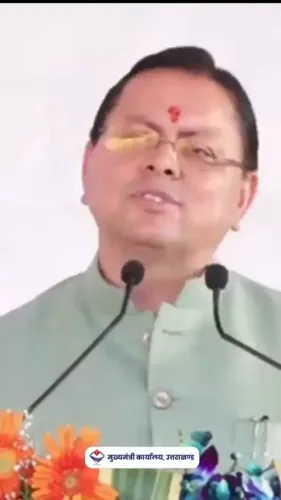
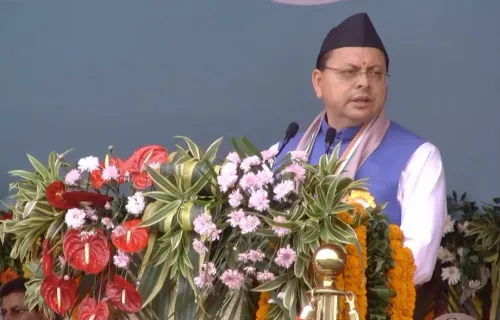
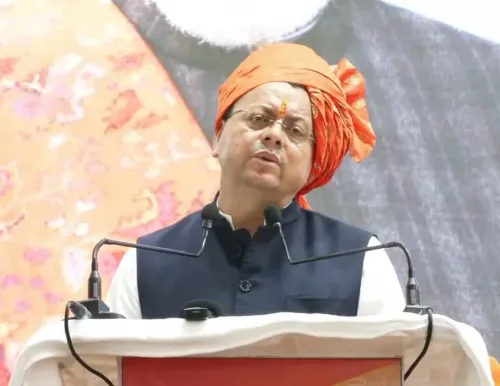
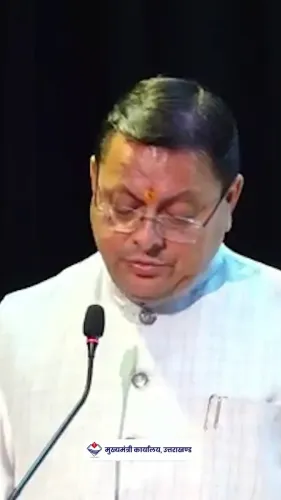
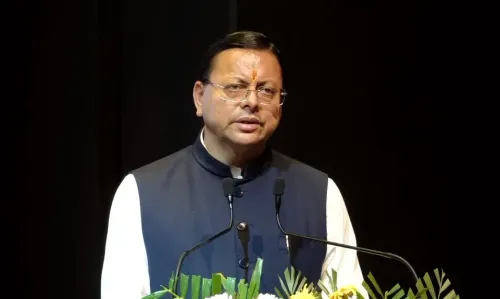
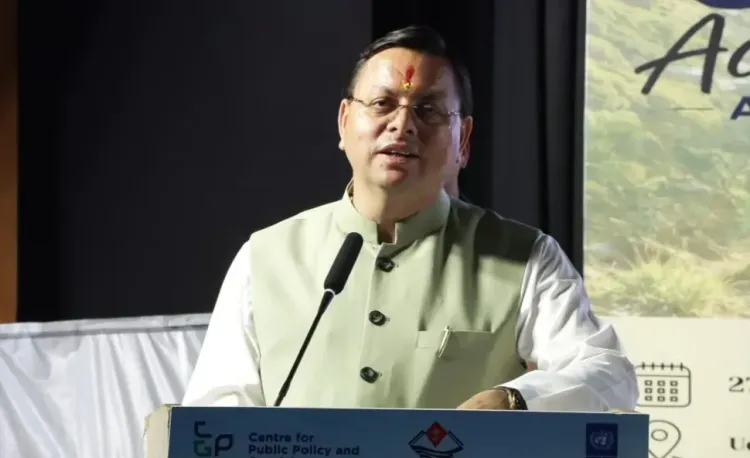
The Chief Minister's Office of Uttarakhand announced on Wednesday, 27 May 2026 that the state government has initiated a three-tier, nine-point policy framework aimed at realising Prime Minister Narendra Modi's Viksit Bharat 2047 vision. Chief Minister Pushkar Singh Dhami stated that the government is working continuously in this direction, marking a formal alignment of Uttarakhand's development agenda with the national centenary goal.
Context
Addressing the policy initiative, CM Dhami was quoted as saying: 'Aadaraniya Pradhan Mantri ji ke Vision 2047 ko sakar karne ki disha mein hamari sarkar nirantar karya kar rahi hai' ('Our government is continuously working towards realising the honourable Prime Minister's Vision 2047'). He added that a three-tier, nine-point policy has been launched for this purpose. The announcement signals a structured, multi-level approach to embedding the national development vision within the state's governance machinery.
Policy Backdrop
Prime Minister Modi first outlined the Viksit Bharat 2047 vision in his Independence Day address in August 2022, calling for India to achieve developed-nation status by 2047 — the centenary of independence. Since then, state governments across India have progressively aligned their sub-national development plans with this overarching framework. Uttarakhand, as a Himalayan state with distinct priorities including hill-area development, sustainable tourism, mountain agriculture, and disaster-resilient infrastructure, faces a unique set of challenges in translating the national vision into ground-level outcomes. The three-tier structure announced by CM Dhami appears designed to address these layered governance realities, though the specific components of the nine-point policy have not yet been publicly detailed.
Stakeholders and Impact
The primary beneficiaries of this policy framework are the residents of Uttarakhand, particularly communities in remote hill districts that have historically faced gaps in infrastructure, employment, and public services. The state administration — from the secretariat level down to district and block offices — will be responsible for implementing the multi-tier structure. Alignment with the Viksit Bharat 2047 framework also positions Uttarakhand to better access centrally sponsored schemes and federal funding tied to national development targets, potentially accelerating progress on key indicators such as per-capita income, literacy, and connectivity.
What's Next
Observers will look to the next Uttarakhand legislative session and the state's annual economic survey for a detailed action plan and budget allocations underpinning the nine-point policy. The government is expected to publish implementation timelines and measurable targets that map each of the nine points to specific sectoral outcomes. How effectively the three-tier structure coordinates between state, district, and local-body levels will be a key test of the framework's practical impact on Uttarakhand's development trajectory through 2047.
Point of View
Nine-point policy is a textbook example of state-level political signalling that simultaneously demonstrates loyalty to the central BJP leadership's flagship vision and establishes a local governance narrative ahead of future electoral cycles. By formalising the Viksit Bharat 2047 alignment through a named framework, the Uttarakhand government creates a measurable accountability structure — one that can be cited in budget speeches and campaign materials alike. The multi-tier design also reflects a broader pattern among BJP-governed states of building institutional architecture around centrally defined goals, which strengthens coordination but can also blur accountability between state and central governments. The real test will come when the nine specific policy points are disclosed and matched against budgetary commitments.
NationPress
11 Oct 2026
Frequently Asked Questions
What is the three-tier nine-point policy announced by CM Dhami?
CM Pushkar Singh Dhami announced a three-tier, nine-point policy framework on 27 May 2026 to align Uttarakhand's development agenda with PM Modi's Viksit Bharat 2047 vision. The specific components of the nine points have not yet been publicly detailed by the government.
What is Viksit Bharat 2047?
Viksit Bharat 2047 is PM Narendra Modi's national vision to make India a developed country by 2047, the centenary of its independence. It was first outlined during his Independence Day address in August 2022 and encompasses economic, social, and technological advancement goals.
Who is Pushkar Singh Dhami?
Pushkar Singh Dhami is the Chief Minister of Uttarakhand, heading the BJP-led state government since March 2021. He has focused his tenure on development, administrative reforms, and aligning the state with central government initiatives.
How is Uttarakhand implementing the Viksit Bharat 2047 vision?
Uttarakhand is implementing the Viksit Bharat 2047 vision through a newly announced three-tier, nine-point policy framework. The structure is designed to integrate state-specific priorities such as hill-area development, sustainable tourism, and disaster-resilient infrastructure with national development targets.
When will the details of Uttarakhand's nine-point policy be released?
The detailed action plan and budget allocations for the nine-point policy are expected to be disclosed in the next Uttarakhand legislative session or the state's annual economic survey, though no specific date has been announced.