CM Dhami Visits School, Inspects Smart Classes and Labs
Synopsis
Uttarakhand Chief Minister Pushkar Singh Dhami visited a government school, inspecting smart classrooms and laboratories, interacting warmly with students, and distributing chocolates and gifts as part of the state's focus on digital education infrastructure.
Key Takeaways
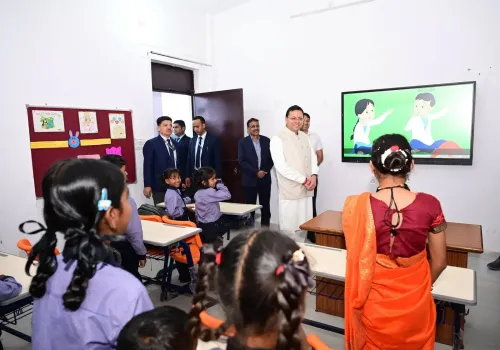
CM Pushkar Singh Dhami visited a government school on November 2, 2026 and personally inspected smart classrooms and science laboratories.
He held direct conversations with students and distributed chocolates and gifts during the visit.
The inspection aligns with the National Education Policy 2020 mandate for digital infrastructure in government schools.
Uttarakhand's hilly terrain makes equitable rollout of smart-class facilities a logistical challenge, raising the stakes of on-ground oversight.
State-level progress on smart classroom expansion and lab upgrades under Uttarakhand education schemes remains the key metric to watch.
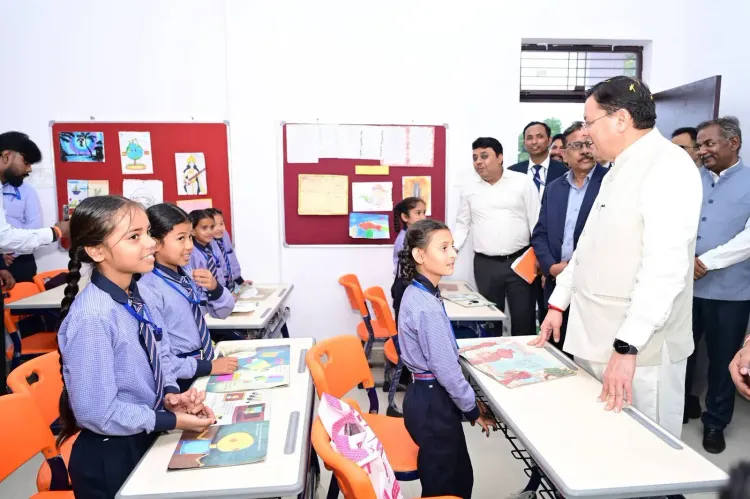
Uttarakhand Chief Minister Pushkar Singh Dhami stepped into a government school on Monday, November 2, 2026, sitting with students, handing out chocolates and gifts, and personally walking through smart classrooms and science laboratories to assess the state of educational infrastructure on the ground.
Dhami shared the visit on X, writing that he held 'aatmiya samvaad' — a heartfelt conversation — with the children, and took stock of academic activities by inspecting the smart class facilities and laboratory. 'Spent affectionate moments with the children and distributed chocolates and gifts to them,' he noted.
Smart Classrooms at the Centre of Uttarakhand's Education Push
The visit sits squarely within the framework of the National Education Policy 2020, which mandates digital infrastructure — smart classrooms, functional science labs, and blended learning tools — as baseline requirements for government schools across India. Chief ministers conducting school inspections have become a visible signal of state-level commitment to these rollout targets.
Uttarakhand's hill geography makes equitable classroom upgrades a particular challenge: connectivity and infrastructure costs are higher, and teacher availability in remote blocks remains uneven. A direct inspection by the Chief Minister puts the bureaucratic spotlight precisely where implementation gaps tend to hide.
Chocolates and Classrooms: The Softer Signal
The distribution of gifts to students is a small but deliberate gesture — one that frames the Chief Minister not as an auditor but as an engaged patron of state schools. For the children in the room, it turns a routine official visit into a memorable event. For the administration, it is a reminder that infrastructure numbers ultimately answer to human outcomes: whether a child in a government school in Uttarakhand feels the state is invested in her future.
What gets watched now is whether this inspection translates into expedited orders — lab equipment, smart-board maintenance contracts, teacher training cycles — or remains a warm photograph. The answer will show up in the next round of state education audit reports.
Point of View
But the specifics here — personally walking through labs and smart classrooms rather than attending a ribbon-cutting — suggest a focus on implementation quality rather than optics alone. For Uttarakhand, where NEP 2020's digital mandates collide with the realities of a mountainous state with dispersed schools, such visits carry genuine administrative weight. Dhami's party, the BJP, has consistently used education infrastructure as a governance credential ahead of state cycles, making school inspections both a policy signal and a political one. The test of this visit's impact lies in what follow-up action, if any, the Chief Minister's office directs to the education department in its wake.
NationPress
2 Nov 2026
Frequently Asked Questions
Which school did CM Dhami visit on November 2, 2026?
The specific school visited by Uttarakhand Chief Minister Pushkar Singh Dhami has not been officially identified in public records. His office shared details of the visit on X, noting an inspection of smart classrooms and laboratories.
What is the purpose of smart classrooms in Uttarakhand government schools?
Smart classrooms use digital tools such as interactive boards and audio-visual aids to enhance learning outcomes. Their rollout in Uttarakhand government schools is tied to the National Education Policy 2020, which promotes technology-enabled education infrastructure.
What did CM Dhami do during the school visit?
CM Dhami held personal conversations with students, inspected smart class facilities and science laboratories, assessed ongoing academic activities, and distributed chocolates and gifts to the children present.
How is Uttarakhand implementing NEP 2020 in schools?
Uttarakhand is expanding digital infrastructure including smart classrooms and laboratories in government schools as part of the NEP 2020 framework. Chief ministerial inspections are one mechanism the state uses to monitor on-ground implementation.
Why does CM Dhami visit government schools personally?
Personal visits by the Chief Minister allow direct assessment of infrastructure quality, student engagement, and teaching activity beyond what official reports capture. They also reinforce administrative accountability at the school level.