CM DK Shivakumar Inaugurates ₹3,200 Cr Works in Malur
Synopsis
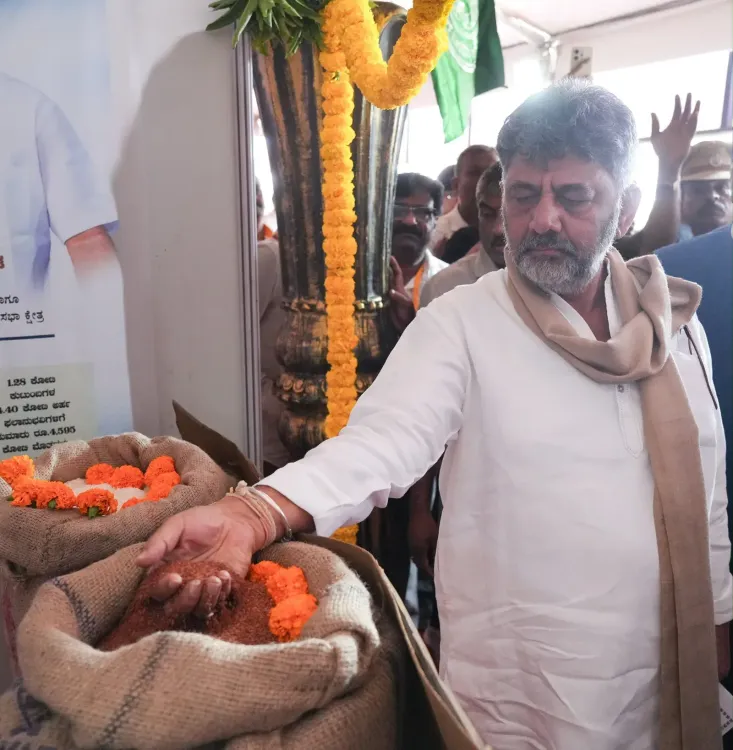
Deputy CM D.K. Shivakumar inaugurated ₹3,200 crore in multi-department development works, foundation stones, and beneficiary distributions in Malur taluk, Kolar district on 10 August 2026, flanked by six ministers and multiple legislators in a high-profile Congress delivery event.
Key Takeaways
₹3,200 crore in multi-department works were inaugurated, foundation-stoned, and distributed in Malur taluk, Kolar district on 10 August 2026 .
Shivakumar led the event, branded by the CMO as 'ಸಾಧನೆಯ ಸಂಭ್ರಮ' — a celebration of achievement.
Six cabinet ministers attended, including K.H.
Muniyappa , Ramalinga Reddy , Satish Jarkiholi , Eshwar Khandre , U.T.
Yatindra Siddaramaiah .
Beneficiaries received scheme entitlements directly at the venue, adding a direct welfare dimension to the infrastructure event.
Kolar district , bordering Tamil Nadu, has historically faced infrastructure deficits and remains a key political constituency for the ruling Congress government.
A ₹3,200 crore wave of development landed in Malur taluk, Kolar district on Monday, 10 August 2026, as Karnataka Deputy Chief Minister D.K. Shivakumar inaugurated, laid foundation stones for, and distributed benefits under a sweeping multi-department infrastructure push — one of the largest single-event outlay announcements the taluk has seen in recent memory.
What ₹3,200 crore looks like on the ground in Malur
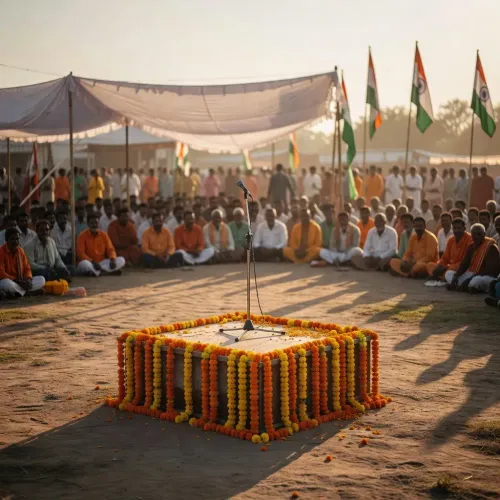
The programme, described by the Chief Minister's Office as 'ಸಾಧನೆಯ ಸಂಭ್ರಮ' ('a celebration of achievement'), bundled works spanning several government departments — a common but politically significant format that lets a single event signal delivery across roads, water, welfare, and local infrastructure simultaneously. Beneficiaries received scheme entitlements directly at the venue, giving the occasion an immediate, tangible dimension beyond ribbon-cutting.
Malur taluk sits at the heart of Kolar district in southern Karnataka, a region that borders Tamil Nadu and has a mixed economy of sericulture, dairy farming, granite quarrying, and small-scale industry. Its proximity to Bengaluru — roughly 60 kilometres away — makes it a natural target for peri-urban infrastructure upgrades as the state capital's economic gravity pulls outward.
Six ministers, one taluk: the political weight of the gathering
The turnout of senior cabinet members underscored the political significance the ruling Congress government attaches to Kolar. Ministers present included K.H. Muniyappa — a veteran Congress figure from the Kolar region with deep roots in the district — alongside Ramalinga Reddy, Satish Jarkiholi, Eshwar Khandre, U.T. Khader, and Dr. Yatindra Siddaramaiah. Legislator K.Y. Nanjegowda and other MLAs, party leaders, and senior officials were also present.
That constellation of ministers at a single taluk-level event is not accidental. Indian state governments routinely aggregate district-level works into high-visibility programmes, timing them to demonstrate delivery and build goodwill with local constituencies. Kolar has been a recurring venue for such exercises under successive governments, given its strategic location and the large beneficiary population that schemes in agriculture, housing, and rural welfare touch.
Kolar's long wait — and what this outlay is meant to address
Kolar district has historically lagged on per-capita public investment relative to some other Karnataka districts, a gap that has made it a persistent talking point in state budget debates. The district gained renewed attention after the closure of the Kolar Gold Fields — once among Asia's deepest gold mines — left a legacy of unemployment and infrastructure deficit in the eastern belt. Development programmes that bundle funds across departments are, in that context, more than optics: they represent a measurable injection into a region with genuine unmet need.
Whether the ₹3,200 crore figure translates into completed projects on schedule will be the real test — physical and financial progress reports on aggregated works of this scale are notoriously slow to materialise. Residents of Malur taluk will be watching the follow-through.
Point of View
The party is clearly signalling that Kolar, long a Congress stronghold anchored by figures like K.H. Muniyappa, remains a priority constituency. The ₹3,200 crore figure is significant, but the real political dividend will depend on project completion timelines — a gap between announcement and delivery has historically eroded goodwill in this region. This event fits a broader Karnataka Congress pattern of front-loading visible infrastructure activity in the mid-term window before the electoral cycle tightens.
NationPress
10 Aug 2026
Frequently Asked Questions
What is the ₹3,200 crore development programme in Kolar?
It is a multi-department infrastructure package covering inaugurations, foundation-stone layings, and direct beneficiary distributions across Malur taluk in Kolar district , launched by Deputy CM D.K. Shivakumar on 10 August 2026 .
Who is DK Shivakumar and what is his role in Karnataka?
D.K. Shivakumar is a senior Congress leader and Deputy Chief Minister of Karnataka , also serving as the Karnataka Pradesh Congress Committee president. He has held multiple cabinet portfolios over his career, including irrigation.
Why is Kolar district significant for Karnataka politics?
Kolar district in southern Karnataka is a traditional Congress stronghold with a large rural and semi-urban beneficiary population. Its proximity to Bengaluru and legacy infrastructure deficits — partly linked to the closure of the Kolar Gold Fields — make it a recurring focus for state government development programmes.
Who is K.H. Muniyappa and why was he at the Malur event?
K.H. Muniyappa is a veteran Congress politician with deep roots in the Kolar region, having served multiple terms as both a Member of Parliament and a Union minister. His presence at the Malur event reflects his long-standing political influence in the district.
What does 'Saadhaneyha Sambhrama' mean?
'ಸಾಧನೆಯ ಸಂಭ್ರಮ' is a Kannada phrase meaning 'a celebration of achievement.' The Karnataka Chief Minister's Office used it as the official theme for the Malur taluk development event on 10 August 2026 .