CM Fadnavis at Sambhajinagar: Shivaji's legacy meets farmer relief
Synopsis
Chief Minister Devendra Fadnavis attended the 'Praudh Pratap Purandar' historical play in Chhatrapati Sambhajinagar, invoking Shivaji Maharaj's legacy to affirm farmer welfare. Industrialists donated ₹6.33 crore to the CM Relief Fund, while 1,000 water tanks and 500 sewing machines were distributed for drought-hit Marathwada.
Key Takeaways
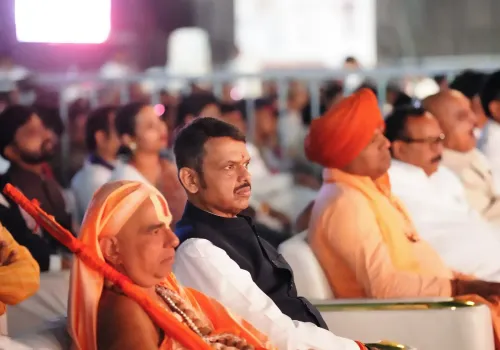
CM Devendra Fadnavis attended the 'Praudh Pratap Purandar' historical play at Chhatrapati Sambhajinagar on November 1, 2026 .
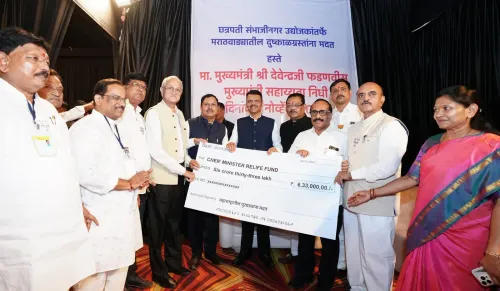
Industrialists from Chhatrapati Sambhajinagar donated ₹6.33 crore to the Chief Minister's Relief Fund for drought-affected Marathwada farmers.
The Devendra Seva Mahotsav Samiti , led by Rajendra Sabale Patil , organised the event and distributed 1,000 water tanks and 500 sewing machines at the programme.
CM Fadnavis urged citizens to carry forward Shivaji Maharaj's ideals of struggle, self-respect, and farmer welfare in contemporary society.
Senior ministers and elected representatives from the region attended, reflecting the ruling coalition's focused outreach to Marathwada .
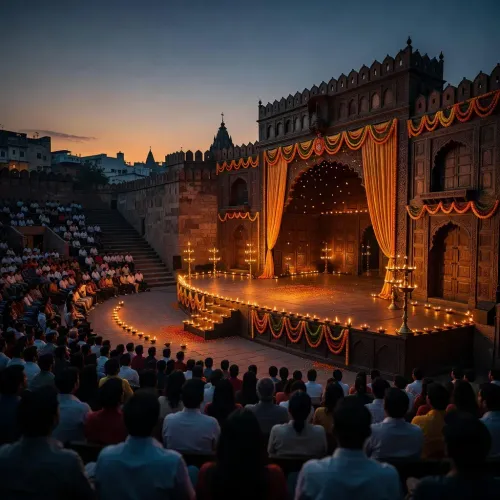
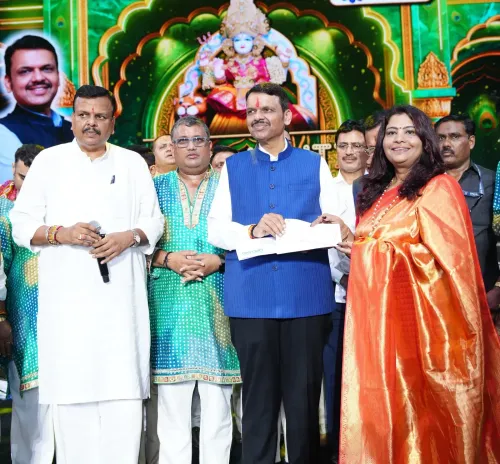
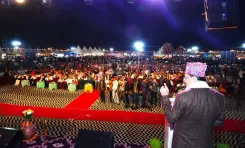
A historical play about Chhatrapati Shivaji Maharaj became the backdrop for a concrete farmer-relief push in drought-stricken Marathwada on Sunday, November 1, 2026, as the Chief Minister's Office of Maharashtra announced that Chief Minister Devendra Fadnavis presided over the 'Praudh Pratap Purandar' mahanaatya event at Chhatrapati Sambhajinagar — and walked away with a cheque of ₹6.33 crore for the Chief Minister's Relief Fund.
What happened at the 'Praudh Pratap Purandar' event
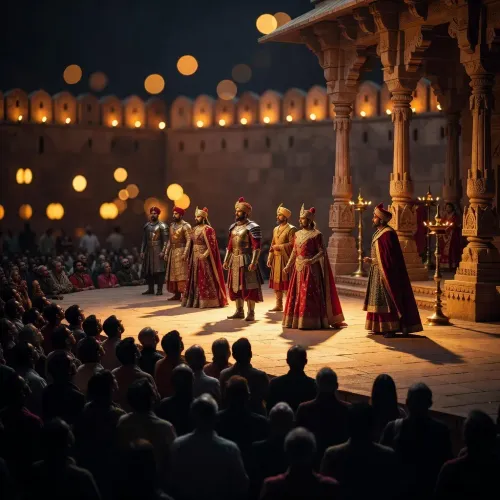
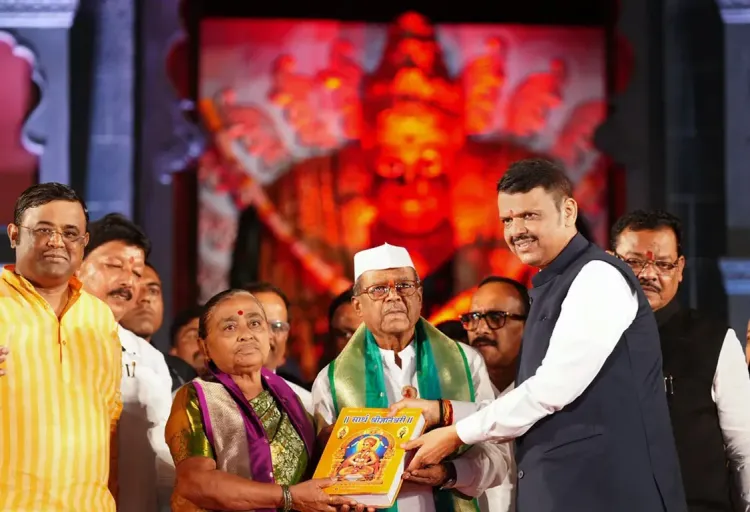
The event, organised under the initiative of Rajendra Sabale Patil, founder chairman of the Devendra Seva Mahotsav Samiti, opened with CM Fadnavis performing padyapujan (ritual honouring of the feet) of saints and mahants from various institutions. The historical play was conceived as a cultural recollection of Shivaji Maharaj's legacy — his battles, his principles of self-rule (swarajya), and his farmer-centric governance.
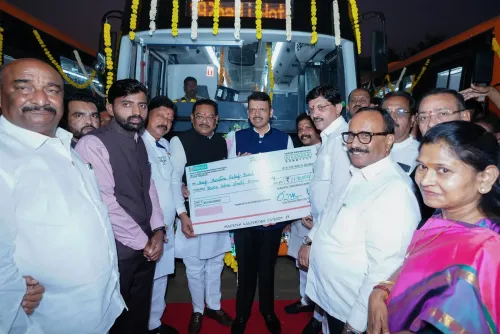
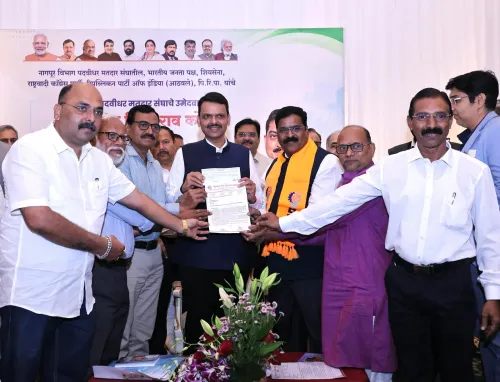
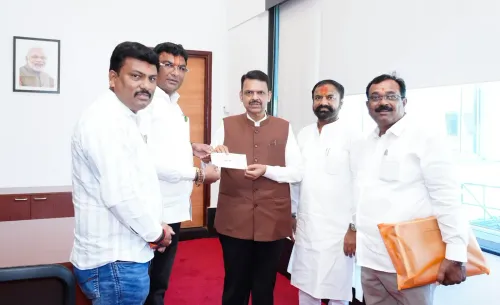
At the event, industrialists from Chhatrapati Sambhajinagar handed over a cheque of ₹6.33 crore to the Chief Minister's Relief Fund, an act CM Fadnavis described as a powerful demonstration of solidarity during crisis. The Devendra Seva Mahotsav Samiti also distributed 1,000 water tanks for drought-affected farmers and 500 sewing machines for women's empowerment at the occasion.
CM Fadnavis links Shivaji's ideals to farmer welfare
Speaking at the event, CM Fadnavis drew a direct line between Shivaji Maharaj's philosophy and his government's policy orientation. 'Everyone must carry forward the message of struggle, self-respect, public welfare, and farmer welfare from the life of Chhatrapati Shivaji Maharaj to society,' he said. He urged citizens to understand the courage, struggles, and inspiration behind the founding of swarajya by recalling the challenges of that era.
Fadnavis also reiterated that his government is working in accordance with Shivaji Maharaj's ideals and stands firmly behind farmers. 'The government is solidly with farmers to bring them out of crisis,' he stated, framing state intervention as an expression of that centuries-old legacy of people's welfare.
Marathwada's drought crisis — the context behind the cheque
Marathwada, the eight-district eastern belt of Maharashtra, has long been one of India's most drought-exposed agricultural zones. The region faces recurring cycles of water scarcity, fodder shortages, and farm income collapse — distress that has drawn repeated government and private-sector interventions. The ₹6.33 crore donation from city-based industrialists, made publicly at a high-profile cultural event, follows a well-worn pattern in Maharashtra: combining heritage commemoration with tangible relief mobilisation to maximise both visibility and community buy-in.
Ministers Atul Save and Sanjay Shirsat, MP Sandipan Bhumare, and MLAs Suhas Shirsath, Narayan Kuche, and Anuradha Chavan were among the elected representatives present, underlining the political weight Maharashtra's ruling alliance attaches to Marathwada outreach.
Water tanks, sewing machines, and the relief arithmetic
Beyond the headline donation, the day's relief tally was specific: 1,000 water tanks directly addressing the region's acute water scarcity, and 500 sewing machines targeted at women's economic empowerment. Small numbers by Maharashtra's scale — but they represent immediate, on-the-ground delivery at a moment when Marathwada farmers are watching the sky and counting their reserves. That combination of cultural pageantry and distributed material relief is a signature of the Fadnavis administration's Marathwada playbook, first developed during his 2014-2019 tenure.
With the Kharif harvest season winding down and the region's water tables under stress, every commitment made from a Sambhajinagar stage will be measured against what actually reaches the field.
Point of View
Farmer support — inside culturally resonant programming centred on Chhatrapati Shivaji Maharaj, maximising emotional uptake in a region that has historically swung on agrarian grievances. The ₹6.33 crore private donation, raised publicly at a heritage event, also offloads some relief optics from the state exchequer onto the corporate sector, a public-private framing the Fadnavis administration has refined since its first term. Marathwada's recurring drought cycle means these events are not one-offs — they are routine maintenance of political capital in a high-stakes constituency. The test will be whether follow-through on water infrastructure and farm-income support outlasts the cultural calendar.
NationPress
2 Nov 2026
Frequently Asked Questions
What is the 'Praudh Pratap Purandar' mahanaatya?
'Praudh Pratap Purandar' is a historical play ( mahanaatya ) depicting the life, battles and ideals of Chhatrapati Shivaji Maharaj , organised in Chhatrapati Sambhajinagar by the Devendra Seva Mahotsav Samiti under founder chairman Rajendra Sabale Patil.
How much money was donated to the CM Relief Fund at the Sambhajinagar event?
Industrialists from Chhatrapati Sambhajinagar donated ₹6.33 crore to the Chief Minister's Relief Fund at the event, specifically for relief to drought-affected farmers in Marathwada.
What relief materials were distributed at the Sambhajinagar programme?
The Devendra Seva Mahotsav Samiti distributed 1,000 water tanks for drought-affected farmers and 500 sewing machines for women's empowerment at the event.
Why is Marathwada frequently in focus for drought relief?
Marathwada , the eight-district eastern belt of Maharashtra, is one of India's most drought-prone agricultural regions, facing recurring water scarcity, fodder shortages and farm-income distress that has required repeated government and private-sector interventions.
What did CM Fadnavis say about Chhatrapati Shivaji Maharaj and farmers?
CM Fadnavis said his government works in accordance with Shivaji Maharaj's ideals and stands firmly behind farmers. He urged everyone to carry forward the values of struggle, self-respect, and farmer welfare drawn from Shivaji Maharaj's life.