CM Fadnavis at Wardha Convocation: Women Lead, AI Must Serve
Synopsis
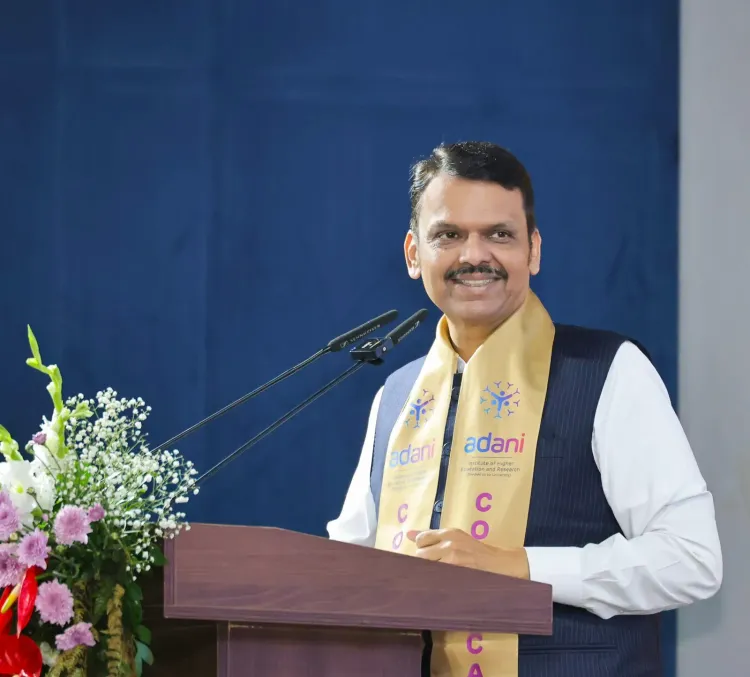
Chief Minister Devendra Fadnavis addressed the 17th Convocation of Adani Institute of Higher Education and Research in Wardha, highlighting that 85% of medal winners were women, felicitating record-holder Pujal Mhapari, and urging graduates to embrace AI while keeping empathy and social responsibility at the core of their careers.
Key Takeaways
Approximately 2,000 students received degrees at the 17th Convocation 2026 of Adani Institute of Higher Education and Research, Wardha.
85 per cent of medal winners were women , which CM Fadnavis called 'the real strength of a new India.' Student Pujal Mhapari set a new institutional record by winning 21 gold medals and 5 additional prizes .
Fadnavis called on universities to become innovation centres focused on AI, new medicines, and medical technology , not just degree-granting bodies.
The CM stressed that human empathy and compassion must accompany technological advancement in healthcare, distinguishing humans from AI and robots.
Fadnavis paid tribute to the legacy of late Datta Meghe in expanding higher education across Vidarbha, and acknowledged Dr Priti Adani's role in strengthening the institute.
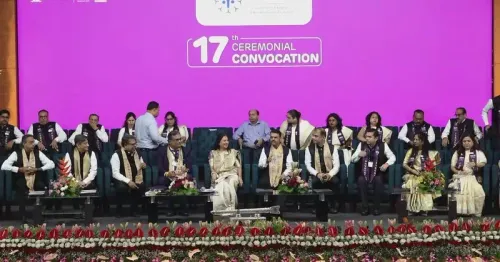
When 85 per cent of the medal winners at a convocation are women, and one student — Pujal Mhapari — walks away with 21 gold medals and 5 additional prizes, setting a new record, the numbers tell their own story. Chief Minister Devendra Fadnavis attended the 17th Convocation 2026 of the Adani Institute of Higher Education and Research (Deemed University) in Wardha on Saturday, 17 October 2026, and turned the graduation ceremony into a pointed address on technology, empathy, and social responsibility.
Pujal Mhapari's record and what 85% women medalists mean for Vidarbha
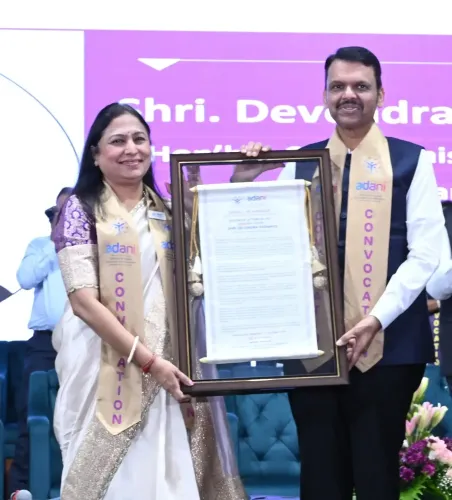
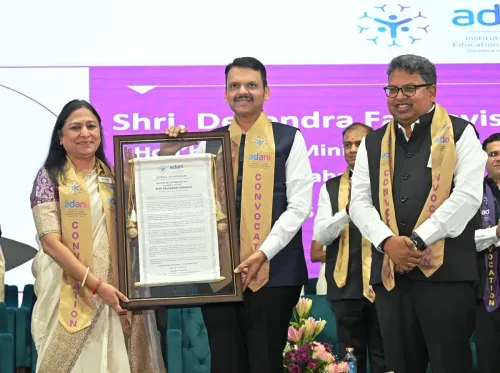
Fadnavis opened with the number that stopped the hall: approximately 2,000 students received degrees, and 85 per cent of the medal winners were women. He singled out Pujal Mhapari for special congratulations, calling her achievement — 21 gold medals plus five further prizes — a new institutional record. 'This is the real strength of a new India,' he said, adding that placing women at the centre of the development mainstream is essential for realising Viksit Bharat (a Developed India).
The figure lands with particular weight in Vidarbha, a region historically underserved by Maharashtra's higher-education infrastructure, which has long been concentrated around Mumbai and Pune. The institute in Wardha represents exactly the kind of inland expansion that successive state governments have pushed — and the women's medal sweep suggests that access, when delivered, translates quickly into achievement.
The Datta Meghe legacy and Adani Foundation's stake in Wardha
Fadnavis paid tribute to the late Datta Meghe — senior leader, former minister, and the man credited with building quality educational institutions across Nagpur and Wardha. His successors Sagar Meghe and Sameer Meghe have carried that legacy forward. Now, through the Adani Foundation, Dr Priti Adani — Chancellor of the institute — is strengthening the institution further. Fadnavis expressed confidence that the university will earn recognition not just among India's leading institutions, but on a global stage.
Also present were State Minister Dr Pankaj Bhoyar, Vice-Chancellor Dr Lalitbhushan Waghmare, and Dr Abhijat Sheth, Chairperson of the National Medical Commission.
AI, semiconductors, and the 'Learn, Unlearn, Relearn' mandate
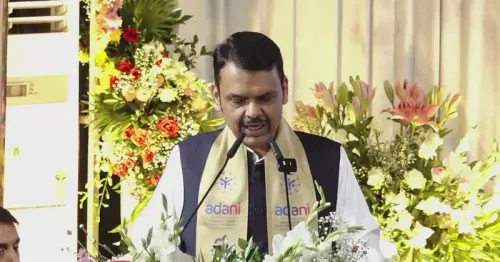
AI, semiconductors, and quantum computing will transform every sphere of human life, Fadnavis told graduates — and that means the old model of a fixed degree preparing you for a fixed career is obsolete. His prescription: adopt the formula 'Learn, Unlearn and Relearn' and keep acquiring new knowledge and skills continuously. In medicine specifically, he pointed to AI's growing role in early diagnosis, precision treatment, and accelerating drug discovery.
Universities, he argued, must stop being mere degree-dispensing machines. They must become centres of innovation — incubating new medicines, medical technologies, and research breakthroughs. Research and health technology must reach the last person in society, he said, particularly to address stubborn challenges like malnutrition, child stunting, maternal health, and non-communicable diseases.
Empathy over algorithms: Fadnavis's closing charge to graduates
The sharpest moment of the address may have been the quietest. Even as he championed AI and robotics, Fadnavis drew a clear line: 'what separates humans from AI and robots is human sensitivity.' Technology and empathy must coexist in healthcare — compassion matters as much as code. Then came the parting challenge to graduates: true success is not measured by how much money you earn, but by how much you contribute to society. Those who have been educated with society's support must repay that debt by using their knowledge for public good.
A convocation speech that began with a medal tally ended as a quiet manifesto for what an educated generation owes the country. The bar, Fadnavis made clear, is higher than a gold medal.
Point of View
Quantum computing, and 'Learn, Unlearn, Relearn' aligns Maharashtra's education agenda with the national Viksit Bharat narrative while positioning the state as a proactive partner in future-skills policy. The Adani Foundation's visible role in a deemed university — with the CM present — also underscores the Mahayuti government's comfort with large private-foundation partnerships in public-interest sectors. The empathy-over-algorithms closing note is a deft softener, signalling that technological ambition will be tethered to social responsibility rhetoric heading into the next budget and university reform cycle.
NationPress
17 Oct 2026
Frequently Asked Questions
What happened at the Adani Institute Wardha convocation 2026?
Chief Minister Devendra Fadnavis attended the 17th Convocation 2026 of Adani Institute of Higher Education and Research in Wardha on 17 October 2026, where around 2,000 students received degrees and 85 per cent of medal winners were women.
Who is Pujal Mhapari and what record did she set?
Pujal Mhapari is a student at Adani Institute Wardha who won 21 gold medals and 5 additional prizes at the 17th Convocation, setting a new institutional record that CM Fadnavis personally congratulated her for.
What did CM Fadnavis say about AI and universities in Maharashtra?
Fadnavis urged universities to move beyond degree-granting and become innovation centres for AI, new medicines, and medical technology. He asked graduates to adopt the 'Learn, Unlearn and Relearn' approach to stay relevant as AI, semiconductors, and quantum computing reshape every field.
What is the Adani Institute of Higher Education and Research in Wardha?
It is a deemed university in Wardha, Vidarbha, established under the Adani Foundation. Dr Priti Adani serves as its Chancellor, and it continues the legacy of the late Datta Meghe in expanding quality higher education in the Vidarbha region.
Why did Fadnavis emphasise empathy alongside technology at the convocation?
Fadnavis argued that while AI and robotics will transform healthcare, human sensitivity — empathy and compassion — is what distinguishes humans from machines and must coexist with technological advancement, particularly in medical practice.