CM Bhajan Lal Sharma Pushes Water Security Agenda for Rajasthan
Synopsis
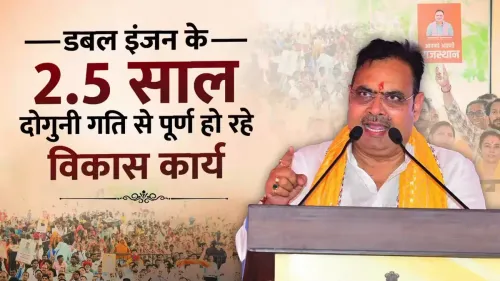
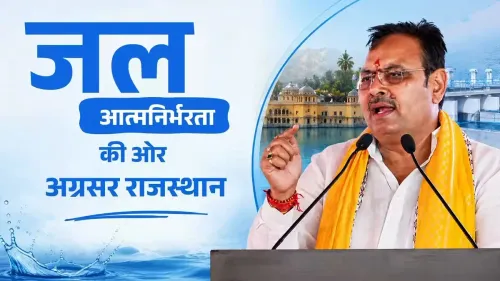
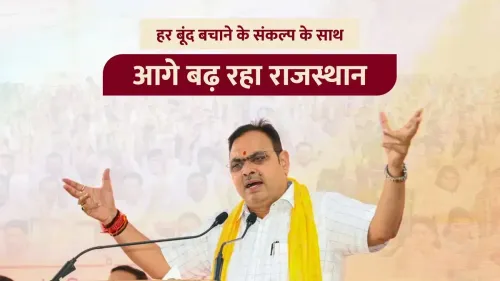
Rajasthan CM Bhajan Lal Sharma on 17 October 2026 committed the state's BJP-led 'double engine' government to concrete action on water conservation, management, and availability — a direct response to the state's chronic groundwater depletion and low rainfall geography.
Key Takeaways
CM Bhajan Lal Sharma posted on 17 October 2026 reaffirming the Rajasthan government's commitment to water conservation, management, and availability.
The 'double engine' framing signals expected coordination between the BJP-led state government and the Centre on water infrastructure funding.
Rajasthan covers roughly 10 percent of India's landmass but faces chronic low rainfall and heavy groundwater depletion.
The national Jal Jeevan Mission , launched in 2019 , lists Rajasthan among its largest and most challenging implementation states.
Rural households and farmers remain the most directly affected stakeholders, with remote desert and tribal districts historically lagging on piped water coverage.
State budget allocations and district-level Jal Jeevan Mission coverage reports will be the key benchmarks for delivery.
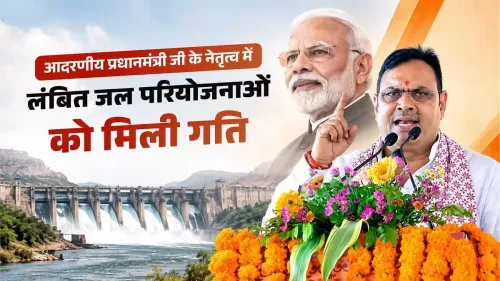
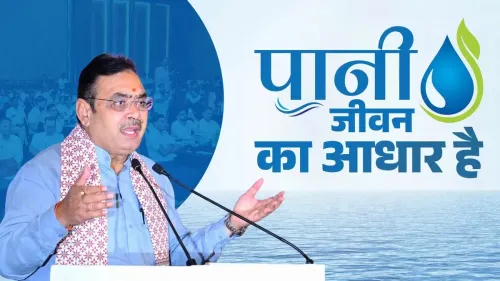
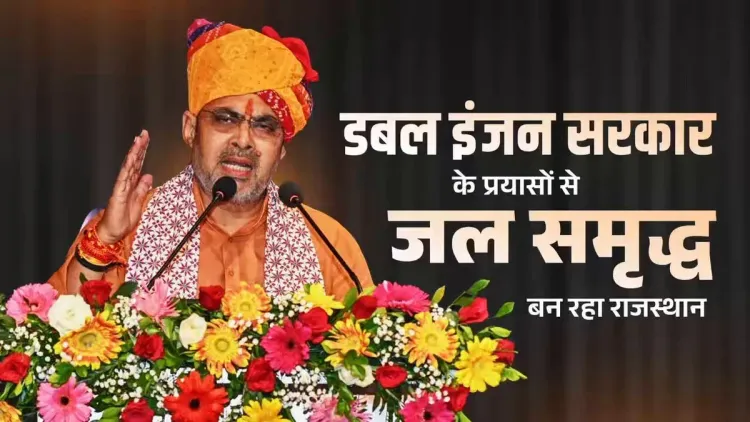
Water-scarce Rajasthan has a government that says it is done waiting — Rajasthan Chief Minister Bhajan Lal Sharma signalled a resolute push on Saturday, 17 October 2026, committing the state's 'double engine' administration to concrete action on water conservation, water management, and wider water availability across every region of the state.
Posting in Hindi on X, CM Sharma declared: 'The double engine government of Rajasthan is taking firm steps towards water conservation, water management, and increasing water availability. The government is working with commitment to make the state water-rich and to ensure adequate water reaches every region.' The 'double engine' framing — a BJP formulation for coordinated central-state governance — signals that New Delhi's resources and Jaipur's implementation machinery are expected to move in tandem.
Why Rajasthan's Water Crisis Is Structural, Not Seasonal
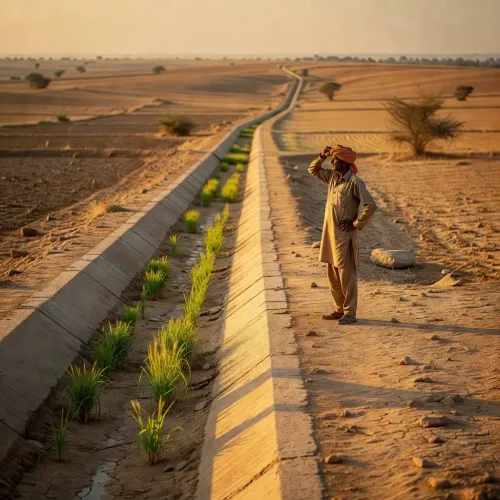
Rajasthan covers roughly 10 percent of India's landmass but receives some of its lowest average rainfall. Large stretches of the Thar Desert and the surrounding semi-arid belt have long made groundwater depletion and erratic monsoons an existential concern — not a policy footnote. Rural households and the farming community bear the sharpest edge of that scarcity, waiting years for reliable piped supply.
The national Jal Jeevan Mission, launched in 2019, set out to deliver functional household tap connections in rural India, and Rajasthan has been one of the mission's largest and most challenging implementation states. Progress in remote desert and tribal districts has historically lagged, making the CM's renewed emphasis on reaching 'every region' a pointed acknowledgement of those gaps.
The 'Double Engine' Promise — and What It Demands
CM Sharma took office in December 2023, inheriting a state with decades of water-management ambition and uneven delivery. The BJP's 'double engine' pitch to voters rests on the argument that a state government aligned with the ruling party at the Centre can unlock faster fund flows, smoother approvals, and mission-mode execution that opposition-led states cannot match.
For that promise to hold on water, analysts and district administrators will watch two indicators closely: state budget allocations for water infrastructure in the coming fiscal cycle, and district-level coverage reports under the Jal Jeevan Mission — particularly in underserved blocks where the gap between announced targets and actual connections has been the widest.
A state of 80 million people betting its agricultural and domestic future on groundwater it is already overdrawing cannot afford policy announcements that stop at the press release. CM Sharma's post plants a flag — now every budget line and project completion report will be measured against it.
Point of View
More than two years into his tenure, suggests the government wants to move water higher up the agenda ahead of budget season and possible mid-term performance reviews. The post's deliberate vagueness — no project names, no targets — keeps political flexibility intact, but it also means the announcement will be judged entirely by what follows in allocations and on-ground delivery. For a state whose groundwater table is under sustained stress, the credibility gap between declaration and execution is the real story to watch.
NationPress
17 Oct 2026
Frequently Asked Questions
What has Rajasthan CM Bhajan Lal Sharma said about water conservation?
CM Bhajan Lal Sharma stated on 17 October 2026 that Rajasthan's 'double engine' government is taking firm steps on water conservation, management, and availability, and is committed to making the state water-rich and ensuring adequate water reaches every region.
What is the Jal Jeevan Mission and how does it affect Rajasthan?
The Jal Jeevan Mission is a national programme launched in 2019 to provide functional household tap connections in rural India. Rajasthan, given its vast arid geography and large rural population, is one of the mission's most challenging and significant implementing states.
Why does Rajasthan face such severe water scarcity?
Rajasthan covers around 10 percent of India's total area but receives some of the country's lowest average rainfall. The Thar Desert and surrounding semi-arid zones make the state heavily dependent on groundwater, which is being depleted faster than it is replenished.
What does 'double engine government' mean in Rajasthan's context?
'Double engine government' is a BJP term describing a state where both the state and central governments are BJP-led, enabling faster fund flows and coordinated policy execution — CM Sharma uses it to signal that Rajasthan can leverage central resources for water infrastructure.
How will Rajasthan's water commitments be measured?
Policy analysts point to two key benchmarks: state budget allocations for water projects in the next fiscal cycle, and district-level coverage data under the Jal Jeevan Mission , especially in underserved desert and tribal blocks where gaps between targets and actual connections have been widest.