CM Fadnavis: Contract Redesign Saved Maharashtra Crores
Synopsis
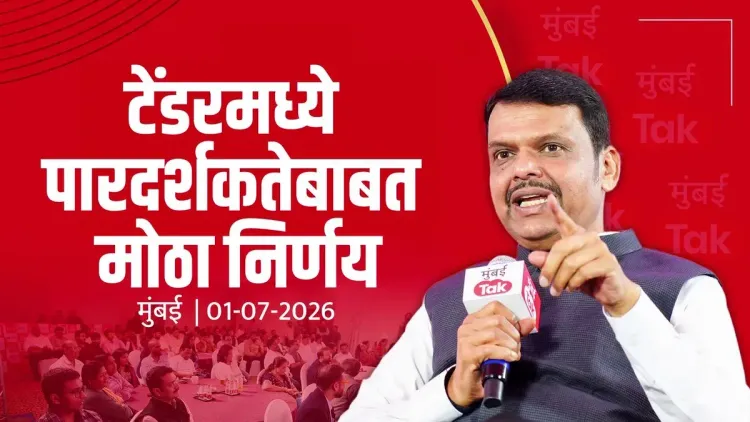
Maharashtra Chief Minister Devendra Fadnavis announced at the Mumbai Tak Baithak on 1 July 2026 that the state government saved crores of rupees by restructuring and amending several contracts and tenders, framing it as a key fiscal efficiency measure.
Key Takeaways
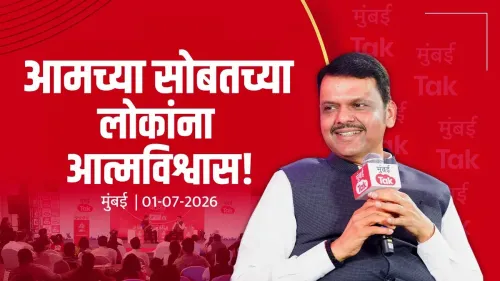
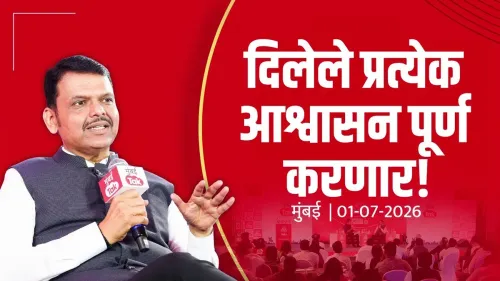
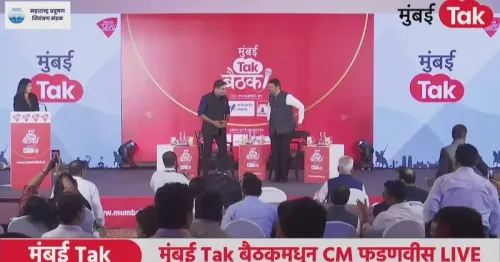
CM Devendra Fadnavis announced the savings at the Mumbai Tak Baithak in Mumbai on 1 July 2026 .
Multiple government contracts and tenders were redesigned and amended to achieve the savings.
The savings are described as running into 'crores of rupees' for the state government.
The announcement was made bilingually — in Marathi and Hindi — signalling a broad public outreach intent.
Exact savings figures and names of restructured contracts have not yet been officially disclosed.
Maharashtra has been strengthening e-procurement and tender transparency norms since the mid-2010s as part of broader fiscal governance reform.
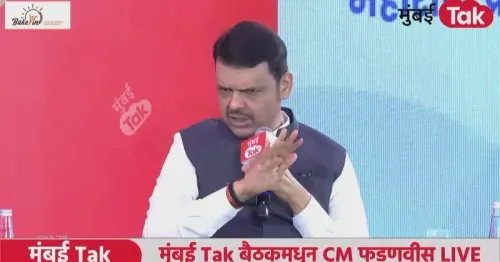
Maharashtra Chief Minister Devendra Fadnavis on Wednesday, 1 July 2026 stated that the state government has saved crores of rupees by restructuring and amending several contracts and tenders, making the announcement at the Mumbai Tak Baithak interaction in Mumbai.
Context
Speaking at the Mumbai Tak Baithak, Fadnavis said in a bilingual post — in Marathi and Hindi — that 'many contracts have been restructured and necessary amendments made, resulting in savings of crores of rupees for the state government.' The original Marathi reads: अनेक कंत्राटांची पुनर्रचना करून आवश्यक सुधारणा केल्यामुळे राज्य शासनाच्या कोट्यवधी रुपयांची बचत झाली [By restructuring many contracts and making necessary improvements, crores of rupees of the state government have been saved].
The Chief Minister shared the update directly on his official X account, tagging Mumbai Tak, the regional media platform that hosted the event, and using the hashtags #Maharashtra and #MumbaiTakBaithak.
Policy Backdrop
Maharashtra has progressively adopted e-procurement and tender transparency measures since the mid-2010s, aimed at reducing discretionary contract awards and improving value for public money. Periodic redesign of tenders and renegotiation of contracts is a recognised tool state administrations use to align procurement costs with current market rates and plug expenditure leakages.
The state carries a large infrastructure pipeline — spanning roads, urban transport, water supply, and housing — making procurement efficiency a recurring concern for fiscal managers. Debates over expenditure quality and contract structuring have been a feature of Maharashtra's legislative sessions in recent years.
Stakeholders and Impact
The primary beneficiaries of such exercises are Maharashtra taxpayers, whose funds are deployed through state contracts. Private contractors bidding on government projects are also directly affected, as revised tender conditions reset pricing benchmarks and eligibility norms.
For the broader contracting ecosystem, restructured tenders can mean tighter specifications, revised timelines, or altered payment schedules — changes that recalibrate competition and, in principle, improve the state's cost-to-output ratio on public works.
What's Next
Granular details — including the exact quantum of savings, the categories of contracts involved, and any resulting changes to procurement rules — are expected to emerge from formal disclosures by the state's finance or public works departments. Such figures, when published, would allow independent assessment of the claimed savings.
Any follow-through in the form of amendments to Maharashtra's procurement regulations or tabling of related data in the state assembly would be the next concrete indicator of how deep this restructuring exercise runs.
Point of View
The CM broadens its reach while keeping specifics deliberately vague. The absence of verified figures means the claim currently rests on political credibility rather than audited outcomes. Whether this signals a deeper procurement overhaul or a one-cycle exercise will depend on whether detailed data is tabled in the state assembly.
NationPress
2 Jul 2026
Frequently Asked Questions
How much money did Maharashtra save by restructuring contracts?
CM Fadnavis stated the savings run into 'crores of rupees,' but the exact quantum has not been officially disclosed by the state finance or public works departments as of 1 July 2026.
What is the Mumbai Tak Baithak?
Mumbai Tak Baithak is a public interaction session hosted by Mumbai Tak, a regional media platform, where senior leaders discuss governance and policy matters with a wider audience.
Which contracts did Maharashtra restructure to save money?
The specific contracts and tender categories involved have not been named publicly. CM Fadnavis indicated multiple contracts were redesigned and amended, but detailed disclosures are awaited.
Why does Maharashtra redesign government tenders?
Tender redesign is used to align procurement costs with current market rates, reduce cost escalation, plug expenditure leakages, and improve value for taxpayer money — a practice followed by state governments across India.
What happens next after Fadnavis's savings announcement?
The next steps to watch are formal disclosures from Maharashtra's finance or public works departments on the savings quantum, and any amendments to state procurement rules that may be tabled in the assembly.