CM Fadnavis receives ₹1 crore donation for drought-hit farmers
Synopsis
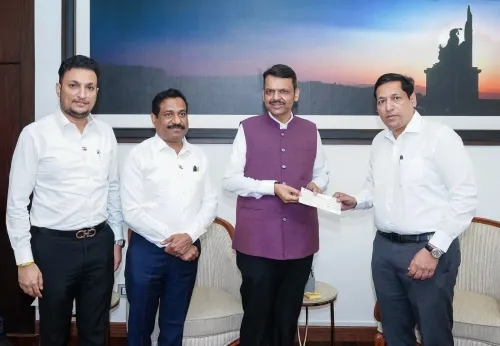
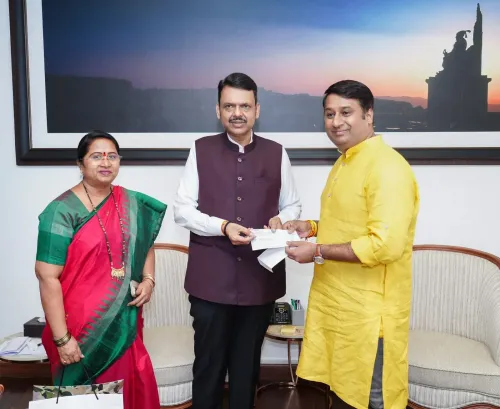
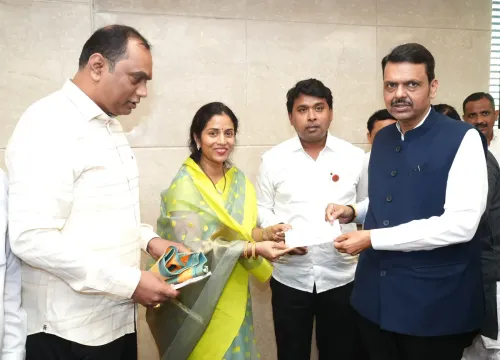
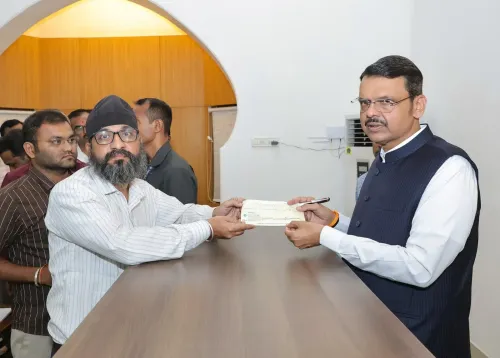
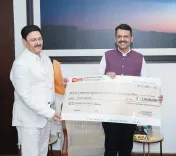
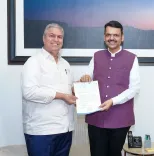
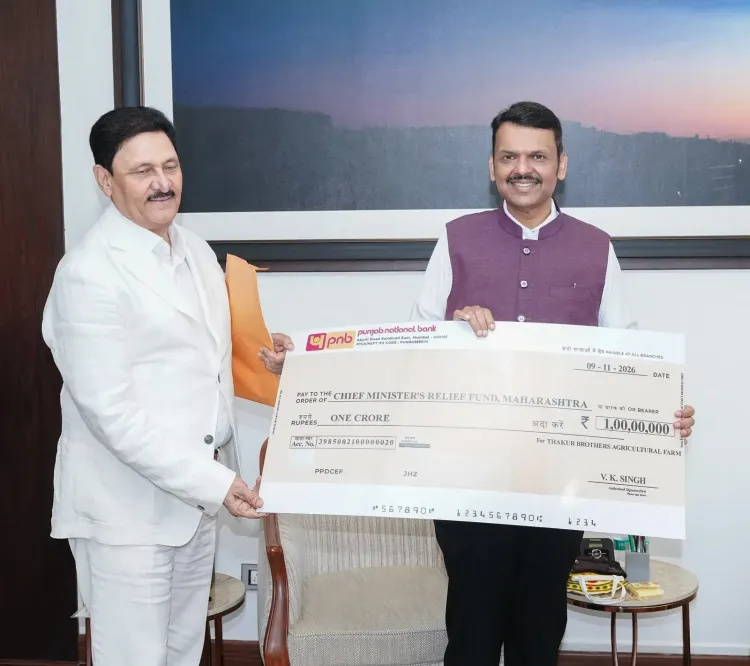
V. K. Singh of Thakur Brothers Agricultural Farm presented a ₹1 crore cheque to Maharashtra Chief Minister Devendra Fadnavis in Mumbai on 9 November 2026, contributing to the CM Relief Fund for drought-affected farmers across the state.
Key Takeaways
₹1,00,00,000 donated to the Chief Minister's Relief Fund by V.
Singh on behalf of Thakur Brothers Agricultural Farm .
The donation was handed over to CM Devendra Fadnavis in Mumbai on 9 November 2026 .
Funds are earmarked specifically for relief to drought-affected farmers in Maharashtra.
The CM Relief Fund is Maharashtra's primary state-managed vehicle for emergency agricultural and disaster relief.
Private donations to this fund during drought years are a recurring pattern in Maharashtra, supplementing official government relief packages.
Disbursement timelines and the specific districts to benefit from this contribution are yet to be announced.
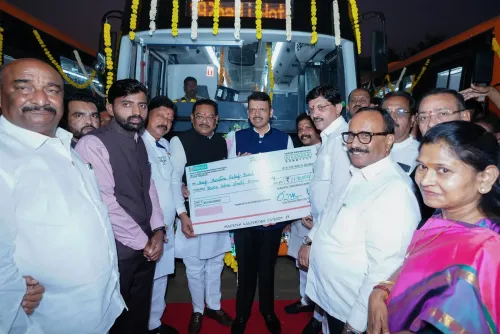
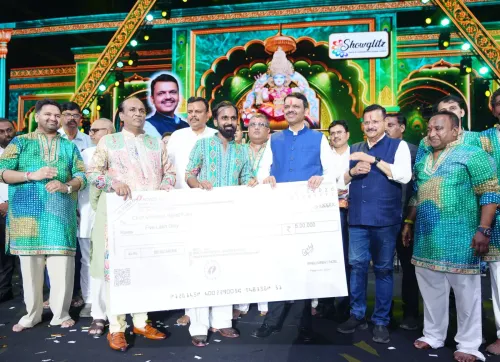
A ₹1 crore cheque changed hands at Mumbai on Monday, 9 November 2026 — and behind it lies the stubborn reality of drought-stricken farmland across Maharashtra. V. K. Singh, representing Thakur Brothers Agricultural Farm, handed the donation to Chief Minister Devendra Fadnavis for the Chief Minister's Relief Fund, earmarked specifically for drought-affected farmers. Fadnavis personally thanked Singh for the gesture.
A ₹1 crore pledge for farmers on the edge
The Chief Minister's Office of Maharashtra announced that the cheque — worth ₹1,00,00,000 — was handed over to Fadnavis during a meeting in Mumbai. The donation flows directly into the CM Relief Fund, the state's primary vehicle for channelling emergency financial assistance to communities hit by drought, crop failure, and natural disasters. Fadnavis expressed gratitude to the donors on behalf of the state government and the farming communities who stand to benefit.
Maharashtra's drought burden and the Relief Fund's role
Maharashtra is no stranger to agrarian distress. Regions like Marathwada and Vidarbha have faced recurrent monsoon failures and large-scale crop losses over the past decade, leaving farmers exposed and dependent on state intervention. The Chief Minister's Relief Fund has long served as a first-response mechanism — supplementing official drought relief packages with money that can move faster than bureaucratic allocations.
Private donations to this fund are not new. During drought years stretching back to the 2014–2019 period, Maharashtra saw a steady stream of corporate and individual contributions to shore up relief efforts. The pattern reflects a broader norm in India's agrarian states: when official packages lag behind immediate need, private capital fills the gap — and the CM Relief Fund becomes the bridge.
What this donation means on the ground
One crore rupees is a pointed, concrete sum — large enough to cover immediate relief for hundreds of farm families, yet a signal too, one that invites other private donors to step forward. The key question now is how quickly funds are disbursed, and which drought-hit districts are prioritised. Maharashtra's administration will be expected to demonstrate that contributions like this translate into verifiable, ground-level relief rather than sitting idle in a central pool.
For CM Devendra Fadnavis, this moment lands at a time when the state's agricultural regions are watching the government's response to distress with sharp eyes. Every crore that moves into the relief fund is also a political statement — that Maharashtra's leadership takes farmer welfare seriously enough to mobilise private resources alongside state funds.
The farmers waiting for that cheque to reach their fields are not watching the optics. They are watching the disbursements.
Point of View
Corporate and institutional donors step in to plug the gap, and CM Relief Funds become a barometer of civil society's confidence in state governance. For Fadnavis, mobilising a ₹1 crore private donation reinforces the Maharashtra government's farmer-welfare narrative at a time when agrarian distress in Marathwada and Vidarbha remains politically sensitive. The critical test, however, is not fundraising optics but disbursement velocity — how fast money reaches farm households determines whether gestures like this translate into genuine relief or symbolic politics. Transparent, district-level accounting of where this crore lands will ultimately define its policy value.
NationPress
9 Nov 2026
Frequently Asked Questions
What is the Maharashtra Chief Minister's Relief Fund?
The Chief Minister's Relief Fund is a state-managed financial pool used for emergency assistance in Maharashtra, including drought relief, crop-loss compensation, and aid to affected farming communities. Private individuals and organisations can donate to it.
Who donated ₹1 crore to CM Fadnavis for farmers?
V. K. Singh , representing Thakur Brothers Agricultural Farm , handed over the ₹1 crore cheque to Chief Minister Devendra Fadnavis in Mumbai on 9 November 2026.
Which farmers will benefit from this ₹1 crore donation?
The donation is earmarked for drought-affected farmers in Maharashtra. Specific districts and disbursement timelines have not yet been announced by the Chief Minister's Office.
How does the CM Relief Fund help drought-hit farmers in Maharashtra?
The fund channels emergency financial assistance directly to communities affected by drought and crop failure, supplementing official state relief packages. It can respond faster than regular budgetary allocations.
Which parts of Maharashtra are most affected by drought?
Regions like Marathwada and Vidarbha have historically faced the worst agricultural distress in Maharashtra due to recurrent monsoon failures and large-scale crop losses.