CM Fadnavis receives ₹35,000 donation for drought-hit farmers
Synopsis
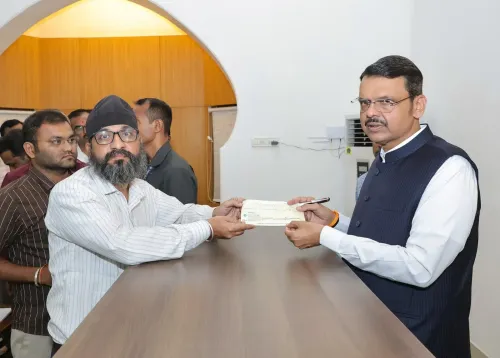
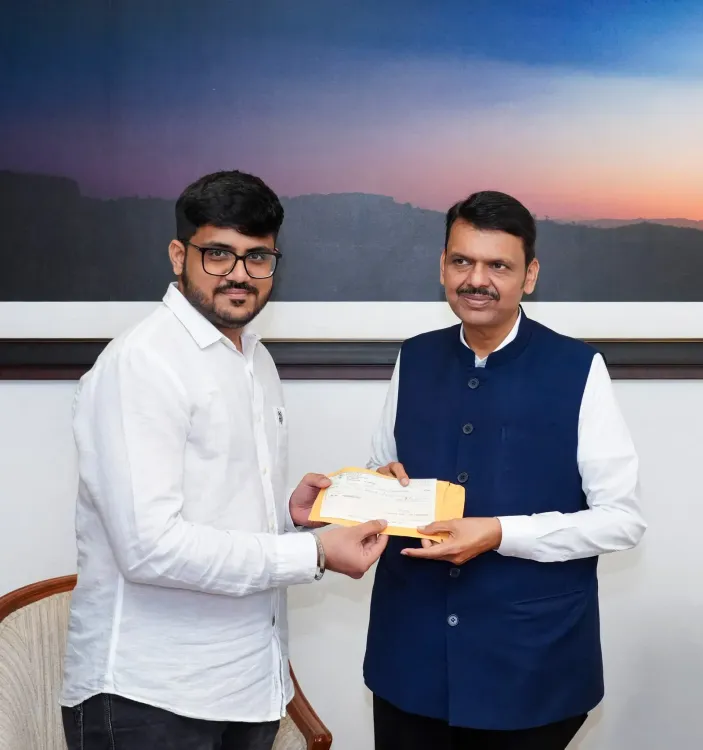
Krishna Lalwani presented a ₹35,000 cheque to Maharashtra CM Devendra Fadnavis in Mumbai for the Mukhyamantri Sahayata Nidhi, intended to support drought-affected farmers across the state. CM Fadnavis publicly thanked the donor.
Key Takeaways
Krishna Lalwani donated ₹35,000 to the Mukhyamantri Sahayata Nidhi (Chief Minister's Relief Fund) for drought-hit farmers.
The cheque was handed over to CM Devendra Fadnavis in person in Mumbai on 19 November 2026 .
CM Fadnavis personally acknowledged and thanked Lalwani for the contribution.
The Chief Minister's Relief Fund is Maharashtra's primary mechanism for channelling emergency assistance during droughts, particularly in Marathwada and Vidarbha .
The CMO publicly posted the handover, consistent with its transparency practice of acknowledging donations to the fund.
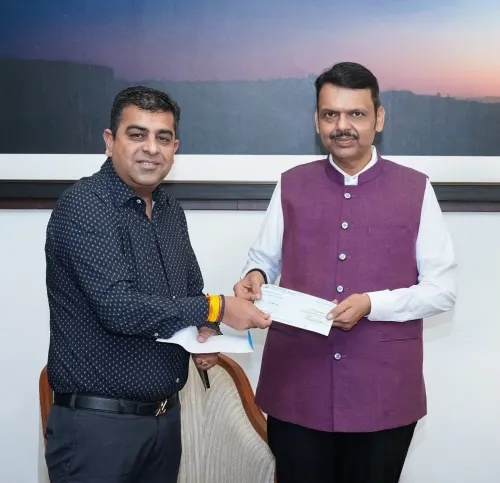
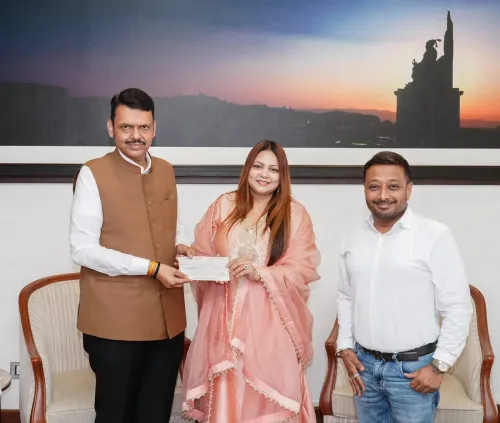
A ₹35,000 cheque for Maharashtra's drought-affected farmers — that was the gesture Krishna Lalwani brought to Chief Minister Devendra Fadnavis in Mumbai on Thursday, 19 November 2026, handing it directly to the Chief Minister's Office for the state's relief fund. CM Fadnavis personally thanked Lalwani for the contribution.
The donation was made to the Mukhyamantri Sahayata Nidhi — the Chief Minister's Relief Fund — which serves as the state's primary financial mechanism for channelling emergency assistance to farmers and communities struck by natural calamities. The Chief Minister's Office posted the handover moment on social media, acknowledging Lalwani's contribution publicly.
Maharashtra's drought belt and the Relief Fund's role
Maharashtra's farming communities, particularly in the chronically water-stressed regions of Marathwada and Vidarbha, have long depended on a combination of state disbursements and privately donated funds during dry spells. The Mukhyamantri Sahayata Nidhi has been a consistent instrument across successive state governments — pooling contributions from citizens, corporates, and philanthropists, then directing them toward crop-loss compensation, water supply measures, and emergency relief.
Successive Maharashtra governments have used the fund to respond to recurring drought cycles that leave smallholder farmers — many growing cotton or soybean in rain-fed tracts — with little buffer when the monsoon fails or retreats early. Official acknowledgment of even modest private donations serves a dual purpose: it honours the contributor and signals to the public that the fund is active and accepting support.
Why small donations get official acknowledgment
The CMO's decision to publicly post this handover is consistent with a broader transparency practice — making visible every contribution, large or small, to maintain trust in the fund's administration. For donors like Lalwani, the public acknowledgment from the Chief Minister himself carries symbolic weight beyond the cheque's face value. It signals that individual citizens can directly participate in the state's drought-relief machinery.
In a state where farmer distress regularly makes national headlines, gestures of civic solidarity — however modest — carry disproportionate moral weight. The ₹35,000 may be a small number against the scale of agrarian need, but the act of giving, and the government's act of receiving it with gratitude, reinforces the social compact between Maharashtra's citizens and its drought-stricken farming heartland.
Point of View
000 donation reflects a deliberate civic-engagement strategy — keeping the Chief Minister's Relief Fund visible and participatory rather than purely bureaucratic. In a state with deep agrarian distress concentrated in Marathwada and Vidarbha, this optics of open-door philanthropy helps sustain public confidence in state relief infrastructure. It also fits a pattern under Fadnavis of projecting administrative responsiveness on social media. The broader signal is that Maharashtra's drought-relief ecosystem depends not just on government budgets but on a continuing social compact with its citizens.
NationPress
19 Nov 2026
Frequently Asked Questions
What is the Chief Minister's Relief Fund in Maharashtra?
The Mukhyamantri Sahayata Nidhi is a state fund that collects donations from citizens, organisations, and corporates to provide emergency financial assistance during natural calamities such as droughts and floods, with a focus on affected farmers.
Who donated ₹35,000 to CM Fadnavis for drought relief?
Krishna Lalwani donated ₹35,000 to the Chief Minister's Relief Fund by presenting a cheque directly to CM Devendra Fadnavis in Mumbai on 19 November 2026.
Which farmers benefit from Maharashtra's Chief Minister's Relief Fund?
Farmers in drought-affected regions of Maharashtra, particularly in Marathwada and Vidarbha, are primary beneficiaries of relief disbursements from the Mukhyamantri Sahayata Nidhi.
Can ordinary citizens donate to the Maharashtra CM Relief Fund?
Yes, the Mukhyamantri Sahayata Nidhi accepts donations from individual citizens, as demonstrated by Krishna Lalwani's ₹35,000 contribution acknowledged by the Chief Minister's Office.
Why does the Maharashtra CMO post about individual donations?
The Chief Minister's Office publicly acknowledges donations to maintain transparency around the relief fund and to encourage broader civic participation in drought-relief efforts.