CM Fadnavis Hails Successful Anti-Naxal Operation in Maharashtra
Synopsis
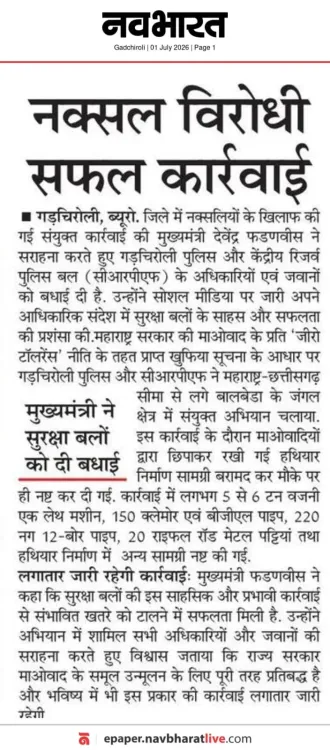
The Chief Minister's Office of Maharashtra on 1 July 2026 publicly acknowledged a successful anti-Naxal operation, tagging CM Devendra Fadnavis. The post reinforces the state government's declared goal of a Naxal-free Maharashtra through sustained security operations in Left Wing Extremism-affected districts.
Key Takeaways
The Chief Minister's Office of Maharashtra posted about a successful anti-Naxal operation on 1 July 2026 .
The post tagged Chief Minister Devendra Fadnavis and used the hashtag #NaxalFreeMaharashtra .
Maharashtra Police conducts counter-insurgency operations in the state's eastern districts, historically affected by Left Wing Extremism.
The Government of India launched Operation Green Hunt in 2009 to coordinate anti-Naxal efforts across affected states including Maharashtra.
Key stakeholders include security forces and tribal communities in conflict-affected districts.
Official district-wise incident data and formal declarations on secured areas are expected to follow.
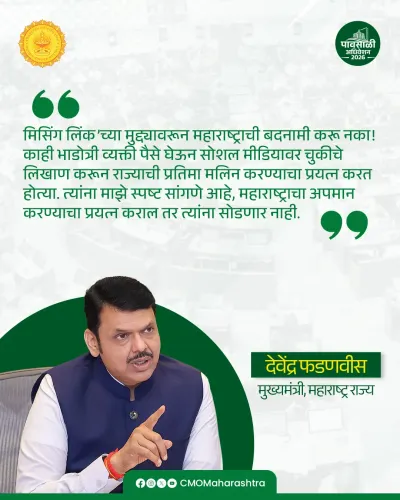
The Chief Minister's Office of Maharashtra on Wednesday, 1 July 2026 highlighted a successful anti-Naxal operation in the state, tagging Chief Minister Devendra Fadnavis in a post that carried the hashtags #NaxalFreeMaharashtra and #Maharashtra. The post, shared from the official CMO handle, signals the state government's continued push to eliminate Left Wing Extremism from Maharashtra's conflict-affected districts.
Context
The CMO's post — 'नक्सल विरोधी सफल कार्रवाई' (meaning 'successful anti-Naxal operation') — is a public acknowledgement of a security action carried out by forces operating under the Maharashtra government's direction. Chief Minister Devendra Fadnavis, a BJP leader serving multiple terms at the helm of Maharashtra, has consistently positioned anti-Naxal operations as a priority of his administration. The hashtag #NaxalFreeMaharashtra reflects a declared policy goal of the state government.
Policy Backdrop
Maharashtra is among several Indian states historically affected by Left Wing Extremism, particularly in its eastern districts bordering Chhattisgarh and Telangana. The Government of India launched Operation Green Hunt in 2009 as a coordinated offensive against Naxal groups, bringing together central and state security forces. Since then, successive Maharashtra governments have pursued a twin-track approach combining security operations with development outreach in tribal areas.
Maharashtra Police conducts counter-insurgency operations in coordination with central paramilitary forces, and the state has reported a gradual decline in Naxal-related incidents over the past decade. The broader national trajectory shows affected states steadily reclaiming territory through area domination exercises, surrender policies, and targeted operations.
Stakeholders and Impact
The primary stakeholders in Maharashtra's anti-Naxal campaign are the security forces — including Maharashtra Police and central armed police units — and the tribal communities living in districts where Naxal influence has historically been strongest. Successful operations are intended to restore the state's administrative reach in these areas, enabling delivery of welfare schemes and infrastructure.
For tribal residents, a reduction in Naxal presence can mean greater freedom of movement, access to government services, and relief from coercive taxation or recruitment by armed groups. However, rights groups have consistently called for parallel attention to land rights and livelihood issues that underlie the conflict.
What's Next
The state government is expected to release further details on the operation, including the districts involved and the outcome of the action. Observers will watch for official declarations on newly secured areas, as well as district-wise data on Naxal incidents — metrics the Maharashtra government has used in the past to demonstrate progress toward its #NaxalFreeMaharashtra goal. Any formal announcement from Chief Minister Fadnavis or the state Home Department is likely to follow in the coming days.
Point of View
Well within the current term — suggests the government is keen to build a record on internal security ahead of future electoral cycles. The absence of specific operational details, however, means independent verification of the claimed success remains pending.
NationPress
30 Sept 2026
Frequently Asked Questions
What is the latest anti-Naxal operation in Maharashtra in 2026?
On 1 July 2026, the Chief Minister's Office of Maharashtra announced a successful anti-Naxal operation, tagging CM Devendra Fadnavis. Specific details such as the district, casualties, and forces involved had not been officially released at the time of the post.
What is Devendra Fadnavis's role in Maharashtra's anti-Naxal policy?
Devendra Fadnavis, as Chief Minister of Maharashtra, oversees state security policy including counter-insurgency operations. He has publicly championed the goal of a 'Naxal-free Maharashtra' across his tenures in office.
Which districts in Maharashtra are affected by Naxal activity?
Naxal activity in Maharashtra has historically been concentrated in eastern districts bordering Chhattisgarh and Telangana, including Gadchiroli, Gondia, and Chandrapur. Maharashtra Police and central forces conduct regular operations in these areas.
What is Operation Green Hunt?
Operation Green Hunt was launched by the Government of India in 2009 as a coordinated security offensive against Left Wing Extremism, involving central paramilitary forces alongside state police in affected states including Maharashtra, Chhattisgarh, and Jharkhand.
What does #NaxalFreeMaharashtra mean?
'#NaxalFreeMaharashtra' is a hashtag used by the Maharashtra government to signal its policy goal of eliminating Naxal presence and influence from the state's conflict-affected districts through security operations and development programmes.