CM Fadnavis hails Cabinet move on women's reservation
Synopsis
Maharashtra CM Devendra Fadnavis on 28 November 2026 welcomed a Union Cabinet decision he said would ensure women's reservation. He credited PM Narendra Modi, tied the move to a more inclusive democracy and a developed India, and congratulated women across the country.
Key Takeaways
Maharashtra CM Devendra Fadnavis on 28 November 2026 welcomed a Union Cabinet decision he said had ensured women's reservation.
He credited Prime Minister Narendra Modi and said greater representation would make democracy more inclusive.
The Nari Shakti Vandan Adhiniyam, passed in September 2023, provides 33 percent reservation for women in the Lok Sabha and state assemblies.
The 73rd and 74th Constitutional Amendments of 1992 already reserved one-third of seats for women in panchayats and municipalities.
Implementation still depends on the next census and delimitation, after which states must amend assembly laws.
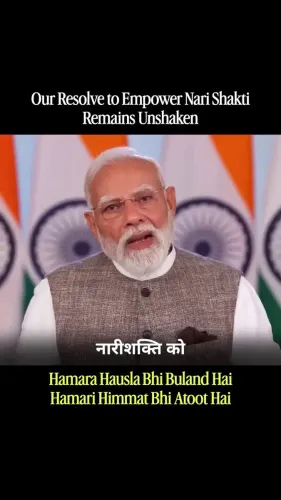
Maharashtra Chief Minister Devendra Fadnavis on Saturday, 28 November 2026, hailed a Union Cabinet decision that he said has ensured women's reservation under Prime Minister Narendra Modi. He called the step historic, arguing it would give the country's mothers and sisters greater political representation and make Indian democracy more inclusive.
In a post on X, Fadnavis said the Cabinet, acting under Modi's dooradarshi netritva (visionary leadership), had taken a historic decision to ensure women's reservation. He added that the resolve of a developed India would be strengthened only with women's growing participation, and offered heartfelt thanks to the Prime Minister along with congratulations to all mothers and sisters of the country.
He wrote that the move would give desh ki mataon-behenon (the nation's mothers and sisters) more space in politics. The post tagged Modi and carried the hashtags Maharashtra and WomenReservation.
Fadnavis links the quota to a developed India
The welcome was not a dry legal note. Fadnavis fused a salute to the Centre with a development pitch: greater women's participation, he said, would itself strengthen the pledge of a developed India. That framing treats a seat-reservation fight as a nation-building instrument, not only an electoral arithmetic tweak.
It also places Maharashtra's BJP leadership in lockstep with the Prime Minister on a demand that women aspirants and state legislatures have waited on for decades.
From 1992 panchayat seats to the 2023 law
India already reserved space for women at the grassroots. The 73rd and 74th Constitutional Amendments of 1992 introduced one-third reservation for women in panchayats and municipalities, creating a large pipeline of elected women in villages and cities.
Extending that principle to the Lok Sabha and state assemblies was a longer, harder climb. Successive governments since the 1990s tried. Parliament finally passed the Nari Shakti Vandan Adhiniyam in September 2023, a constitutional amendment providing 33 percent reservation for women in the Lok Sabha and state legislative assemblies. The ruling party has presented the measure alongside schemes such as Beti Bachao Beti Padhao, as part of a wider push on women's political and economic participation.
Census and delimitation still hold the seats
A law on the books is not the same as names on the ballot. Implementation of the 2023 amendment still hinges on the next census and a delimitation exercise. Only after that sequence can reserved constituencies be drawn, and states will then need to amend their own laws for assembly reservations.
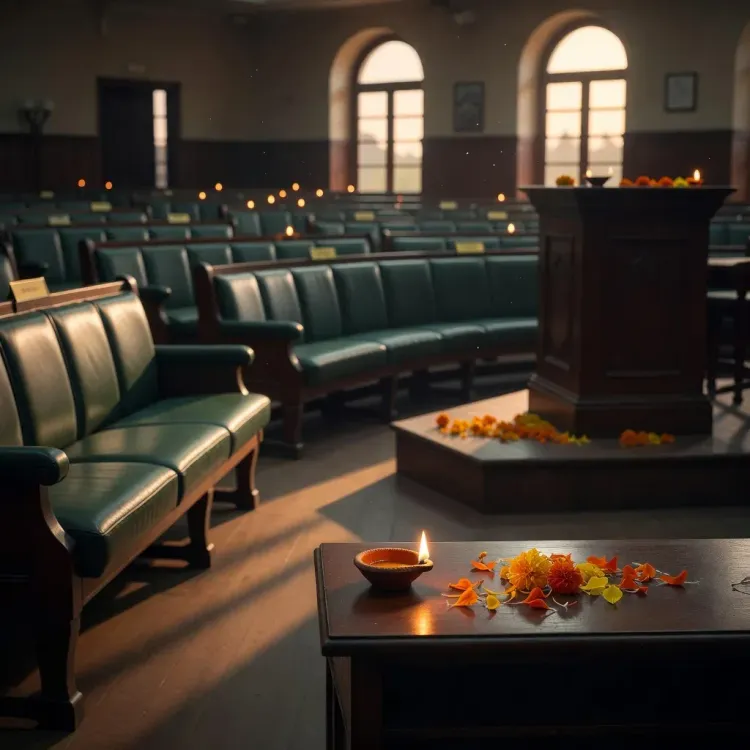
Until those maps are redrawn, the one-third quota in Parliament and assemblies remains a constitutional promise, not a floor reality. Fadnavis's Saturday message keeps the political applause loud in Mumbai. The benches stay unmarked until the maps move.
Point of View
He recasts a constitutional quota as a development instrument rather than a purely electoral arithmetic fight. The unresolved census-and-delimitation bottleneck remains the real test: until maps are redrawn, the welcome from Mumbai cannot convert into named constituencies. Watch whether state BJP units now press the Centre on the census timetable, because that clock, not the applause, will decide when women actually occupy a third of the benches.
NationPress
28 Nov 2026
Frequently Asked Questions
What did Devendra Fadnavis say about women's reservation?
On 28 November 2026 he welcomed a Union Cabinet decision that he said had ensured women's reservation under Prime Minister Narendra Modi's leadership, calling it historic and more inclusive for democracy.
What is the Nari Shakti Vandan Adhiniyam?
It is the constitutional amendment passed by Parliament in September 2023 that provides 33 percent reservation for women in the Lok Sabha and state legislative assemblies.
When will the 33 percent women quota in Lok Sabha come into force?
Implementation depends on the next census and a delimitation exercise, after which reserved constituencies can be drawn.
Did India already reserve seats for women in local bodies?
Yes. The 73rd and 74th Constitutional Amendments of 1992 introduced one-third reservation for women in panchayats and municipalities.
Will Maharashtra need a separate law for assembly reservation?
After delimitation, states will need to amend their own laws for assembly reservations.