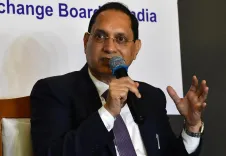
Union Minister Giriraj Singh hails women's reservation step
Synopsis
Union Textiles Minister Giriraj Singh on Saturday welcomed a Union Cabinet decision under Prime Minister Narendra Modi to ensure women's reservation. He said the move would open new leadership opportunities and strengthen women's role from policymaking to nation-building. The 2023 Nari Shakti Vandan Adhiniyam already provides one-third reservation in the Lok Sabha and assemblies, pending census and delimitation.
Key Takeaways
Union Textiles Minister Giriraj Singh on 28 November 2026 welcomed a Union Cabinet decision under PM Narendra Modi to ensure women's reservation.
Singh said strong representation of women is the foundation of a stronger democracy and of national progress.
He argued the decision would give women new leadership opportunities from policy-making to nation-building.
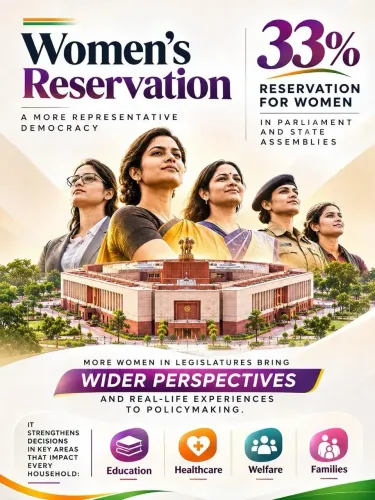
Parliament passed the Nari Shakti Vandan Adhiniyam in September 2023 , reserving one-third of Lok Sabha and assembly seats for women.
Implementation remains tied to the next census and a delimitation exercise.
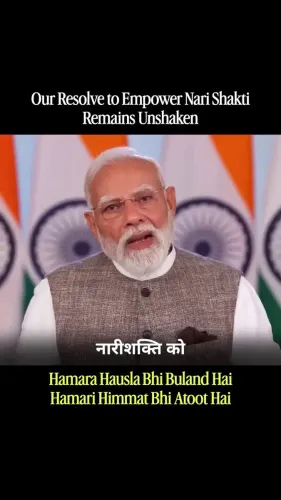
Strong representation of women is not a footnote to Indian democracy, Union Textiles Minister Giriraj Singh said on Saturday — it is the foundation of a stronger republic and of national progress. He heartily welcomed a Union Cabinet decision taken under Prime Minister Narendra Modi to ensure women's reservation. The senior BJP leader and Begusarai MP said the step would give the country's nari shakti new chances at leadership and would further strengthen their participation from policy-making to nation-building.
Singh's message, posted on X, framed the Cabinet move as an important stride towards women's empowerment. He offered what he called a hearty welcome to the decision taken 'in the direction of ensuring women's reservation' under Modi's leadership. The post did not spell out the operational fine print of that Cabinet meeting.
Singh's case for nari shakti in the House
The minister's pitch was blunt. Strong representation of nari shakti (women's power), he wrote, underpins both democratic strength and the nation's progress. The Cabinet decision, in his telling, would open leadership doors and pull more women into the chain that runs from drafting policy to building the country.
That is a message aimed as much at women political aspirants as at party organisations that still decide who gets a ticket. Reservation is not only a rights argument. It is a recruitment argument.
The 2023 Act that still has no seats on the map
Parliament had already passed the Nari Shakti Vandan Adhiniyam in September 2023, locking in one-third reservation for women in the Lok Sabha and in state legislative assemblies. Successive BJP governments have paired that legislative track with welfare schemes meant to raise women's public presence.
The law, however, does not magically redraw constituencies. Seats appear only after a census and a delimitation exercise. Until then, Cabinet language about ensuring reservation is political fuel for a reform that is enacted — and still not in force.
Census, delimitation and the unfinished one-third
The sequence to watch is stubbornly practical: census, then delimitation, then the first polls in which a third of the benches are reserved. State-level follow-up and how parties actually field women will decide whether 2023 becomes a turning point or a delayed promise.
Singh's welcome keeps the pressure on that pipeline. The real test is not another applause line. It is whether one-third of India's legislatures finally stop being a guarantee on paper and start being names on a ballot.
Point of View
Which means parties can claim credit now while the hard arithmetic of tickets and constituencies still lies ahead. For women aspirants, the gap between Cabinet applause and a reserved ballot is the real measure of whether this step is historic or merely hortatory.
NationPress
28 Nov 2026
Frequently Asked Questions
What did Giriraj Singh say about women's reservation?
Union Textiles Minister Giriraj Singh heartily welcomed a Union Cabinet decision under Prime Minister Narendra Modi aimed at ensuring women's reservation. He said it would open new leadership opportunities and strengthen women's participation from policymaking to nation-building.
What is the Nari Shakti Vandan Adhiniyam?
It is the 2023 law passed by Parliament that provides one-third reservation for women in the Lok Sabha and in state legislative assemblies. Its full effect is tied to a census and a delimitation exercise.
When will women's reservation in the Lok Sabha come into force?
The 2023 Act is designed to apply after the next census and a subsequent delimitation of constituencies. No seats are reserved until that process is complete.
Who is Giriraj Singh?
Giriraj Singh is the Union Minister of Textiles, a senior BJP leader and the Lok Sabha MP from Begusarai in Bihar.
How much reservation does the 2023 women's reservation law provide?
The Nari Shakti Vandan Adhiniyam reserves 33 percent, or one-third, of seats for women in the Lok Sabha and state legislative assemblies.