Piyush Goyal hails Cabinet decision on women's reservation
Synopsis
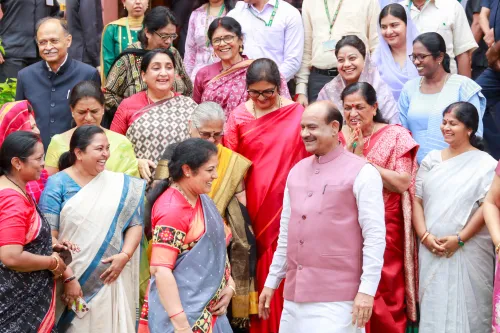
Union Commerce Minister Piyush Goyal on Saturday welcomed a Cabinet decision he said has ensured women's reservation, arguing it will expand mothers and sisters' political presence and every state's share. The 2023 Nari Shakti law already reserves one-third of Lok Sabha and assembly seats after census and delimitation.
Key Takeaways
Union Commerce and Industry Minister Piyush Goyal on Saturday welcomed a Cabinet decision he said has ensured women's reservation.
He said the step will raise the political representation of mothers and sisters and increase every state's share in a normal way.
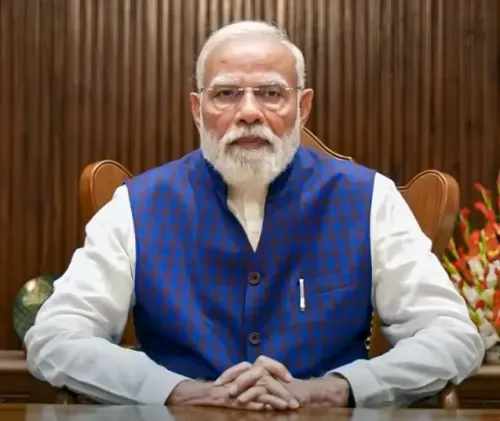
He linked the decision to Prime Minister Narendra Modi 's leadership and to the goal of a developed India.
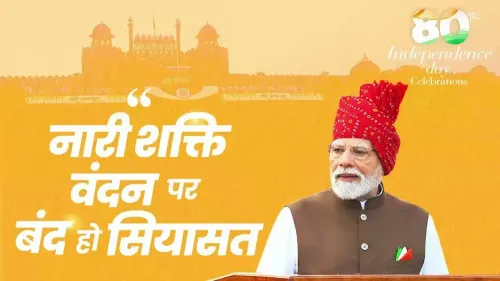
Parliament in September 2023 passed the Constitution (106th Amendment) Act, the Nari Shakti Vandan Adhiniyam , reserving one-third of Lok Sabha and assembly seats for women.
Publicly stated policy ties actual implementation to the next census and delimitation exercise.
Union Commerce and Industry Minister Piyush Goyal on Saturday, 28 November 2026, welcomed a Union Cabinet decision in New Delhi that, he said, has ensured women's reservation, calling it a historic call under Prime Minister Narendra Modi.
In a post on X, Goyal said the Cabinet under Modi's leadership had ensured women's reservation and offered his swagat evam abhinandan (welcome and congratulations) for the move. 'This will increase the representation of our mothers and sisters in politics and the share of all states of the country will increase in a normal way,' he wrote. That step, he added, would contribute in a big way to realising the resolve of a developed India.
The 2023 law that put 33 percent on the statute book
Parliament in September 2023 passed the Constitution (One Hundred and Sixth Amendment) Act, widely known as the Nari Shakti Vandan Adhiniyam. It reserves one-third of seats for women in the Lok Sabha and in every state legislative assembly.
That statute did not appear in a vacuum. The 73rd and 74th Constitutional Amendments of 1992-93 had already locked in one-third reservation for women in panchayats and municipalities. The 2023 Act extends the same principle from village halls to the national and state legislatures.
Why Goyal stressed every state's share
Goyal's line that the share of all states would rise in a 'normal way' tracks the design of the 2023 amendment. The quota is meant to apply after a census and a delimitation exercise redraw constituencies, so reserved seats are spread across states rather than cut from a frozen map. That is how the architecture is supposed to keep federal balance intact while lifting women's numbers in elected Houses.
Census and delimitation still set the clock
The seats do not appear on the next ballot by statement alone. Publicly stated policy since 2023 has tied implementation to the next delimitation, which itself waits on a census. Goyal's Saturday message frames the Cabinet as having ensured the quota. The operational timetable remains those two exercises.
For India's next cohort of women legislators, the argument is no longer whether the reservation exists on paper. The remaining question is how soon the map is redrawn so those seats can actually be fought.
Point of View
The government is keeping women's legislative representation in the live policy conversation rather than on a legal shelf. The federal note — that every state's share will rise in a normal way — is meant to pre-empt the charge that reservation will scramble existing state weight in the Lok Sabha. Until the map is redrawn, the politics of the quota will be about timing as much as principle.
NationPress
28 Nov 2026
Frequently Asked Questions
What did Piyush Goyal say about the Cabinet and women's reservation?
Union Commerce and Industry Minister Piyush Goyal said the Union Cabinet, under Prime Minister Narendra Modi, has ensured women's reservation. He called it a historic decision that will increase the representation of mothers and sisters in politics and raise every state's share in a normal way.
What is the Nari Shakti Vandan Adhiniyam?
It is the popular name for the Constitution (One Hundred and Sixth Amendment) Act, 2023. The law provides for reservation of one-third of seats for women in the Lok Sabha and in state legislative assemblies.
When will women's reservation in the Lok Sabha come into force?
Implementation is linked to the next census and the delimitation exercise that follows it. The 2023 Act does not bring the reserved seats into immediately subsequent elections on its own.
How much reservation does the 2023 amendment provide for women?
It provides 33 percent, or one-third, of seats for women in the Lok Sabha and in each state legislative assembly. A similar one-third quota has existed in panchayats and municipalities since the 73rd and 74th Amendments of 1992-93.
Who is Piyush Goyal?
Piyush Goyal is the Union Minister of Commerce and Industry. He is a senior BJP leader and the Leader of the House in the Rajya Sabha.