Women MPs Rally Behind Push for Nari Shakti Vandan Adhiniyam Amendment
Synopsis
As the government progresses towards introducing bills for women's reservation in legislative bodies, bipartisan support among female MPs highlights the initiative's potential for empowerment and inclusivity. This move could reshape India's political dynamics significantly.
Key Takeaways
Women empowerment: A significant focus of the proposed amendment.
Bipartisan support: Female MPs from different parties back the initiative.
Parliamentary increase: Potential rise in Lok Sabha seats to 816.
2011 Census data: Government may use this for implementation.
Majority threshold: New majority mark would be set at 409 seats.
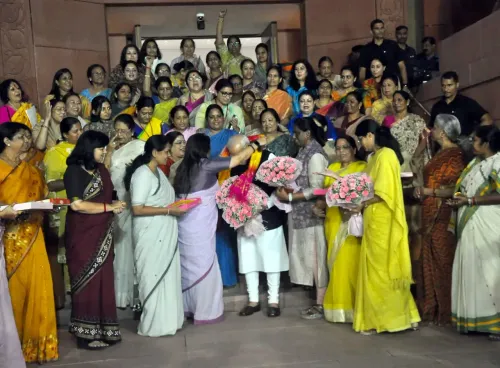
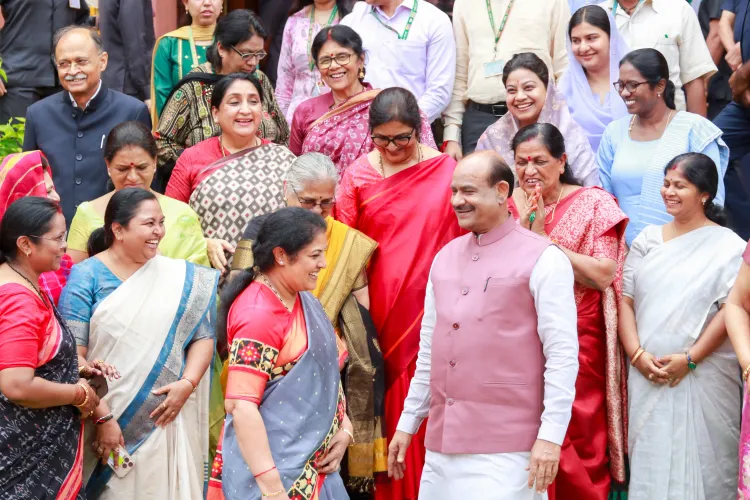
New Delhi, March 24 (NationPress) As the government prepares to unveil two significant bills in Parliament aimed at establishing one-third reservation for women in legislative assemblies, female MPs from various political parties have expressed their support for this initiative, emphasizing its importance for empowerment and inclusive development in India.
Reports indicate that to foster a broader political consensus for revising the Nari Shakti Vandan Adhiniyam, the administration is looking to separate the implementation of women's reservation from the ongoing delimitation process.
As part of this initiative, Union Home Minister Amit Shah engaged in discussions with leaders of several opposition parties not aligned with the Congress.
The legislative proposals entail modifications to the Women's Reservation Act, 2023, which previously tied the quota's implementation to the completion of the next Census and the subsequent delimitation of electoral constituencies.
Given the delays in conducting the Census, the government is now contemplating moving forward using data from the 2011 Census.
BJP MP Kamaljeet Sehrawat expressed her enthusiasm for the initiative, stating, "The Prime Minister has already articulated his vision regarding the Women's Reservation Bill and his commitment to women's empowerment. It's heartening to see that he prepares women before making decisions on their empowerment."
She further added, "Over the last decade, new policies have been introduced to enhance women's development, opening up new avenues for them. Today, women are ready to excel in every sphere."
Supporting this move, Shiv Sena (UBT) Rajya Sabha MP Priyanka Chaturvedi noted, "I welcome this. When the historic Bill was passed before the 2024 elections, women's reservation was promised until 2029. However, it was tied to the upcoming Census and delimitation process. Now, with this amendment based on the 2011 census, parliamentary seats will increase, granting women their long-overdue rights to representation, respect, and equality."
JD(U) MP Lovely Anand called this development a positive stride, saying, "It is commendable that this initiative is being pursued. We appreciate Prime Minister Narendra Modi for taking this significant step. Progress cannot be expected if women are confined to their homes."
Congress Rajya Sabha member Rajani Patil also endorsed the proposal, stating, "We welcome this move. Rajiv Gandhi was the pioneer of women's reservation, and his contributions cannot be forgotten."
Samajwadi Party MP Iqra Hassan remarked, "The Bill was passed a long time ago. It is crucial that this Bill transcends mere documentation and is implemented effectively. I am pleased to see the government revisiting this matter."
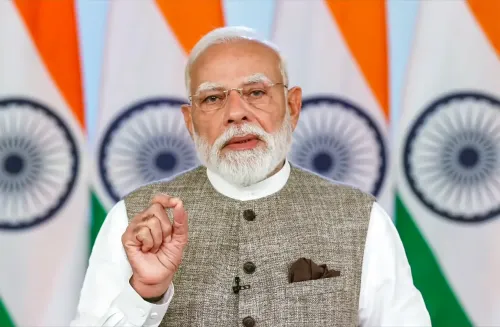
This proposed change is set to dramatically alter India's political landscape and reinforce Prime Minister Narendra Modi's emphasis on women-led development.
If actualized as envisioned, the number of seats in the Lok Sabha may increase by nearly 50%, growing from the current 543 to 816, with up to 273 additional seats earmarked for women.
This expansion aims to ensure that the new quota does not displace existing male members, facilitating a smoother transition towards a more inclusive parliamentary framework.
With this increase, the majority threshold in the Lok Sabha would also rise to 409 seats.
Although the ruling NDA does not presently hold sufficient numbers to pass the amendment independently, the government is eager to push for its approval during the ongoing Budget Session of Parliament, set to conclude on April 4.
Point of View
This initiative could lead to transformative changes in the legislative framework, fostering greater inclusivity and empowerment for women.
NationPress
23 Sept 2026
Frequently Asked Questions
What is the Nari Shakti Vandan Adhiniyam?
The Nari Shakti Vandan Adhiniyam is an initiative aimed at ensuring one-third reservation for women in legislative bodies across India.
Why is the women's reservation linked to the Census?
The previous amendments linked the implementation of women's reservation to the completion of the Census and subsequent delimitation of constituencies to ensure fair representation.
How many additional seats are proposed for women?
The proposed changes could increase parliamentary seats to 816, with up to 273 additional seats reserved specifically for women.
Who supports the amendment?
Female MPs from various political parties, including BJP, Shiv Sena, Congress, and JD(U), have expressed their support for the amendment.
When is the Budget Session of Parliament scheduled to conclude?
The ongoing Budget Session of Parliament is scheduled to conclude on April 4.