Piyush Goyal: Modi urges all parties on 33% women quota
Synopsis
On Independence Day 2026, PM Modi used the Red Fort address to appeal to all parties to back 33% women's reservation in Parliament and assemblies. Commerce Minister Piyush Goyal amplified the call. Full operationalisation of the 2023 Nari Shakti Vandan Adhiniyam still awaits a census and delimitation.
Key Takeaways
PM Narendra Modi appealed to all political parties from the Red Fort on 15 August 2026 to support 33% women's reservation in the Lok Sabha and state assemblies.
Commerce Minister Piyush Goyal shared the moment on X, describing it as an appeal made 'in the shadow of the tricolour.' The Nari Shakti Vandan Adhiniyam (2023) already enshrines the one-third reservation in the Constitution — the first such law to clear Parliament in India's history.
Actual implementation is blocked pending the next national census and a delimitation of constituencies.
The Women's Reservation Bill was first introduced in 1996 and took 27 years to become law.
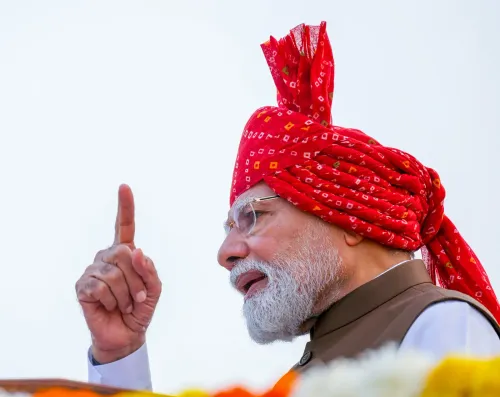
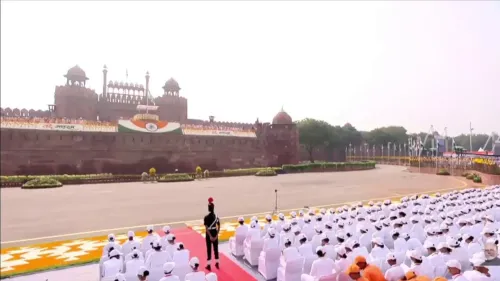
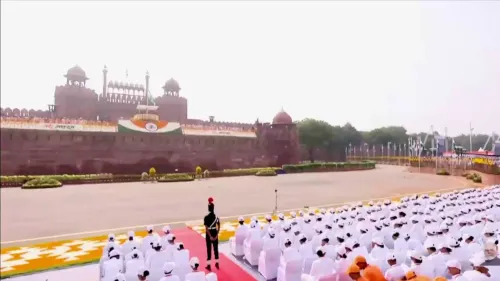
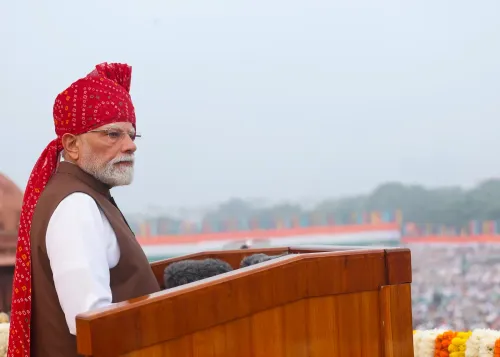
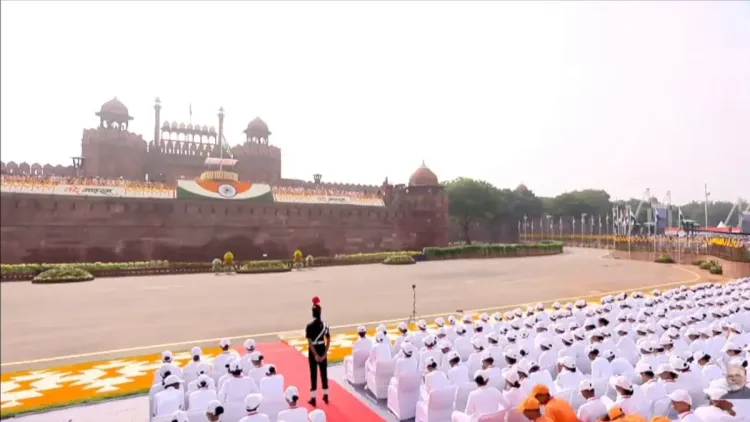
From the ramparts of the Red Fort, beneath the tricolour on Independence Day, 15 August 2026, Prime Minister Narendra Modi made a direct appeal to every political party in the country — join hands to make 33% reservation for women in the Lok Sabha and state legislative assemblies a living reality. Union Commerce and Industry Minister Piyush Goyal amplified the moment on X, calling it an appeal cast in the shadow of the tricolour itself.
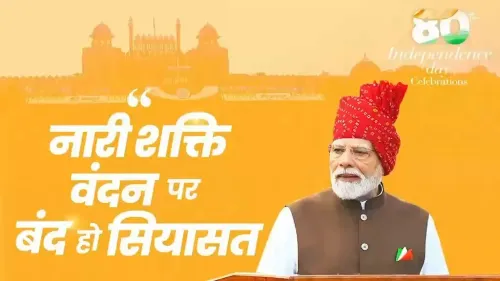
Goyal's post — written in Hindi — captured the Prime Minister's call: 'लाल किले की प्राचीर से तिरंगे की छाया में' ('From the ramparts of the Red Fort, in the shadow of the tricolour'), urging all parties to unite behind women's reservation in both houses of the legislature. The Independence Day address from the Red Fort is India's most-watched annual political platform, making the Prime Minister's direct appeal to the opposition carry unusual weight.
Three decades, one unfinished law
The road to this moment stretches back thirty years. A Women's Reservation Bill was first introduced in 1996, only to lapse with the dissolution of successive Lok Sabhas. The Rajya Sabha passed a version in 2010, but it never received a vote in the lower house before that term ended. The breakthrough finally came in 2023, when the Constitution (One Hundred and Sixth Amendment) Act — formally titled the Nari Shakti Vandan Adhiniyam — received presidential assent after passage in both houses. It was the first time in independent India's history that a women's reservation provision cleared Parliament at the national level.
The census lock: why the seats aren't reserved yet
Here is the catch that gives Modi's appeal its urgency. The Nari Shakti Vandan Adhiniyam links the actual operationalisation of reserved seats to two sequential steps: completion of the next national census and a subsequent delimitation of constituencies. Until both are done, the one-third reservation exists on paper but not on the ballot. That gap — between a law passed and a law felt — is precisely what the Prime Minister's cross-party appeal is designed to address.
Modi's Red Fort platform choice is deliberate. No speech from that rampart is purely ceremonial; it sets the political agenda for the year ahead. By framing women's reservation as a collective national duty rather than a ruling-party achievement, the Prime Minister is putting opposition leaders on the record — in public, on Independence Day — about where they stand on implementation.
Whether the census calendar and delimitation process accelerate in response will be the real measure of this moment.
Point of View
The government elevates the political cost of non-cooperation without legislating anything new. The real test is whether this public pressure accelerates the census and delimitation timelines that the 2023 law made the gatekeepers of actual implementation. Until those bureaucratic milestones are met, the appeal remains aspirational — and the government knows it.
NationPress
29 Sept 2026
Frequently Asked Questions
What is the 33% women's reservation in India?
The Constitution (One Hundred and Sixth Amendment) Act, 2023, also called the Nari Shakti Vandan Adhiniyam, reserves one-third of seats for women in the Lok Sabha and state legislative assemblies. It became law after receiving presidential assent in 2023, but takes effect only after the next census and delimitation of constituencies.
Why has women's reservation not been implemented yet?
The 2023 law ties operationalisation to two steps: completion of India's next national census and a subsequent delimitation exercise to redraw constituency boundaries. Neither has been completed, so the reserved seats have not yet come into effect.
What did PM Modi say about women's reservation on Independence Day 2026?
Speaking from the Red Fort on 15 August 2026, PM Modi appealed to all political parties to join in supporting 33% reservation for women in the Lok Sabha and state legislative assemblies. The exact wording of his address has not been independently verified.
What is the history of the Women's Reservation Bill in India?
The bill was first introduced in Parliament in 1996 but lapsed repeatedly. The Rajya Sabha passed a version in 2010, but it was never voted on in the Lok Sabha. The breakthrough came in 2023 with the passage of the Nari Shakti Vandan Adhiniyam in both houses.
Who is Piyush Goyal and why did he post about this?
Piyush Goyal is India's Union Minister of Commerce and Industry, a senior BJP leader, and Leader of the House in the Rajya Sabha. He shared PM Modi's Independence Day appeal on women's reservation on X, amplifying the message to his followers.