Nari Shakti Vandan Act: Modi urges all parties to fast-track 33% women quota
Synopsis
Modi used India's biggest political stage — the Red Fort on Independence Day — to press all parties for urgent action on the Nari Shakti Vandan Act. The 2023 law promises 33% women's reservation in Parliament and assemblies, but its enforcement is locked behind a delimitation exercise with no confirmed timeline. The gap between a passed law and an implemented one is the real story here.
Key Takeaways
PM Modi appealed from the Red Fort on 15 August 2025 for all parties to fast-track the Nari Shakti Vandan Act .
The Act, passed in 2023 , reserves 33 per cent of seats for women in the Lok Sabha and state legislative assemblies.
Implementation is tied to the next delimitation exercise , which has no confirmed timeline.
Modi framed women's reservation as a national priority, not a partisan issue, urging 'sincerity and urgency' from all parties.
Critics argue that linking implementation to delimitation could defer the reservation for years beyond the 2026 census.
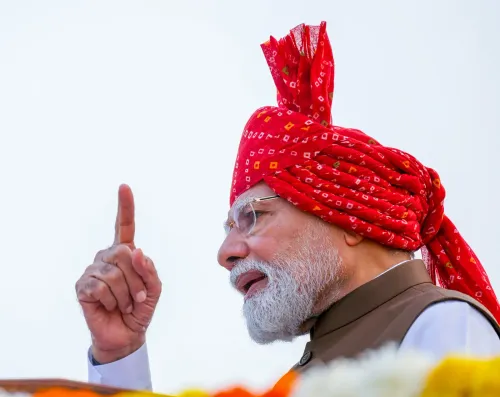
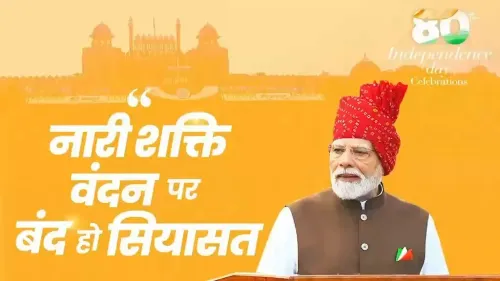
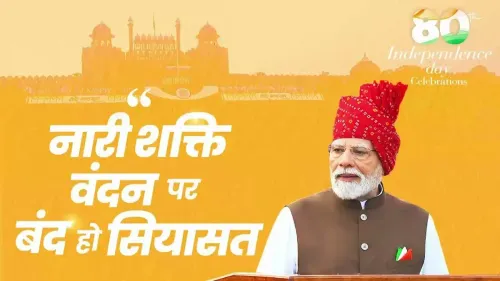
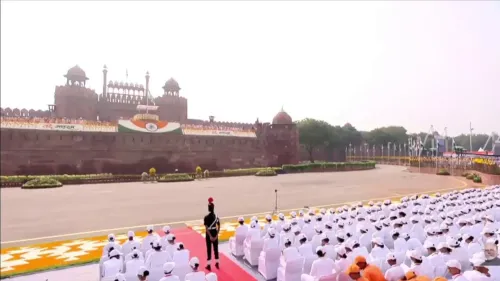
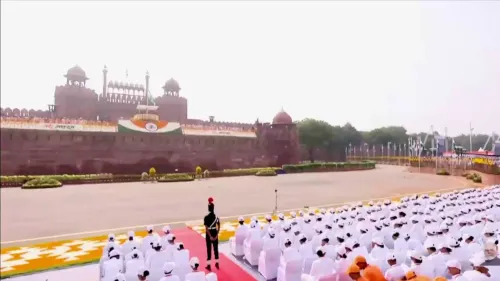
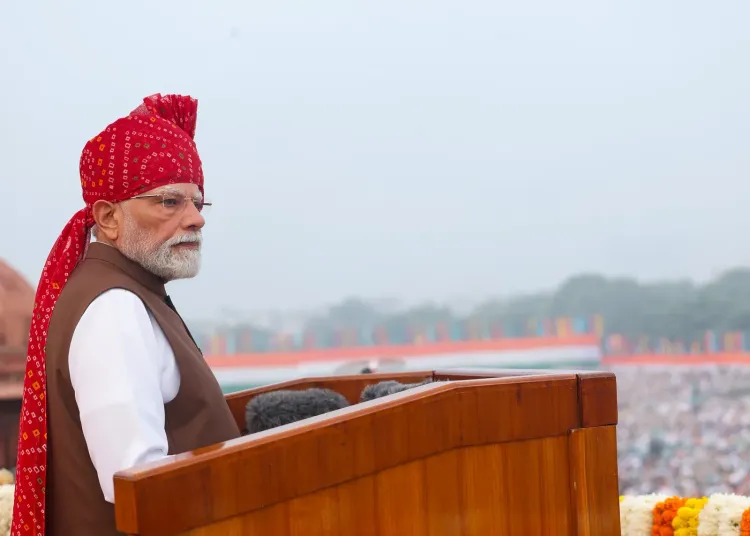
Prime Minister Narendra Modi on 15 August 2025 made a direct appeal from the ramparts of the Red Fort to all political parties to set aside differences and accelerate the implementation of the Nari Shakti Vandan Act, which guarantees 33 per cent reservation for women in the Lok Sabha and state legislative assemblies. The appeal, delivered during his Independence Day address, is the Prime Minister's most public and pointed push yet for translating the landmark law into electoral reality.
What Modi Said
'Let our mothers and sisters receive 33 per cent representation as soon as possible,' the Prime Minister said, stressing that the nation must move beyond taking political credit for women's advancement and instead make them genuine equal partners in building a developed India. He urged parties to champion the cause 'with sincerity and urgency,' framing women's reservation not as a partisan achievement but as a national obligation.
The Law and Its Implementation Gap
The Nari Shakti Vandan Act was passed by Parliament in 2023, reserving one-third of seats for women across both houses of Parliament and state assemblies. However, the law's actual enforcement is contingent on the completion of the next delimitation exercise — a process that redraws constituency boundaries and has no confirmed timeline. This gap between legislation and implementation has drawn criticism from women's rights groups and opposition parties alike, who argue that the reservation could remain on paper for years.
Why the Red Fort Appeal Matters
By choosing Independence Day — the most nationally watched political platform — to press the issue, Modi sought to generate cross-party political consensus and place the implementation question under public scrutiny. Notably, this is the second consecutive Independence Day on which the Prime Minister has highlighted women's empowerment as a centrepiece theme, signalling a sustained policy priority rather than a one-time rhetorical gesture.
The Prime Minister expressed confidence that once reservation is in effect, women would bring 'fresh energy, perspective and leadership' to public life, contributing to the vision of a Viksit Bharat by 2047. He described greater female participation in decision-making as essential to enriching democracy and accelerating development.
Political Context and Opposition Response
The Nari Shakti Vandan Act was passed with rare cross-party support in 2023, but the delimitation precondition has since become a point of contention. Critics argue that tying implementation to delimitation — itself a politically sensitive exercise — effectively defers the reservation indefinitely. Opposition parties have called on the government to delink implementation from delimitation, a demand the Centre has not yet addressed.
What Comes Next
No fresh timeline for delimitation was announced in the Independence Day address. Political observers note that the next delimitation is broadly expected after the 2026 census, which itself has faced delays. Until then, the constitutional promise of one-third representation for women in elected bodies remains in a legislative holding pattern — and Monday's appeal from the Red Fort, while symbolically significant, does not alter that structural reality.
Point of View
A step that would require political will rather than legislative effort. By urging 'all parties' to act, Modi diffuses accountability across the political spectrum while the Centre controls the delimitation calendar. Women's groups have been making this argument since 2023; the Independence Day spotlight does not resolve it. Until delimitation has a fixed date, the 33 per cent promise remains a constitutional aspiration with an indeterminate deadline.
NationPress
29 Sept 2026
Frequently Asked Questions
What is the Nari Shakti Vandan Act?
The Nari Shakti Vandan Act is a 2023 law that reserves 33 per cent of seats for women in the Lok Sabha and state legislative assemblies. It was passed by Parliament with broad cross-party support but its implementation is linked to the completion of the next delimitation exercise.
Why has the Nari Shakti Vandan Act not been implemented yet?
The law's enforcement is contingent on the next delimitation — a redrawing of constituency boundaries — which has no confirmed timeline and is broadly expected only after the 2026 census. Critics argue this effectively defers women's reservation indefinitely.
What did PM Modi say about the Act on Independence Day?
PM Modi urged all political parties from the Red Fort on 15 August 2025 to rise above differences and ensure the earliest possible implementation of the Act. He called for 33 per cent representation for women 'as soon as possible' and framed it as a national priority essential for inclusive growth.
Who is affected by the Nari Shakti Vandan Act?
The Act directly affects women candidates contesting elections to the Lok Sabha and state assemblies, one-third of whose seats would be reserved for women once implemented. It also affects voters, political parties, and the overall composition of India's legislative bodies.
What needs to happen before the reservation takes effect?
The delimitation exercise must be completed before the reservation can be enforced. Delimitation is expected after the 2026 census, which has itself faced delays, meaning implementation could be several years away unless the government takes additional legislative steps to expedite the process.