PM Modi urges all parties to back women's quota Bill on Independence Day
Synopsis
For the first time from the Red Fort in his third term, Modi directly named every political party and demanded they back the women's quota Bill — a law passed in 2023 that remains unoperationalised three years later. With the 2029 elections looming and a two-thirds majority still elusive, his appeal doubles as a political pressure campaign.
Key Takeaways
PM Modi appealed to all political parties on 15 August 2026 to support the Nari Shakti Vandan Adhiniyam from the Red Fort .
The law, originally enacted as the 106th Amendment Act, 2023 , provides 33% reservation for women in the Lok Sabha and state assemblies.
The Constitution (131st Amendment) Bill, 2026 was introduced to operationalise the quota ahead of the 2029 Lok Sabha elections .
Passage requires a constitutionally mandated two-thirds special majority in Parliament.
Opposition parties and regional groups have raised concerns over the Bill's linkage to a proposed delimitation exercise that could redraw seat boundaries.
Modi said the issue had been derailed by political disagreements for 40 years .
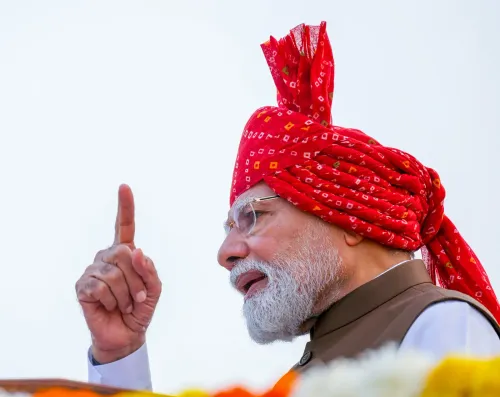
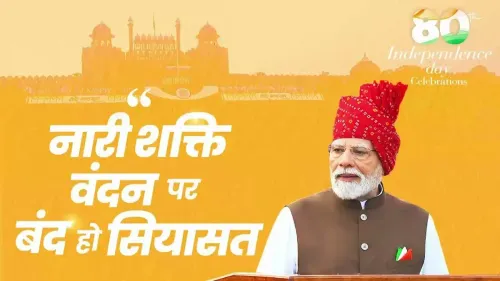
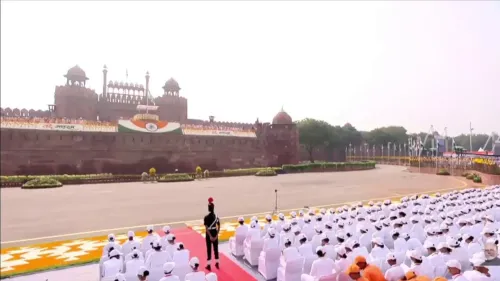
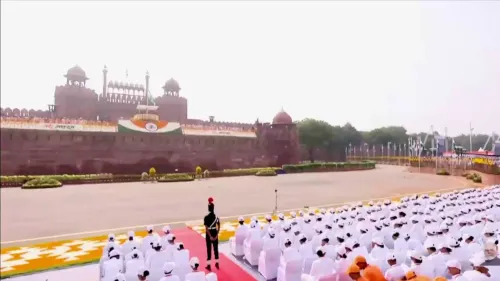
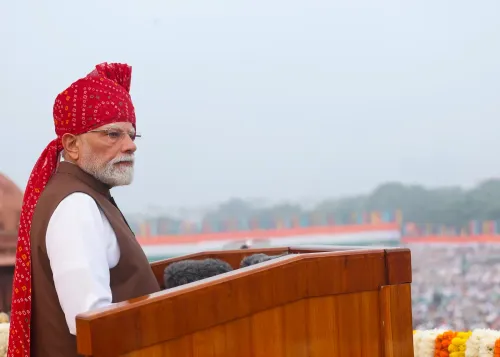
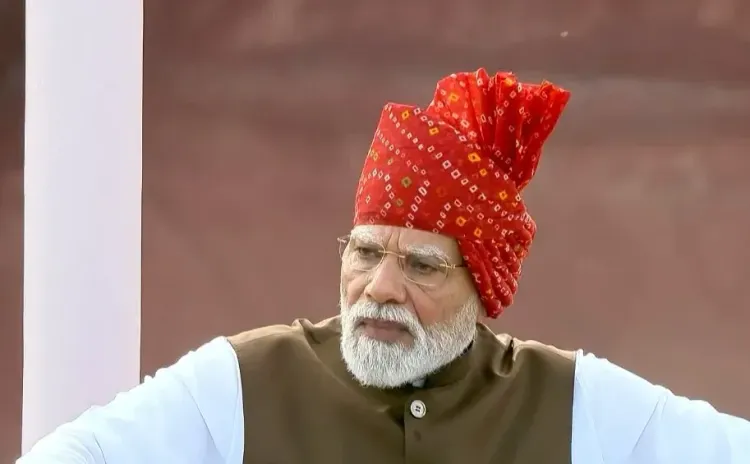
Prime Minister Narendra Modi on 15 August 2026 made a direct appeal to all political parties from the ramparts of the Red Fort to support the Nari Shakti Vandan Adhiniyam, pressing for swift implementation of 33% reservation for women in state legislatures and the Lok Sabha. Speaking during his 80th Independence Day address, Modi framed the demand as a matter of national urgency, calling on parties to set aside political differences and honour women's role in governance.
Modi's Appeal from the Red Fort
Invoking the symbolism of the Tricolour overhead, the Prime Minister urged every political party to move beyond factional interests. 'Today, from the ramparts of the Red Fort, standing under the shadow of the Tricolour, I earnestly appeal to and urge all political parties of our nation: Come forward and celebrate the strength and capability of our women,' Modi said. He specifically called for ensuring that 'mothers and sisters receive their due representation in the State Legislative Assemblies and the Lok Sabha so that they can actively contribute to shaping India's policies.'
Four Decades of a Deferred Promise
Modi acknowledged that the aspiration of women's political reservation had been repeatedly derailed over the past 40 years, describing it as a dream that had 'persistently fallen victim to political games and political battlegrounds.' Parliament had passed the Nari Shakti Vandan Adhiniyam — enacted as the 106th Amendment Act, 2023 — to enshrine this reservation, but operationalising it has remained contested. The Constitution (131st Amendment) Bill, 2026 was subsequently introduced to accelerate the law's implementation ahead of the 2029 Lok Sabha elections.
Women's Leadership at the Grassroots
The Prime Minister pointed to women's growing footprint in local governance as evidence of their readiness for greater political responsibility. 'Today in Panchayats, Municipalities, and Municipal Corporations, our women public representatives are guiding the nation in very large numbers, solving local challenges, and providing exceptionally capable and empowering leadership,' he said. This grassroots record, Modi argued, makes the case for expanding their presence to Parliament and state assemblies.
The Political and Constitutional Hurdles
The path to implementation is far from smooth. The enabling amendment requires a constitutionally mandated two-thirds special majority in Parliament — a threshold that demands cross-party consensus. Opposition parties and several regional groups have raised concerns about the Bill's linkage to a proposed delimitation exercise, which would redraw parliamentary seat boundaries based on population. Critics argue that delimitation could disadvantage states in southern and eastern India that have managed population growth better, altering the federal balance of representation.
What Comes Next
The political debate now centres on whether parties will separate the women's reservation question from the contentious delimitation framework, or insist on addressing both together. Modi's Independence Day appeal signals that the Centre intends to keep pressure on the opposition to back the Bill. Whether the required special majority can be assembled before the 2029 elections will depend on how the delimitation dispute is resolved — a question that could define the next phase of India's constitutional politics.
Point of View
He positions the Bharatiya Janata Party as the champion of women's representation while placing the burden of obstruction on the opposition — a framing that will sharpen as 2029 approaches. The real sticking point, however, is not women's reservation per se but the delimitation exercise attached to it: southern states fear losing seats to more populous northern states, and no prime ministerial appeal resolves that structural anxiety. Until the delimitation question is decoupled or settled, the two-thirds majority the Bill needs will remain out of reach — and the 40-year wait may well extend further.
NationPress
29 Sept 2026
Frequently Asked Questions
What is the Nari Shakti Vandan Adhiniyam?
The Nari Shakti Vandan Adhiniyam is a constitutional amendment enacted as the 106th Amendment Act in 2023 that reserves 33% of seats in the Lok Sabha and state legislative assemblies for women. While the law has been passed, its operationalisation requires a further enabling amendment and a delimitation exercise, neither of which has been completed.
What is the Constitution (131st Amendment) Bill, 2026?
It is a legislative measure introduced to fast-track the implementation of the 33% women's reservation guaranteed under the Nari Shakti Vandan Adhiniyam, with the aim of having the quota in place before the 2029 Lok Sabha elections. The Bill requires a two-thirds special majority in Parliament to pass.
Why has the women's reservation Bill faced delays for 40 years?
PM Modi himself acknowledged that the aspiration had 'persistently fallen victim to political games and political battlegrounds' for four decades. Successive governments failed to build the cross-party consensus needed, and the current version is further complicated by its linkage to a delimitation exercise that many opposition and regional parties oppose.
What is the controversy over delimitation?
The proposed delimitation exercise would redraw parliamentary seat boundaries based on population data, which critics — particularly from southern and eastern states — fear would reduce their representation in favour of more populous northern states. Opposition parties argue that linking delimitation to women's reservation complicates both issues and risks altering the federal balance.
When could the women's quota actually take effect?
The Constitution (131st Amendment) Bill, 2026 is designed to operationalise the quota before the 2029 Lok Sabha elections, but that timeline depends on securing a two-thirds majority in Parliament and resolving the delimitation dispute — neither of which is assured.