Rijiju urges all parties to fast-track women's 33% quota
Synopsis
Union Minister Kiren Rijiju, invoking Independence Day and the Red Fort, called on all political parties to urgently implement 33% women's reservation in Parliament and state assemblies under the Nari Shakti Vandan Adhiniyam passed in 2023.
Key Takeaways
Kiren Rijiju made a cross-party appeal on Independence Day, 15 August , for swift implementation of 33% women's reservation in legislative bodies.
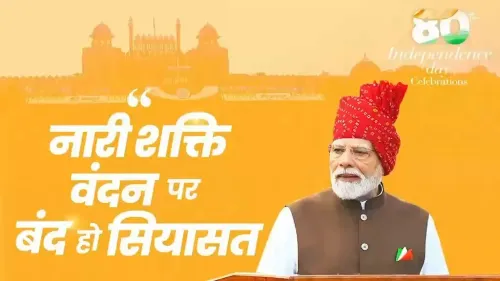
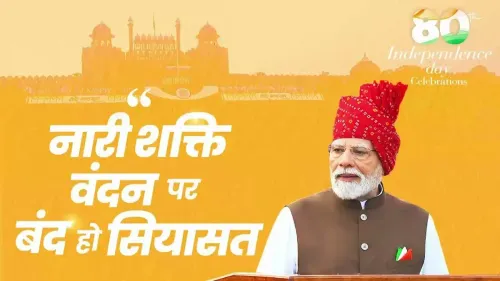
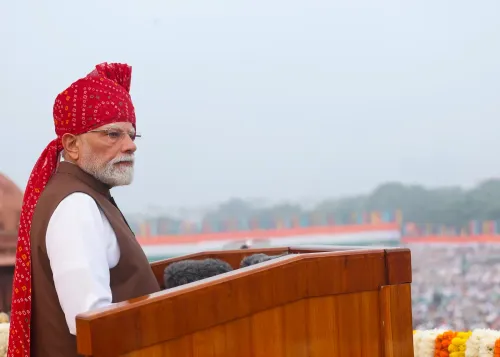
The appeal was made in the context of PM Narendra Modi 's Red Fort address, amplifying its symbolic weight.
Parliament passed the Nari Shakti Vandan Adhiniyam (128th Constitutional Amendment) in September 2023 , but implementation is contingent on the next census and delimitation exercise.
Previous women's reservation bills failed in 1996, 1998, 1999 and 2010 before the 2023 law was enacted.
The reservation applies to both the Lok Sabha and state legislative assemblies .
The pending census and delimitation process remains the key bottleneck before the law can take effect.
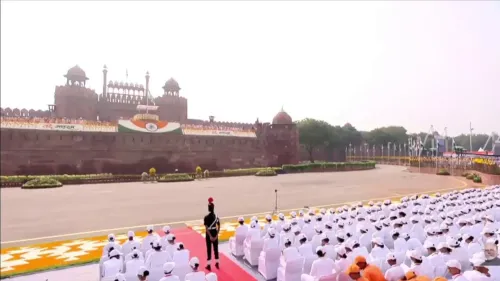
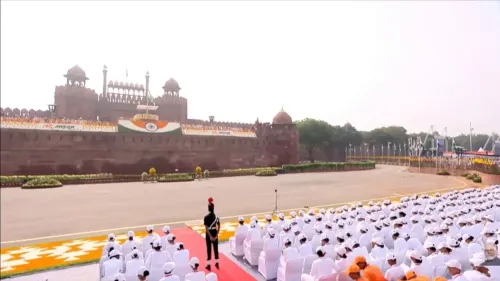
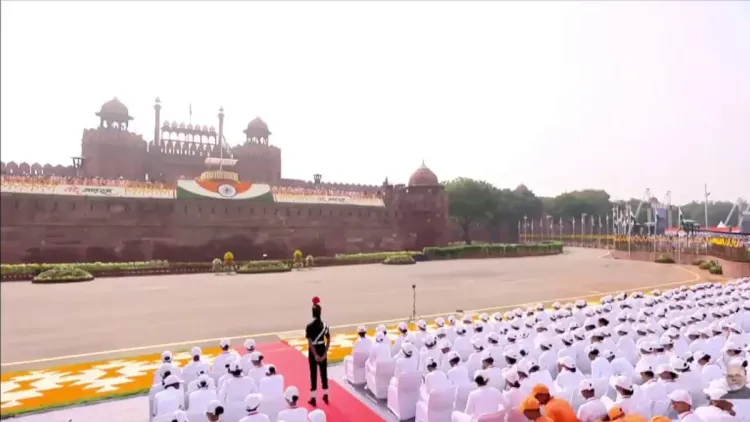
Standing beneath the tricolour at the ramparts of the Red Fort on Independence Day, 15 August, Union Parliamentary Affairs Minister Kiren Rijiju turned a moment of national celebration into a direct, cross-party appeal — urging every political party in India to move swiftly on delivering 33% reservation for women in the Lok Sabha and state assemblies.
Sharing Prime Minister Narendra Modi's Independence Day address, Rijiju posted in Hindi: 'देश के सभी राजनीतिक दलों से आज लाल किले की प्राचीर से तिरंगे की छाया में खड़े होकर, प्रार्थना कर रहा हूँ' — 'Standing today in the shadow of the tricolour at the ramparts of the Red Fort, I am praying to all political parties of the country.' His ask was unambiguous: become 'worshippers of women's strength,' honour women's dignity, and ensure that mothers and sisters receive their rightful 33% share of legislative seats at the earliest.
The law that exists — and the implementation that doesn't
Rijiju's appeal lands against a specific, consequential backdrop. In September 2023, Parliament passed the Nari Shakti Vandan Adhiniyam — the 128th Constitutional Amendment — reserving one-third of seats for women in the Lok Sabha and state legislative assemblies. It was a historic breakthrough after four failed attempts in 1996, 1998, 1999 and 2010.
But the law contains a critical condition: the reservation cannot take effect until after the next national census and a subsequent delimitation exercise redraw constituency boundaries. Both processes remain pending. That gap — between a law on the books and seats in the chamber — is precisely what Rijiju is flagging from the most symbolically charged address of the Indian calendar year.
Why the Red Fort stage matters
The choice of platform is deliberate. Prime Ministers have used the Red Fort's Independence Day address for decades to signal national-consensus priorities — from economic reform to public health. By invoking that same stage in his post, Rijiju frames women's political representation not as a partisan demand but as a matter of national resolve. The appeal to 'all political parties' is notable: it reaches across the aisle, implicitly acknowledging that census and delimitation timelines involve bureaucratic and legislative cooperation beyond any single party's control.
For women candidates across party lines, the message is a reminder that a constitutional guarantee already exists — what remains is the political will and administrative machinery to make it real. The kicker: a law without implementation is a promise without a date.
Point of View
' he signals that the BJP is willing to be judged on delivery, not just legislation, while simultaneously distributing accountability across the political spectrum. The appeal fits a broader pattern of the ruling dispensation using ceremonial occasions to reinforce its women's-empowerment brand ahead of electoral cycles. Whether the cross-party framing produces genuine momentum or remains aspirational rhetoric will depend entirely on when the census and delimitation exercise conclude.
NationPress
30 Sept 2026
Frequently Asked Questions
What is the Nari Shakti Vandan Adhiniyam?
The Nari Shakti Vandan Adhiniyam is the 128th Constitutional Amendment passed by Parliament in September 2023 that reserves 33% of seats for women in the Lok Sabha and state legislative assemblies. It cannot take effect until after the next national census and a delimitation exercise.
Why has the women's reservation law not been implemented yet?
The 2023 law explicitly requires a fresh national census and a subsequent delimitation of constituencies before the 33% reservation can be applied. Both processes are currently pending.
What did Kiren Rijiju say on Independence Day about women's reservation?
Standing in the context of PM Modi's Red Fort address, Rijiju urged all political parties to champion women's empowerment and ensure that mothers and sisters receive 33% representation in the Lok Sabha and state assemblies at the earliest.
How many times did the women's reservation bill fail before 2023?
Similar bills were introduced and failed to pass in 1996, 1998, 1999, and 2010 before the Nari Shakti Vandan Adhiniyam was finally enacted in September 2023.
Why is the Red Fort significant for this appeal?
The Red Fort is the historic site in Delhi from which the Prime Minister addresses the nation every Independence Day. Invoking that platform frames women's political representation as a matter of national consensus rather than partisan politics.