Minister Chirag Paswan welcomes delimitation drive
Synopsis
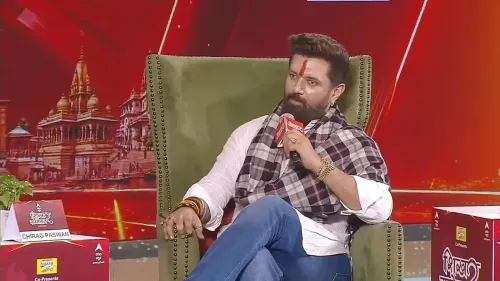
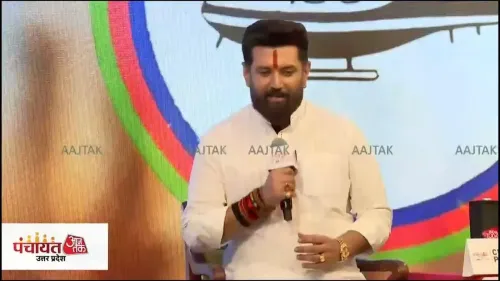
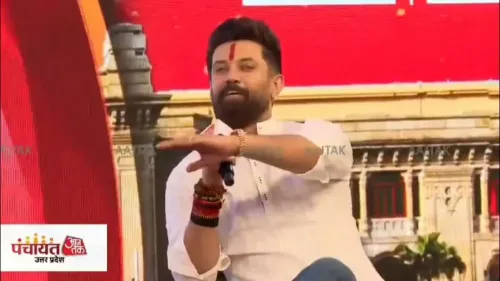
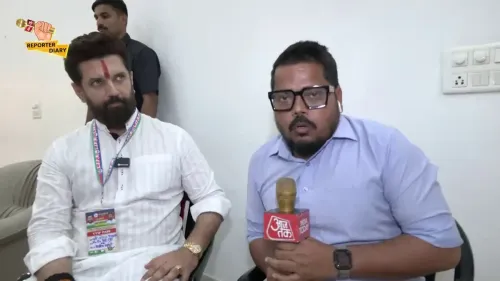
Union Food Processing Minister Chirag Paswan on Saturday welcomed delimitation under Prime Minister Narendra Modi's leadership, saying expanded seats in Bihar and other states would strengthen the public's voice. He also linked the exercise to the Nari Shakti Vandan Adhiniyam.
Key Takeaways
Union Food Processing Minister Chirag Paswan on 28 November 2026 welcomed delimitation under Prime Minister Narendra Modi 's leadership.
The Lok Janshakti Party (Ram Vilas) said expanded representation in all states, including Bihar , would carry the public's voice more strongly into the houses.
Paswan called the move an important step toward implementing the Nari Shakti Vandan Adhiniyam and increasing women's political participation.
The 84th Constitutional Amendment Act, 2001 froze seat readjustment until the first census after 2026 ; the last nationwide delimitation was in 2002 .
The women's reservation law of September 2023 is contingent on completion of delimitation.
Bihar just received a full-throated political endorsement of a nationwide redraw of constituencies. On Saturday, Union Food Processing Minister Chirag Paswan said he and the Lok Janshakti Party (Ram Vilas) heartily welcome, under Prime Minister Narendra Modi's leadership, the initiative to expand democratic representation through delimitation.
Writing in Hindi, Paswan argued that expanding public representation in every state, including Bihar, would give the people's voice a stronger path into the houses of legislature. He also framed the same exercise as a crucial step toward implementing the Nari Shakti Vandan Adhiniyam and lifting women's political participation.
His party, he said, hriday se swagat karti hai (heartily welcomes) the move. The post, dated 28 November 2026, names both the Prime Minister and the women's reservation law in the same breath as the seat reset.
Paswan ties a bigger Bihar voice to a new map
The minister's party is rooted in Bihar, a state long cited in debates over how seats should track population. Periodic delimitation in India has historically followed censuses so that constituencies realign with where people actually live. The last nationwide exercise was completed in 2002.
A constitutional freeze still shapes that calendar. The 84th Constitutional Amendment Act, 2001 barred readjustment of Lok Sabha and assembly seats until the first census after 2026. Paswan's Saturday message treats delimitation as the route to a louder public voice in the houses, including for voters in Bihar and every other state.
Why the women's reservation law is on the same page
Parliament enacted the Nari Shakti Vandan Adhiniyam in September 2023, reserving one-third of seats for women in the Lok Sabha and state assemblies. Those provisions were made contingent on the completion of delimitation. Linking the two is how the statute was written, not a side note.
Paswan's post therefore does two jobs at once. It backs expanded representation for voters in Bihar and other states. It also treats a fresh constituency map as the on-ramp for women who would occupy reserved seats once the law is triggered.
North-south arithmetic still shadows the redraw
Any post-freeze delimitation is expected to reopen a sensitive national argument: northern states that grew faster could gain seats relative to southern states that slowed their population growth. Paswan did not wade into that regional contest. He kept the frame national and democratic. All states. A louder voice. Greater women's participation.
On the known legal track, a Delimitation Commission would follow the census due after 2026, after which the parliamentary and state-level steps needed to bring the women's reservation provisions into force can begin. Paswan's intervention is a political blessing from a Bihar-based Union minister, not the notification of that commission.
The map still has to be drawn. Bihar's NDA ally has already planted its flag.
Point of View
He uses a women's-representation frame that the 2023 statute itself requires, because the quota cannot roll out until a new map exists. The 2001 freeze was designed to wait for a census after 2026; this statement treats that redraw as the democratic next step even as the Delimitation Commission still has to be constituted. Other high-growth NDA states will now be watched for whether they echo the same pairing of more seats and women's quota.
NationPress
28 Nov 2026
Frequently Asked Questions
What did Chirag Paswan say about delimitation?
Union Food Processing Minister Chirag Paswan said he and the Lok Janshakti Party (Ram Vilas) heartily welcome the initiative to expand democratic representation through delimitation under Prime Minister Narendra Modi's leadership. He said the expansion, including in Bihar, would take the public's voice more strongly into legislatures and help implement the Nari Shakti Vandan Adhiniyam.
What is the Nari Shakti Vandan Adhiniyam?
It is the 2023 law that reserves one-third of seats for women in the Lok Sabha and state assemblies. Its provisions were made contingent on the completion of delimitation.
Why is delimitation frozen in India?
The 84th Constitutional Amendment Act of 2001 froze the readjustment of Lok Sabha and assembly seats until the first census after 2026. The last nationwide delimitation exercise was completed in 2002.
How is women's reservation linked to delimitation?
The Nari Shakti Vandan Adhiniyam takes effect only after delimitation is completed, because reserved seats have to be drawn on a fresh constituency map. Paswan described the delimitation initiative as an important step toward that implementation.
Who is Chirag Paswan?
He is the Union Minister of Food Processing Industries and the national president of the Lok Janshakti Party (Ram Vilas). He issued the Saturday statement welcoming delimitation and linking it to Bihar and to women's political participation.