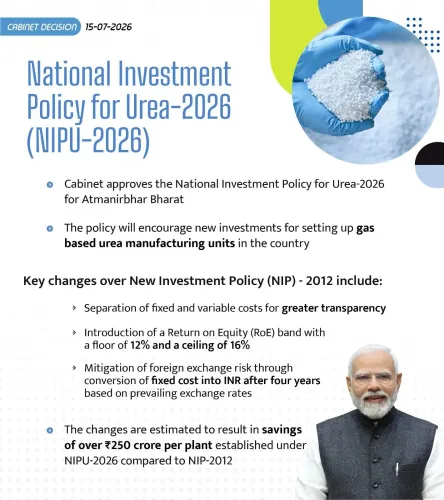
Shekhawat: six urea plants cleared under NIPU-2026
Synopsis
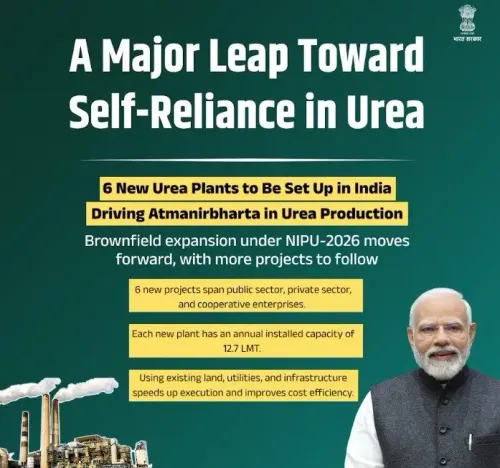
Gajendra Singh Shekhawat said brownfield urea expansion under NIPU-2026 would add six plants of 12.7 LMT each via public, private and cooperative partnership, calling it a shield for farmers and a step toward Atmanirbhar Bharat.
Key Takeaways
Union Culture and Tourism Minister Gajendra Singh Shekhawat on 28 November 2026 said brownfield urea expansion had been approved under NIPU-2026.
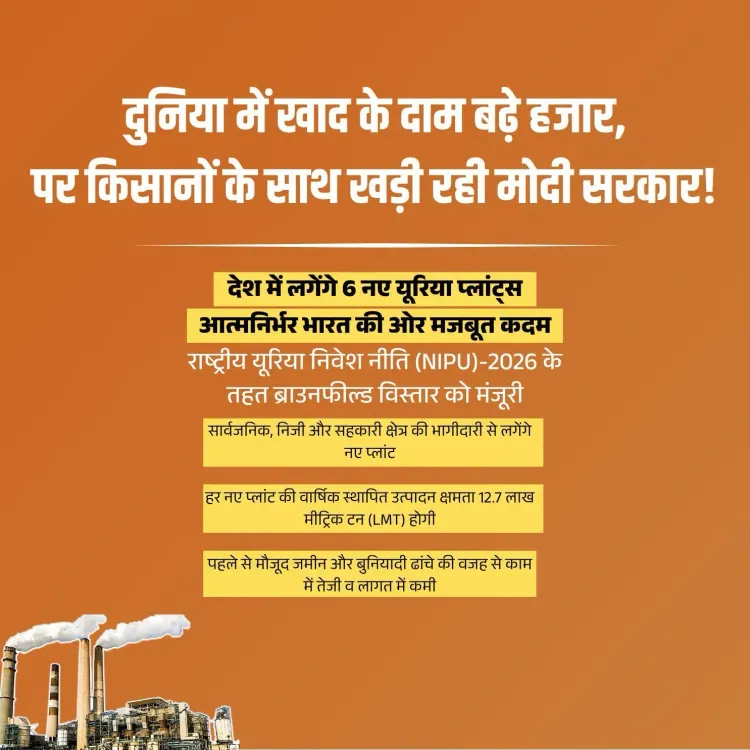
He said six new urea plants would be set up through public, private and cooperative partnership.
Each plant would have an annual capacity of 12.7 lakh metric tonnes (LMT), as per the post.
Shekhawat framed the move as a shield for farmers and a step toward Atmanirbhar Bharat.
India has historically imported over 30 to 40 percent of its urea; the 2015 New Urea Policy and 2020 Atmanirbhar Bharat drive sit in the same lineage.
The post did not name plant locations or commissioning timelines.
Union Culture and Tourism Minister Gajendra Singh Shekhawat on 28 November 2026 framed New Delhi's latest fertiliser push as a shield for India's farmers even amid a global crisis. In a post on X, the senior BJP leader and Lok Sabha MP from Jodhpur said the Union government had approved brownfield expansion under the National Urea Investment Policy (NIPU)-2026 and called it a stride toward Atmanirbhar Bharat.
Shekhawat wrote that even in a global crisis the government had become annadata ki dhaal (a shield for the farmer). By clearing brownfield expansion under NIPU-2026, he said, New Delhi had taken a big step toward self-reliant India. Six new urea plants would come up through a partnership of the public, private and cooperative sectors, each with an annual capacity of 12.7 lakh metric tonnes (LMT). That, he added, reflected Prime Minister Narendra Modi's visionary thinking and dedication to farmers.
Six plants at 12.7 LMT and a three-sector mix
The numbers in the post are stark. Six plants. Each rated at 12.7 LMT a year. Shekhawat located them in a public-private-cooperative mix rather than a single-sector revival. He tagged the message #NewUreaPlants and #AtmanirbharKisan.
Locations, sponsors and commissioning dates were not named. Cabinet or Department of Fertilizers notifications would typically lock those details. Until then, the claim is a policy signal, not a plant-by-plant map.
From the 2015 New Urea Policy to Atmanirbhar Bharat
India has spent years trying to shrink a urea import habit that has historically covered more than 30 to 40 percent of annual requirement. The New Urea Policy notified in 2015 offered incentives for higher domestic output and for bringing closed units back. Atmanirbhar Bharat, launched in 2020, later folded fertilisers into a wider self-reliance drive.
Successive governments have mixed public-sector revival, private capital and cooperative participation to add plants. Shekhawat's post presents NIPU-2026 as the next frame for brownfield work — expanding existing sites rather than raising greenfield complexes on empty land — and ties it to the farmer as annadata.
Why urea still sits at the centre of farm politics
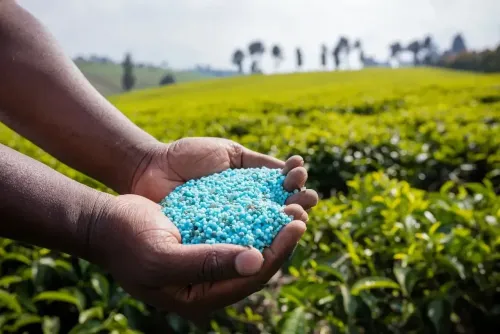
Urea is the workhorse nitrogen fertiliser on Indian fields. When global prices spike or shipping seizes up, the subsidy bill and farm-gate supply both come under strain. That is the global-crisis backdrop Shekhawat invoked: keep domestic molecules flowing so the cultivator is not left exposed.
Whether six plants at 12.7 LMT each move the import needle will depend on gas feedstock, timelines and actual commissioning — none of which the post specified. The next concrete test is an order that names sites and dates. Bags in the mandi, not hashtags, will decide if the shield holds.
Point of View
Not a one-day slogan. Shekhawat's post slots NIPU-2026 into the arc that runs from the 2015 New Urea Policy through the 2020 Atmanirbhar Bharat push, with brownfield capacity as the chosen instrument. The public-private-cooperative mix is the familiar financing template for capital-heavy urea assets. What the post does not yet do is convert that template into named sites, gas contracts and a commissioning clock — the only metrics that change farm-gate reality.
NationPress
28 Nov 2026
Frequently Asked Questions
What is NIPU-2026 according to Gajendra Singh Shekhawat?
Shekhawat described NIPU-2026 as the National Urea Investment Policy under which brownfield expansion has been approved. He said it would enable six new urea plants through public, private and cooperative partnership.
How much urea would each new plant produce?
Each plant would have an annual capacity of 12.7 lakh metric tonnes (LMT), according to Shekhawat's post. He said six such plants are planned.
What is brownfield expansion in urea manufacturing?
Brownfield expansion means adding capacity at existing industrial sites rather than building entirely new complexes on unused land. Shekhawat said the NIPU-2026 approval covers that route.
Why is India expanding domestic urea capacity?
India has long imported more than 30 to 40 percent of its annual urea requirement. Successive governments have tried to cut that dependence so farmers are less exposed to global price and supply shocks.
Who is Gajendra Singh Shekhawat?
He is the Union Culture and Tourism Minister, a senior BJP leader and the Lok Sabha MP from Jodhpur, Rajasthan. He posted the urea-policy message on 28 November 2026.