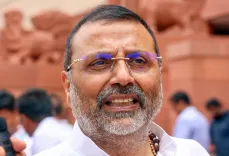
Gujarat CM Patel hails six new urea plants under Modi
Synopsis
Gujarat CM Bhupendra Patel hailed approval of six new urea plants under NIPU-2026, citing a ₹54,000 crore outlay. He said the move would boost domestic capacity, cut imports and deliver timely fertilizer to farmers, thanking PM Narendra Modi.
Key Takeaways
Gujarat Chief Minister Bhupendra Patel on 28 November 2026 hailed new urea capacity as a historic step toward fertilizer self-reliance.
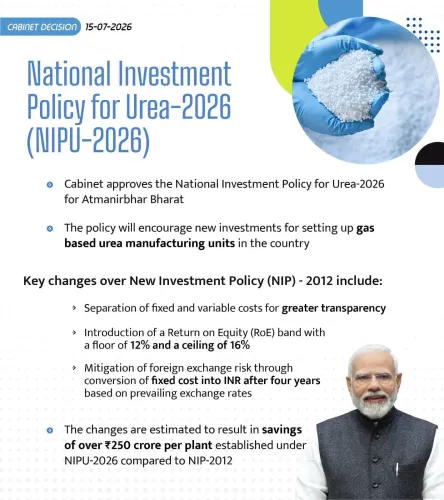
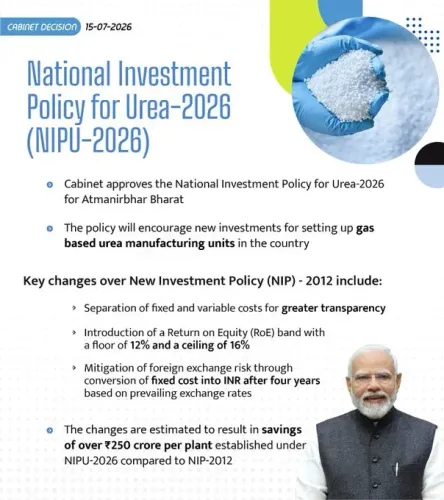
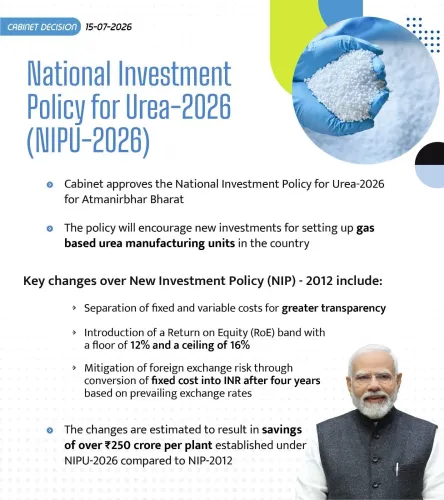
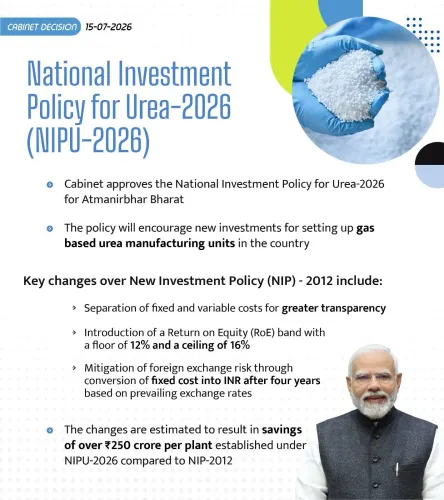
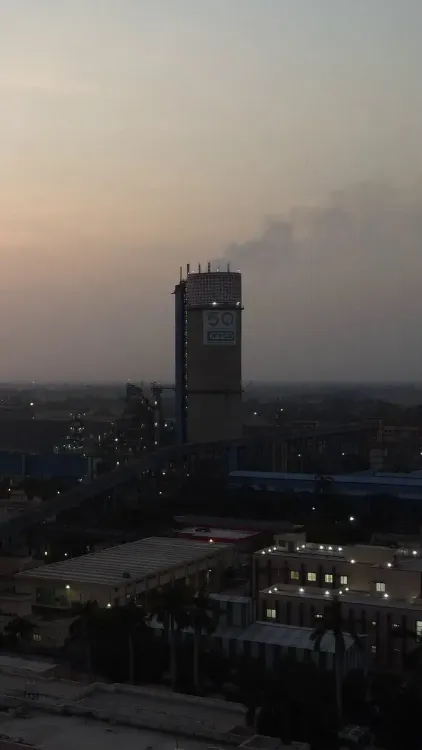
He said that under NIPU-2026 , six new urea plants were approved at a cost of ₹54,000 crore .
Patel argued the plants would boost domestic production, cut imports and ensure timely, affordable fertilizer for crores of farmers.
He thanked Prime Minister Narendra Modi for strengthening farmer welfare and Atmanirbhar Bharat .
India has long imported roughly 30 to 40 percent of its urea; a 2015 policy revived five closed units at Gorakhpur, Sindri, Barauni, Talcher and Ramagundam.
Gujarat Chief Minister Bhupendra Patel on Saturday called the approval of six new urea plants a historic step toward fertilizer self-reliance, arguing that crores of Indian farmers would get timely, affordable supply. He credited Prime Minister Narendra Modi's leadership in a post on X on 28 November 2026.
Patel's NIPU-2026 pitch: six plants, ₹54,000 crore
In Hindi on X, Patel said India is moving toward self-reliance in fertilizer production under Modi's leadership. Under what he termed NIPU-2026, he wrote, approval of six new urea plants at a cost of ₹54,000 crore would greatly strengthen domestic production capacity.
He added that import dependence would fall and that crores of annadata (farmers) would receive fertilizer on time and at affordable rates. Offering हार्दिक आभार (heartfelt gratitude), he thanked the Prime Minister for a decision he said strengthens farmer welfare and the pledge of Atmanirbhar Bharat (self-reliant India).
The 30 to 40 percent import hole India still lives with
India remains one of the world's largest urea consumers. For years it has still imported roughly 30 to 40 percent of what its farms burn through each season. Global price spikes land on the subsidy bill and, when supply tightens, on the farmer's calendar.
That is why capacity has been a running project, not a one-day announcement. In 2015 the Union Cabinet approved the New Urea Policy and the revival of five closed units at Gorakhpur, Sindri, Barauni, Talcher and Ramagundam. Patel's post casts the latest approvals as the next chapter of that Atmanirbhar manufacturing drive.
From Cabinet paper to bags in the mandi
The cause-and-effect Patel sketched is blunt: more plants, less import risk, fertilizer in the field when sowing windows open. For Gujarat's farm economy, urea is not an industrial talking point. It is a seasonal input that decides yields.
Execution will now do the talking — financial closure, construction, feedstock linkages, subsidy design, and commissioning. Until then, the political claim is capacity on paper. Patel, however, was clear: he sees the approval as a direct win for farmer welfare and for Atmanirbhar Kisan.
Self-reliance in urea will be measured not by the announcement, but by when the plants run and the bags reach the farm gate.
Point of View
Giving a state CM's endorsement to a national manufacturing bet. The politics are straightforward: import dependence is a vulnerability, domestic urea is sold as food security. The policy test remains commissioning, feedstock and subsidy, not the headline number.
NationPress
28 Nov 2026
Frequently Asked Questions
What did Gujarat CM Bhupendra Patel say about new urea plants?
On 28 November 2026 he said India is taking a historic step toward self-reliance in fertilizer production. He cited approval of six new urea plants under NIPU-2026 at a cost of ₹54,000 crore and thanked PM Narendra Modi.
What is NIPU-2026 according to Bhupendra Patel?
In his post, Patel referred to NIPU-2026 as the framework under which six new urea plants were approved at ₹54,000 crore. Those scheme details are reported as he stated them, not as independently established record.
Why does India still import urea?
India is among the world's largest urea consumers but has long imported about 30 to 40 percent of its needs, exposing farmers to global price swings and costing foreign exchange.
What was the 2015 New Urea Policy?
In 2015 the Union Cabinet approved the New Urea Policy and the revival of five closed urea units at Gorakhpur, Sindri, Barauni, Talcher and Ramagundam to expand domestic capacity.
How will new urea plants help farmers, as per Patel?
Patel said higher domestic output would cut import dependence and make fertilizer available on time and at affordable rates for crores of farmers.