CM Fadnavis Hails India's IPhO 2026 Gold Sweep, World No. 1 Rank
Synopsis
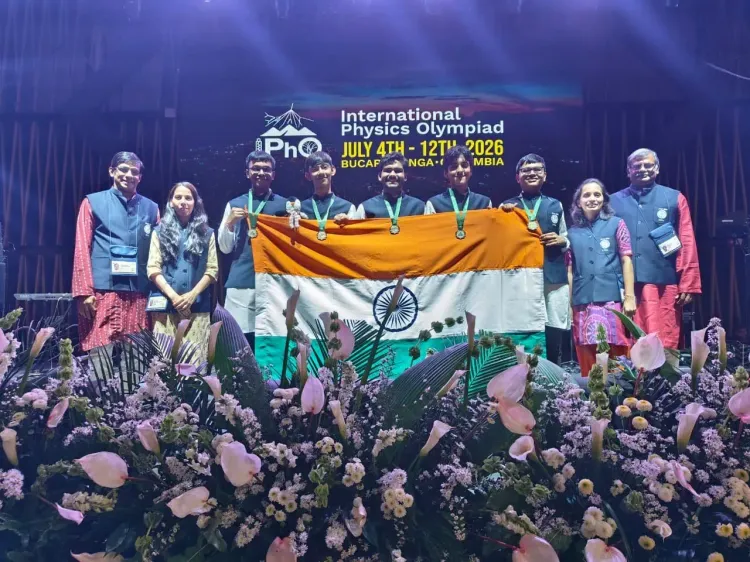
Maharashtra Chief Minister Devendra Fadnavis congratulated India's five-member team for winning all 5 Gold Medals at the 56th International Physics Olympiad 2026 and jointly claiming the World No. 1 rank, with special praise for Maharashtra students Kanishk Jain of Pune and Shresth Suraiya of Mumbai.
Key Takeaways
India won 5 Gold Medals at the 56th International Physics Olympiad (IPhO) 2026 , jointly securing the World No.
The five-member Indian team comprised Kanishk Jain , Riddhesh Anant Bendale , Rishit Garg , Shresth Suraiya , and Svarit Joshi .
Maharashtra CM Devendra Fadnavis offered special recognition to Kanishk Jain (Pune) and Shresth Suraiya (Mumbai) as the state's contributors to the achievement.
India's olympiad training is anchored by the Homi Bhabha Centre for Science Education (HBCSE) under TIFR.
The achievement aligns with the goals of NEP 2020 and the INSPIRE scheme to strengthen STEM talent at the school level.
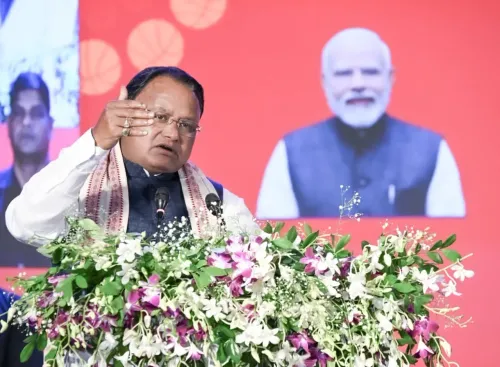
Maharashtra Chief Minister Devendra Fadnavis on Monday, 13 July 2026, congratulated India's five-member physics team for winning 5 Gold Medals at the 56th International Physics Olympiad (IPhO) 2026 and jointly claiming the World No. 1 rank — calling it a 'proud moment' for young India.
Context
The Indian contingent — Kanishk Jain, Riddhesh Anant Bendale, Rishit Garg, Shresth Suraiya, and Svarit Joshi — returned with a clean sweep of gold medals, a performance Fadnavis described as a 'historic achievement.' The Chief Minister offered a 'special word of appreciation' for Kanishk, who hails from Pune, and Shresth, from Mumbai, recognising them as 'Maharashtra's brilliant minds contributing to this outstanding achievement.'
The International Physics Olympiad, established in 1967, is an annual global competition for pre-university students and is widely regarded as the most prestigious school-level physics contest in the world. India's joint World No. 1 finish marks one of its strongest-ever performances at the event.
Policy Backdrop
India's olympiad pipeline is anchored by the Homi Bhabha Centre for Science Education (HBCSE), a TIFR institute that runs the National Olympiad Programme and conducts the intensive residential training camps that prepare students for international competitions. The Centre identifies talent through a multi-stage national selection process before the final team is chosen.
At the policy level, the National Education Policy 2020 (NEP 2020) explicitly prioritises STEM foundations and research-oriented learning at the school stage. The INSPIRE scheme, launched by the Department of Science and Technology (DST) in 2008, complements this by offering scholarships and mentorship to retain young talent in basic sciences. India's consistent olympiad performances are seen by successive governments as validation of this broader ecosystem-building effort.
Stakeholders and Impact
For the five medal-winners, the achievement opens pathways into India's premier research institutions and international universities. Science educators and olympiad coaches across the country regard such results as both a recruitment tool — drawing more school students into competitive science — and a signal to policymakers that investment in gifted education yields measurable returns.
For Maharashtra, the spotlight on Pune and Mumbai students reinforces the state's reputation as a hub of scientific and educational excellence. Chief Minister Fadnavis framed the success through the lens of 'Yuva Shakti' (youth power), connecting it to a wider national narrative around young Indians driving innovation and research.
What's Next
Attention will now turn to how medal-winners are integrated into India's research pipeline — whether through fast-tracked admissions, research fellowships, or mentorship under existing DST programmes. The rollout of accelerated and gifted-education provisions under NEP 2020 is expected to shape how such talent is nurtured in the coming years.
India's performance at IPhO 2027 will be an early indicator of whether this year's result reflects a sustained structural improvement in the country's olympiad training ecosystem or a singular peak.
Point of View
Flagging the Maharashtra connection is deliberate state-level branding: positioning Mumbai and Pune as nurseries of national scientific achievement ahead of what is likely to be a competitive state budget and education policy cycle. The framing of results through 'Yuva Shakti' also signals a continued political effort to associate the BJP-led dispensation with aspirational, youth-forward narratives. Whether the medal haul translates into durable research careers for these students will be the longer test of the ecosystem's depth.
NationPress
13 Jul 2026
Frequently Asked Questions
Did India win at the International Physics Olympiad 2026?
Yes. India's five-member team won all 5 Gold Medals at the 56th International Physics Olympiad (IPhO) 2026 and jointly secured the World No. 1 rank , according to Maharashtra CM Devendra Fadnavis's post on 13 July 2026.
Who were the members of India's IPhO 2026 team?
The Indian contingent at IPhO 2026 comprised Kanishk Jain , Riddhesh Anant Bendale , Rishit Garg , Shresth Suraiya , and Svarit Joshi , all of whom won Gold Medals.
Which students from Maharashtra won at IPhO 2026?
Kanishk Jain from Pune and Shresth Suraiya from Mumbai were the two Maharashtra students in the gold-medal-winning Indian team at IPhO 2026.
What is the International Physics Olympiad?
The International Physics Olympiad (IPhO) is an annual global physics competition for pre-university students, established in 1967 . It is widely considered the most prestigious school-level physics contest in the world.
Which institute trains India's IPhO team?
India's IPhO team is selected and trained by the Homi Bhabha Centre for Science Education (HBCSE) , a TIFR institute that runs the National Olympiad Programme through a multi-stage national selection process.