CM Fadnavis hoists flag, outlines Maharashtra's Viksit Bharat roadmap
Synopsis
Chief Minister Devendra Fadnavis marked Independence Day 2026 with flag-hoistings at Mantralaya and Bombay High Court, citing an 8.8% growth rate, a 56-lakh-farmer loan waiver, a landmark women-farmer bill, and a 100% daytime electricity pledge as Maharashtra's contribution to India's Viksit Bharat goal.
Key Takeaways
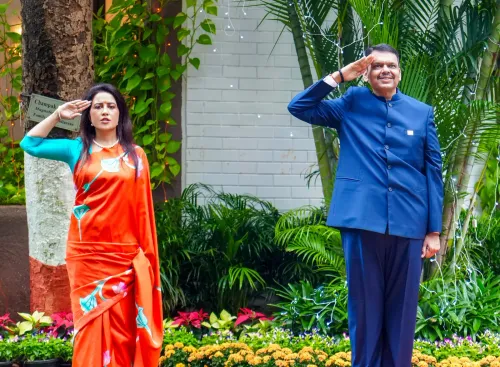
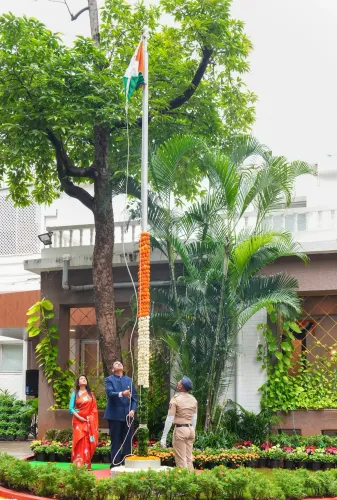
CM Devendra Fadnavis hoisted the tricolour at his official residence, Mantralaya , and Bombay High Court on August 15, 2026 .
Maharashtra recorded an economic growth rate of 8.8% in the first half of 2026; 13 districts have already met their growth targets.
The state is delivering farm loan waivers to 56 lakh farmers under the Punyashlok Ahilyadevi Holkar Shetkari Karjamukti Yojana 2026 .
Maharashtra became the first Indian state to legally recognise women as farmers under the Maharashtra Mahila Shetkari Sakshamikaran Vidheyak 2026 .
Daytime electricity now covers 76% of farmers; the government has pledged 100% coverage within the next year.
Foreign universities are being invited into Maharashtra via the EduCity initiative as the state claims the title of India's startup capital .
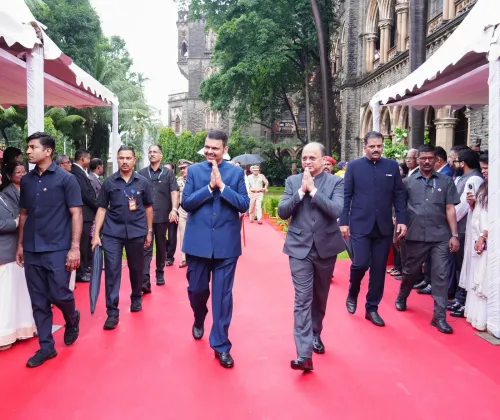
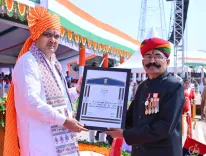
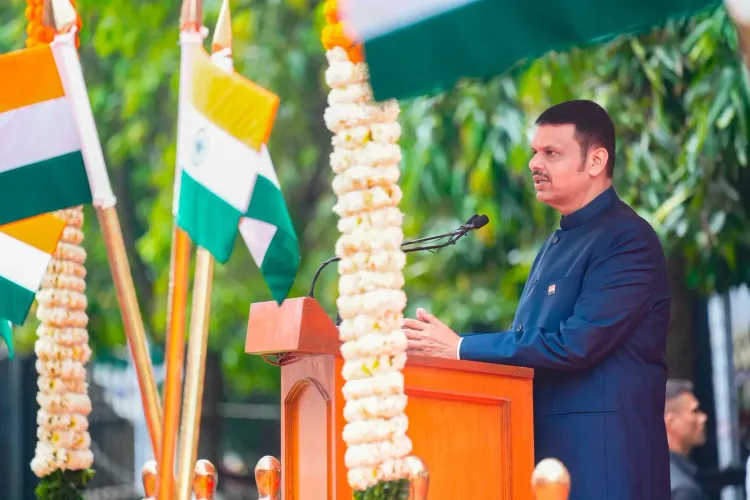
On Independence Day, August 15, 2026, Maharashtra Chief Minister Devendra Fadnavis raised the tricolour at his official residence and at Mantralaya, Mumbai — then stood alongside Bombay High Court Acting Chief Justice Ravindra V. Ghuge for a second flag-hoisting at the court premises. What followed was not a routine ceremonial address. It was a state-of-the-state declaration, dense with numbers and pledges, that positioned Maharashtra as the engine of India's Viksit Bharat (Developed India) ambition.
Tributes, then targets: how the address opened
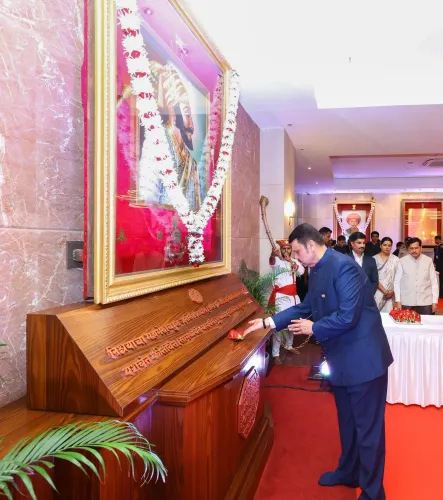
CM Fadnavis opened by saluting freedom fighters and paying homage to soldiers who died in defence of the nation. He then grounded his governance vision in two historical pillars: the teachings of Chhatrapati Shivaji Maharaj and the constitutional framework laid down by Bharat Ratna Dr. B.R. Ambedkar. The framing was deliberate — invoking both the Maratha warrior-king and the Constitution's architect signals a broad tent, reaching across Maharashtra's diverse political and social constituencies.
8.8%, 56 lakh farmers, and the district growth-engine push
Fadnavis cited Maharashtra's economic growth rate at 8.8% for the first half of 2026, and said 13 districts had already met their designated growth targets, with the rest accelerating. He described each district as a potential 'growth engine' — a decentralised development model that pushes accountability below the state level. Under the 'Punyashlok Ahilyadevi Holkar Shetkari Karjamukti Yojana 2026', the government is extending farm loan waivers to 56 lakh (5.6 million) farmers. On energy, he said 76% of farmers currently receive daytime electricity, with a firm pledge to reach 100% within the next year.
A first for women farmers — and a bet on global education
One of the sharpest announcements: Maharashtra has enacted the 'Maharashtra Mahila Shetkari Sakshamikaran Vidheyak (Women Farmer Empowerment Bill), 2026', making it the first state in India to legally recognise women as farmers in their own right — a move with direct implications for land rights, credit access, and welfare scheme eligibility. On education, Fadnavis said foreign universities are being brought into Maharashtra through the 'EduCity' initiative, aiming to give the state's youth world-class learning without leaving the country.
Startup capital claim and the national economic backdrop
Fadnavis positioned Maharashtra as India's startup capital, citing the highest levels of domestic and foreign direct investment in the country as the engine of youth employment. He linked these gains to the broader national story: under Prime Minister Narendra Modi's leadership over the past 12 years, India has lifted more than 25 crore (250 million) citizens out of poverty and is now emerging as the world's fourth-largest economy. The Viksit Bharat goal, he stressed, is not merely about GDP scale — it is about positive transformation in every individual's life, leaving no one behind.
He closed with a call to unity: honour not just constitutional rights, but constitutional duties. 'Our tricolour will always fly high,' he said — a kicker that landed the address squarely on civic resolve rather than political self-congratulation.
The real test of this Independence Day speech will be measured not in applause, but in whether the loan waivers reach all 56 lakh farmers before the next harvest season, and whether Maharashtra's district growth engines fire in unison.
Point of View
He attempts to neutralise opposition narratives on identity and social justice. The women-farmer bill, if implemented robustly, could reshape agrarian welfare architecture nationally and give Maharashtra a genuine first-mover policy advantage. The district growth-engine framing is an attempt to shift accountability downward and pre-empt criticism of uneven development — the credibility of that claim will hinge on independent verification of the 8.8% growth figure and the pace of loan-waiver disbursement.
NationPress
16 Aug 2026
Frequently Asked Questions
What did CM Devendra Fadnavis announce on Independence Day 2026?
CM Fadnavis announced an 8.8% state economic growth rate for the first half of 2026, a farm loan waiver for 56 lakh farmers, a women-farmer recognition law, a pledge for 100% daytime electricity to farmers, and the EduCity initiative to bring foreign universities to Maharashtra.
What is the Punyashlok Ahilyadevi Holkar Shetkari Karjamukti Yojana 2026?
It is Maharashtra's 2026 farm loan waiver scheme, named after the 18th-century ruler Ahilyadevi Holkar, under which the state government is providing debt relief to 56 lakh (5.6 million) farmers.
Which states have legally recognised women as farmers in India?
As of CM Fadnavis's Independence Day 2026 address, Maharashtra became the first state in India to legally grant women the status of farmers through the Maharashtra Mahila Shetkari Sakshamikaran Vidheyak 2026.
What is the EduCity initiative in Maharashtra?
EduCity is Maharashtra's initiative to attract foreign universities to set up campuses in the state, aiming to provide world-class, cutting-edge education to Maharashtra's youth without them needing to study abroad.
Where did CM Fadnavis hoist the flag on Independence Day 2026?
CM Fadnavis hoisted the national flag at his official residence, at Mantralaya in Mumbai, and was also present at the Bombay High Court flag-hoisting conducted by Acting Chief Justice Ravindra V. Ghuge.