CM Fadnavis hoists flag at Varsha Bungalow on Independence Day
Synopsis
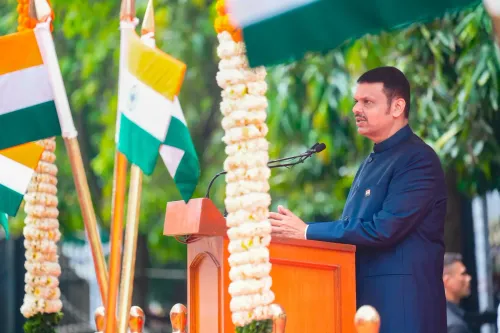
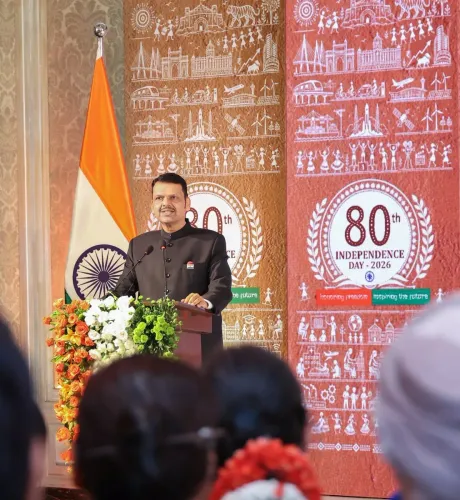
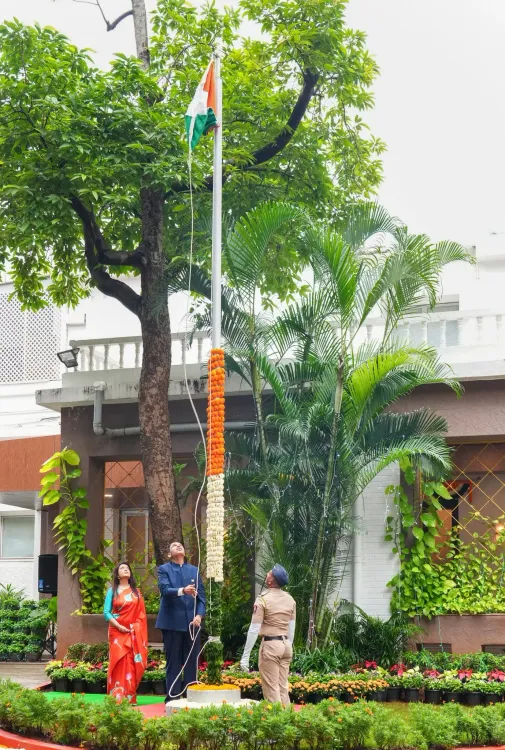
Chief Minister Devendra Fadnavis hoisted the national flag at Varsha Bungalow, his official Mumbai residence, at 8:30 a.m. on 15 August 2026, marking India's Independence Day with a ceremonial tradition Maharashtra has maintained since 1947.
Key Takeaways
CM Devendra Fadnavis performed the Independence Day flag hoisting at Varsha Bungalow, Mumbai on 15 August 2026 .
The ceremony took place at 8:30 a.m. , in keeping with standard Independence Day protocol.
Varsha Bungalow is the official residence of Maharashtra's Chief Minister and the traditional site of this annual observance.
The CMO communicated the event in three languages — Marathi, Hindi, and English — reflecting Maharashtra's multilingual public outreach.
Flag hoisting at the Chief Minister's residence is an unbroken ceremonial practice observed by Maharashtra state governments since 1947 , regardless of the party in power.
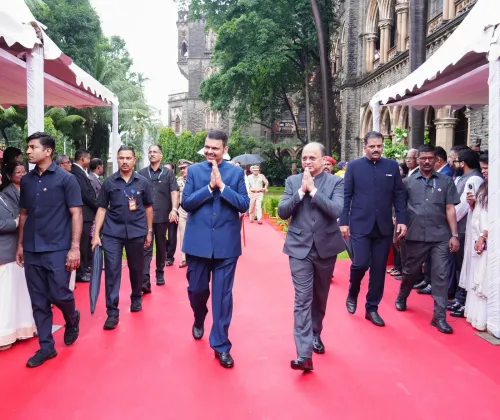
At 8:30 a.m. on 15 August 2026, the tricolour rose over Varsha Bungalow in Mumbai as Chief Minister Devendra Fadnavis performed the Independence Day flag hoisting at his official residence — upholding a ceremonial tradition Maharashtra has observed every year since 1947.
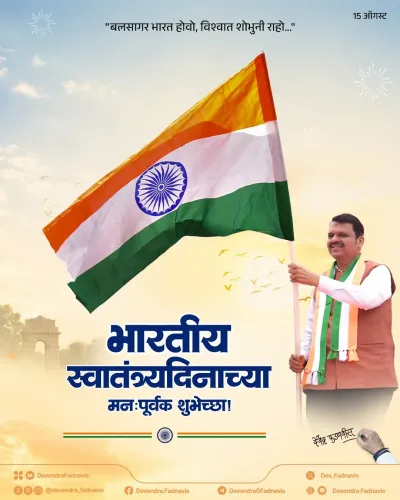
The Chief Minister's Office shared the moment with a Marathi verse celebrating the ideals of truth, good governance, and enduring freedom: 'येथे सदा निनादो जयगीत जागृताचे, आचंद्रसूर्य नांदो स्वातंत्र्य भारताचे' — 'May the victory song of the awakened always resound here; may India's freedom endure as long as the moon and sun.'
Varsha Bungalow and the annual ritual of the tricolour
Varsha Bungalow, the official residence of every Chief Minister of Maharashtra, has served as the backdrop for this ceremony across administrations and political parties alike. The flag hoisting here runs parallel to the central government's observances in New Delhi, affirming the constitutional federal compact that binds the Union and its states on the national holiday.
The practice is not ceremonial decoration — it is a visible assertion that state governments share ownership of the independence narrative. Every 15 August, Chief Ministers across India's states and union territories replicate this act, each venue becoming a local anchor for a national moment.
Fadnavis at the helm of Maharashtra's 78th Independence Day
Devendra Fadnavis, who leads the government of one of India's most economically significant states, presided over the ceremony as the state's constitutional head. The CMO's post — issued in Marathi, Hindi, and English — reflected the multilingual character of Maharashtra's public communication and the inclusive intent of Independence Day outreach.
The tricolour over Varsha Bungalow is a small but deliberate signal: that governance, however contested day to day, pauses to honour the foundation on which it stands.
Point of View
But its consistent performance across administrations underscores the durability of India's federal ceremonial architecture. For Fadnavis, presiding over the ceremony reinforces his role as Maharashtra's constitutional head at a moment when state-centre relations and Maharashtra's political landscape remain closely watched. The trilingual CMO post — Marathi, Hindi, English — signals deliberate inclusivity in state communication. The broader pattern of simultaneous flag hoistings across all state capitals on 15 August remains one of the most visible expressions of cooperative federalism in practice.
NationPress
29 Sept 2026
Frequently Asked Questions
Where did CM Devendra Fadnavis hoist the flag on Independence Day 2026?
CM Devendra Fadnavis hoisted the national flag at Varsha Bungalow , his official residence in Mumbai , on 15 August 2026 .
What time was the flag hoisting at Varsha Bungalow on 15 August 2026?
The flag hoisting ceremony was held at 8:30 a.m. on 15 August 2026.
What is Varsha Bungalow?
Varsha Bungalow is the official residence of the Chief Minister of Maharashtra, located in Mumbai , and is the traditional venue for state-level Independence Day and Republic Day ceremonies.
Does Maharashtra hold its own Independence Day ceremony separate from Delhi?
Yes. Maharashtra's Chief Minister conducts an independent flag hoisting at Varsha Bungalow every 15 August , a practice maintained since 1947 , mirroring the central government's observance in New Delhi.
Who is Devendra Fadnavis?
Devendra Fadnavis is the Chief Minister of Maharashtra, responsible for leading the state government and presiding over official state ceremonies including national day observances.