CM Fadnavis honours Kargil martyrs' families at Mumbai ceremony
Synopsis
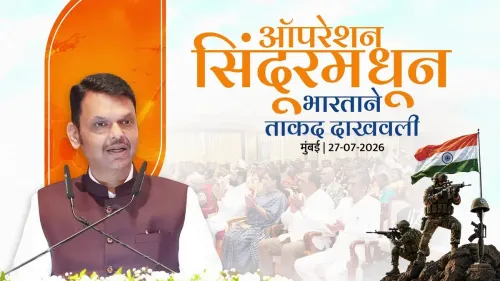
Maharashtra Chief Minister Devendra Fadnavis on 27 July 2026 attended a state gratitude ceremony in Mumbai honouring soldiers, their wives, and widows of Kargil martyrs, declaring that all of Maharashtra stands with the families of those who made the supreme sacrifice.
Key Takeaways
Devendra Fadnavis represented the Maharashtra government at a Krutagnyata Sanman Sohala (Gratitude Honour Ceremony) in Mumbai on 27 July 2026 .
The event honoured Veer Sainiks (soldiers) and Veer Patnis (soldiers' wives, including widows of martyrs).
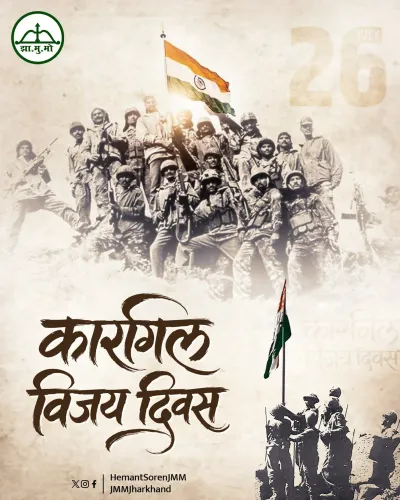
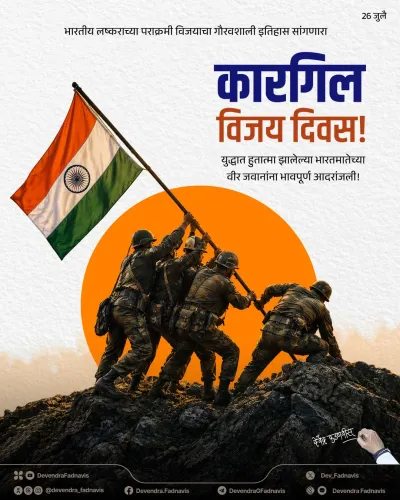
Fadnavis posted in both Marathi and Hindi, stating: 'All of Maharashtra stands with the families of martyrs.' The ceremony was tied to Kargil Vijay Diwas , observed nationally on 26 July each year to mark India's 1999 Kargil War victory.
No new policy or welfare scheme was announced alongside the ceremony.
State budget allocations or district-level welfare extensions for soldier families remain a watch point in coming months.
Maharashtra Chief Minister Devendra Fadnavis on Monday, 27 July 2026 expressed solidarity with the families of soldiers who laid down their lives in the line of duty, marking Kargil Vijay Diwas with a state-organised gratitude ceremony in Mumbai honouring Veer Sainiks (brave soldiers), their wives, and the widows of martyrs.
Context
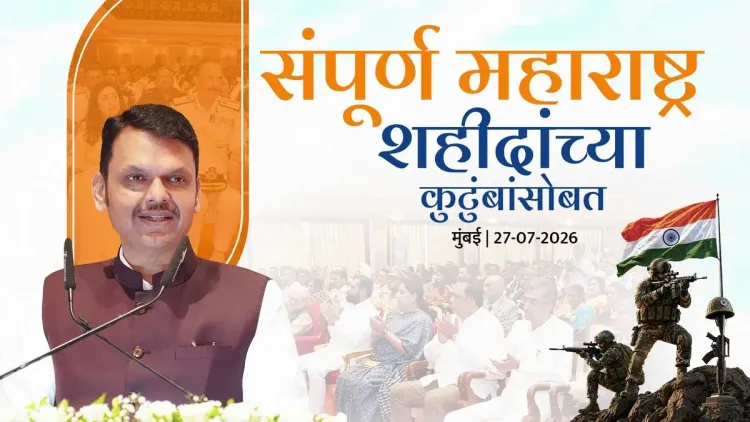
Posting in Marathi and Hindi on the occasion, Fadnavis wrote: 'Sampurna Maharashtra shahidanch ya kutumbansobat' — 'All of Maharashtra stands with the families of martyrs.' The message was accompanied by a video from the event, described as a Krutagnyata Sanman Sohala (Gratitude Honour Ceremony) held in Mumbai on 27 July 2026.
Kargil Vijay Diwas is observed every year on 26 July to commemorate India's victory in the 1999 Kargil conflict with Pakistan. The 27 July ceremony in Mumbai extended the national observance by one day, reflecting the scale of state-level programming this year.
Policy Backdrop
Indian state governments have long staged public honour ceremonies for defence personnel and Veer Naris (war widows) around Kargil Vijay Diwas as part of routine armed-forces welfare protocol. Maharashtra has participated in such events across successive administrations, situating them within a broader national pattern of civilian acknowledgement of military sacrifice.
The category of honourees — Veer Sainiks and Veer Patnis (soldiers' wives, including widows of martyrs) — reflects the state's practice of recognising not just the soldier but the family that bears the cost of service. No new policy announcement was attached to Monday's ceremony.
Stakeholders and Impact
The primary beneficiaries of such ceremonies are families of martyrs and serving or retired armed-forces personnel from Maharashtra, a state that contributes a significant number of soldiers to the Indian Army. Public recognition events provide symbolic affirmation to communities that have experienced loss in service of the nation.
Mumbai, as the state capital, serves as the ceremonial hub, drawing attendees from across Maharashtra's districts. The presence of the Chief Minister at such an event signals the state government's institutional commitment to armed-forces welfare beyond administrative paperwork.
What's Next
Observers will watch whether Monday's ceremony translates into concrete welfare measures — such as enhanced state budget allocations or district-level extensions of soldier-family support schemes — in the months ahead. Maharashtra's track record suggests such ceremonial moments occasionally precede incremental policy steps, though no announcement has been made as yet.
Point of View
Addressing both regional identity and a pan-Indian nationalist sentiment simultaneously. While the ceremony is ceremonial in nature, such events have historically been precursors to incremental welfare announcements, making the government's follow-through worth monitoring. Placed within the broader arc of BJP-led state governments amplifying Kargil Vijay Diwas programming, the event reinforces a consistent political-cultural narrative around national security and soldier welfare.
NationPress
27 Jul 2026
Frequently Asked Questions
What is Kargil Vijay Diwas and why is it observed on 26 July?
Kargil Vijay Diwas is observed every year on 26 July to mark India's victory in the 1999 Kargil War against Pakistan. The date commemorates the day Indian armed forces recaptured all occupied positions, and the occasion is used to honour soldiers who died during the conflict.
What was the Mumbai ceremony held by CM Fadnavis on 27 July 2026?
The ceremony was a Krutagnyata Sanman Sohala — a state-organised gratitude honour event — held in Mumbai on 27 July 2026 to recognise Veer Sainiks (soldiers), their wives, and the widows of martyrs from Maharashtra.
Who are Veer Patnis and why are they honoured at Kargil Vijay Diwas events?
Veer Patnis are the wives of soldiers, particularly widows of those killed in action. They are honoured at such events because they bear the personal cost of military service and sacrifice, and state recognition is seen as an acknowledgement of their contribution alongside the soldier.
Did CM Fadnavis announce any new welfare scheme for soldiers' families at the event?
No new welfare scheme or policy announcement was made at the 27 July 2026 Mumbai ceremony. The event was ceremonial in nature, focused on public recognition and gratitude.
How does Maharashtra typically mark Kargil Vijay Diwas?
Maharashtra administrations across parties have routinely organised public honour ceremonies for defence personnel and war widows around Kargil Vijay Diwas as part of state-level armed-forces welfare protocol, with Mumbai serving as the primary ceremonial venue.