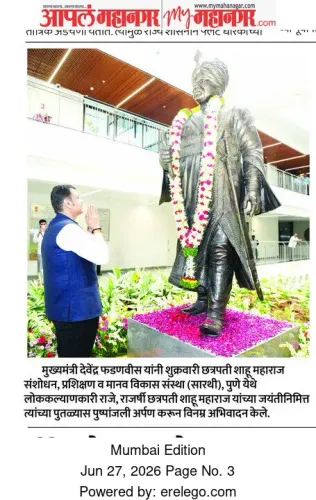
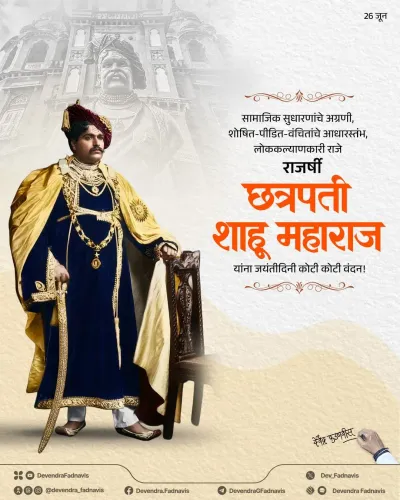
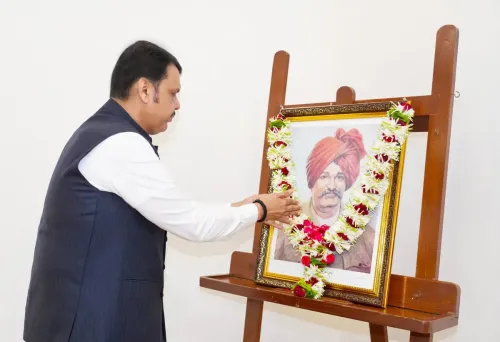
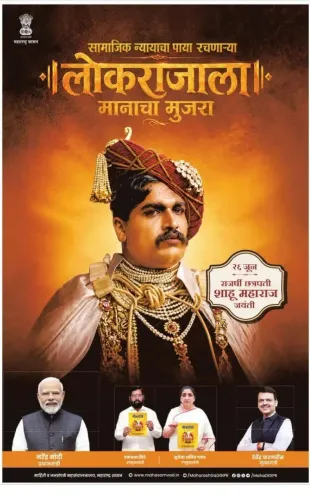
CM Fadnavis inaugurates Shahu Maharaj memorial works in Kolhapur
Synopsis
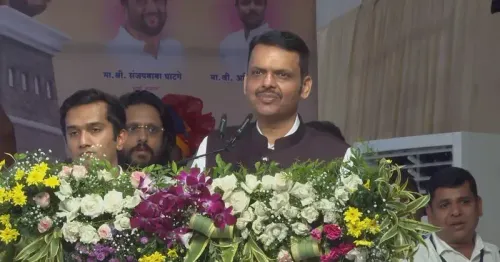
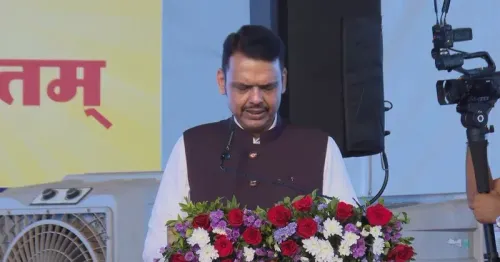
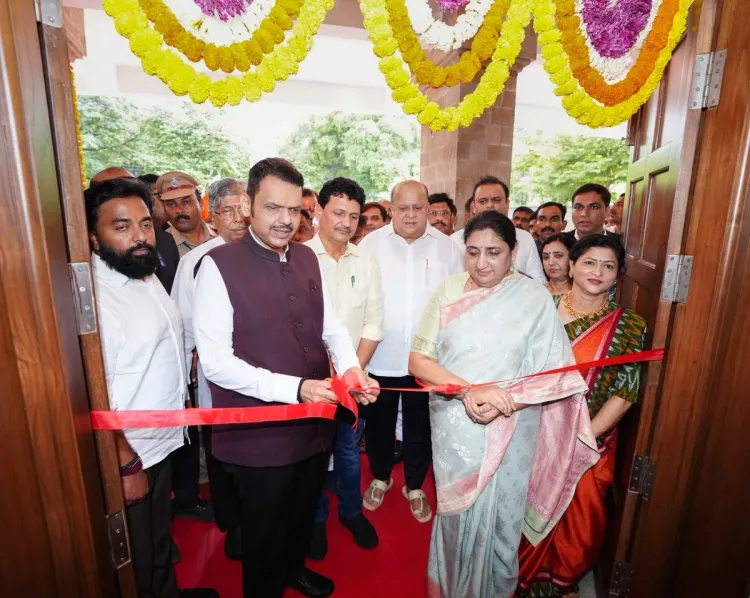
Chief Minister Devendra Fadnavis inaugurated development works at the Chhatrapati Shahu Maharaj Samadhi Smarak in Kolhapur on 9 August 2026, including the renovated Dr. Babasaheb Ambedkar Sabhagriha, with senior state leaders present.
Key Takeaways
CM Devendra Fadnavis inaugurated development works at the Chhatrapati Shahu Maharaj Samadhi Smarak in Kolhapur on 9 August 2026 .
The renovated Mahamanav Bharat Ratna Dr.
Babasaheb Ambedkar Sabhagriha auditorium, housed within the memorial complex, was formally opened.
Chhatrapati Shahu Maharaj ruled Kolhapur from 1894 to 1922 and is revered for pioneering reservations and anti-caste reforms in India.
Senior state leaders including Deputy CM Sunetra Ajit Pawar , Speaker Rahul Narwekar , and multiple ministers attended the ceremony.
The project follows Maharashtra's established practice of upgrading memorials of social reformers as both heritage and community-use spaces.
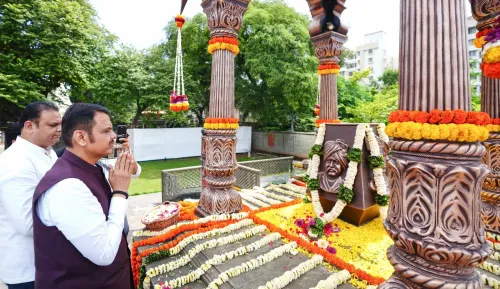
At the samadhi of one of India's most consequential social reformers, Maharashtra Chief Minister Devendra Fadnavis on Sunday, 9 August 2026 formally dedicated a clutch of development works at the Chhatrapati Shahu Maharaj Samadhi Smarak complex in Kolhapur — pairing heritage preservation with a freshly renovated public hall named after another towering figure of Indian social justice.
A renovated hall, two icons, one inauguration
The centrepiece of the ceremony was the inauguration of the newly renovated Mahamanav Bharat Ratna Dr. Babasaheb Ambedkar Sabhagriha — a public auditorium housed within the Samadhi Smarak premises. Naming the hall after Dr. B.R. Ambedkar, the principal architect of the Indian Constitution, inside a complex dedicated to Rajarshi Chhatrapati Shahu Maharaj is a deliberate symbolic pairing: both men are revered as pillars of India's anti-caste and social-reform tradition. Fadnavis also reviewed other ongoing development works at the site.
Shahu Maharaj's enduring legacy in Kolhapur
Chhatrapati Shahu Maharaj ruled the princely state of Kolhapur from 1894 to 1922 and is celebrated for pioneering reservations in government employment, funding schools for marginalised communities, and actively challenging caste discrimination — decades before the Indian Constitution enshrined such protections. His samadhi in Kolhapur remains a site of deep reverence for millions across Maharashtra and beyond.
Senior state leadership assembled at Kolhapur
The inauguration drew significant political weight. Legislative Assembly Speaker Adv. Rahul Narwekar, Deputy Chief Minister Sunetra Ajit Pawar, Minister Chandrakant Patil, Minister Prakash Abitkar, Minister of State Madhuri Misal, and MP Dhananjay Mahadik were all present. Kolhapur Mayor Ruparani Nikam and other dignitaries also attended, signalling the civic importance the state government attached to the occasion.
Maharashtra governments have periodically invested in upgrading memorials of social reformers and former rulers, treating such sites as both heritage assets and active public spaces. The Shahu Smarak project fits that pattern — blending conservation of a historic site with a functional community facility.
For Kolhapur, a city whose identity is inseparable from Shahu Maharaj's reformist legacy, the upgrades land as more than bricks and mortar — they are a reaffirmation of the state's commitment to the ideals the king embodied. Whether the works' full scope and cost are disclosed will be the next measure of that commitment.
Point of View
A constituency the ruling alliance cannot afford to neglect. Fadnavis's personal presence at the inauguration, flanked by Deputy CM Sunetra Pawar and senior ministers, signals that the state is actively investing in the symbolic geography of social-reform heritage ahead of local political cycles. Maharashtra governments across party lines have used such memorial upgrades as soft-power tools to consolidate support among communities that revere these figures. The real test will be whether the infrastructure investment translates into sustained upkeep and programming at the site.
NationPress
9 Aug 2026
Frequently Asked Questions
What was inaugurated at the Chhatrapati Shahu Maharaj Samadhi Smarak in Kolhapur?
Chief Minister Devendra Fadnavis inaugurated several development works at the Samadhi Smarak complex, including the renovated Mahamanav Bharat Ratna Dr. Babasaheb Ambedkar Sabhagriha auditorium, on 9 August 2026.
Who is Chhatrapati Shahu Maharaj and why is his memorial significant?
Chhatrapati Shahu Maharaj ruled the princely state of Kolhapur from 1894 to 1922. He is celebrated for introducing reservations in government jobs, funding schools for marginalised communities, and fighting caste discrimination, making his samadhi a major site of social-reform heritage.
Why is the hall inside the Shahu Maharaj memorial named after Dr. Ambedkar?
Dr. B.R. Ambedkar and Shahu Maharaj are both revered as pillars of India's anti-caste and social-justice tradition. Naming the hall after Ambedkar within Shahu Maharaj's memorial complex underscores their shared ideological legacy.
Which senior leaders attended the Kolhapur inauguration on 9 August 2026?
Legislative Assembly Speaker Adv. Rahul Narwekar, Deputy CM Sunetra Ajit Pawar, Ministers Chandrakant Patil and Prakash Abitkar, Minister of State Madhuri Misal, MP Dhananjay Mahadik, and Kolhapur Mayor Ruparani Nikam were among those present.
Where is the Chhatrapati Shahu Maharaj Samadhi Smarak located?
The Samadhi Smarak is located in Kolhapur, a city in western Maharashtra closely associated with Shahu Maharaj's reformist legacy.