CM Fadnavis lays foundation for Annabhau Sathe memorial in Mumbai
Synopsis
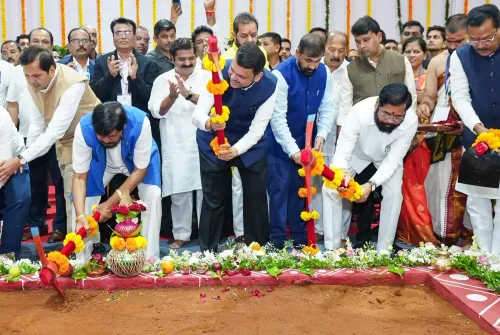
Chief Minister Devendra Fadnavis and Deputy CM Eknath Shinde performed the ground-breaking of the Annabhau Sathe Research and Training Institute in Mumbai on 31 July 2026. The SRA-built project is targeted for completion by July 2029, with PM Modi set to inaugurate it. A parallel Pune memorial for Lahuji Vastad Salve is 65% complete.
Key Takeaways
Bhoomipooja performed on 31 July 2026 in Mumbai by CM Devendra Fadnavis and Deputy CM Eknath Shinde for the Annabhau Sathe Research and Training Institute.
The SRA (Slum Rehabilitation Authority) has been directed to complete the project by July 2029 ; PM Narendra Modi is slated to inaugurate it.
The institute, known as ARTI , will focus on competitive exam preparation and social upliftment for marginalised youth.
Annabhau Sathe's (1920–1969) works were translated into 27 languages including Russian, French, and Italian.
The Lahuji Vastad Salve memorial in Pune is approximately 65% complete and expected to finish soon.
The government assured that all slum residents at the Mumbai site will be properly rehabilitated before construction proceeds.
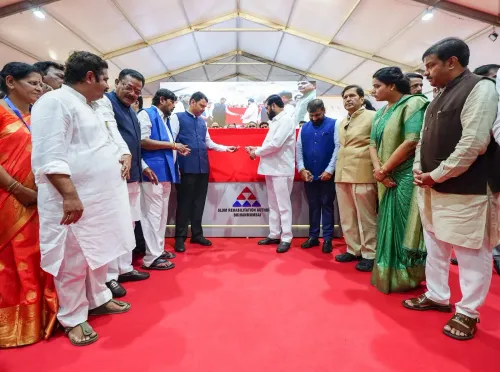
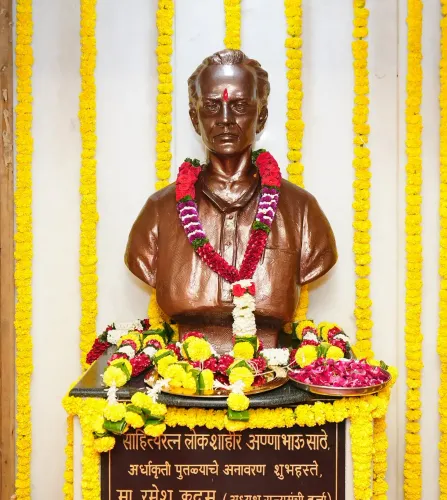
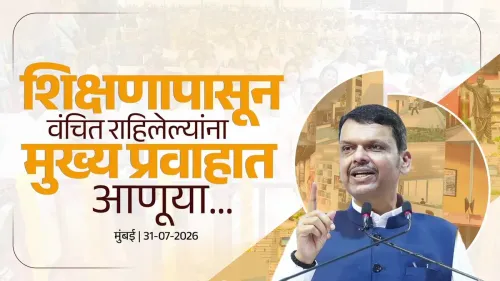
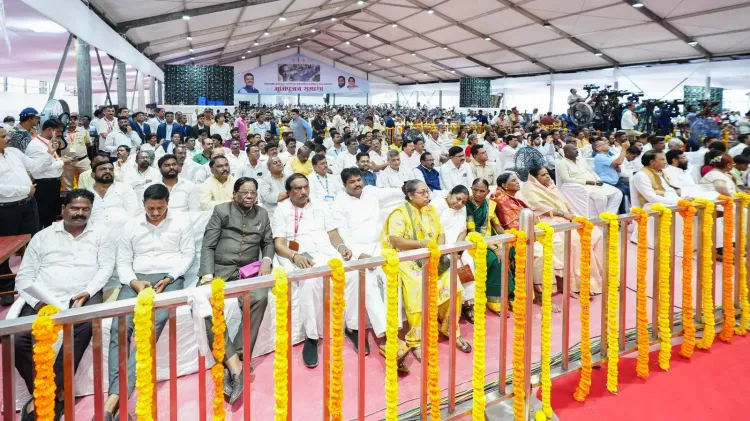
At the very site in Mumbai where Sahitya Ratna Lokshahir Annabhau Sathe once lived, the Maharashtra government on Friday, 31 July 2026 broke ground on a grand memorial and research institute — a long-pending tribute to the poet-activist whose words helped shape a state. Chief Minister Devendra Fadnavis and Deputy Chief Minister Eknath Shinde performed the bhoomipooja (ground-breaking) and unveiled the cornerstone of the 'Sahitya Ratna Lokshahir Annabhau Sathe Research and Training Institute', to be built by the Slum Rehabilitation Authority (SRA) under the Brihanmumbai civic framework.
The pledge: PM Modi to inaugurate by July 2029
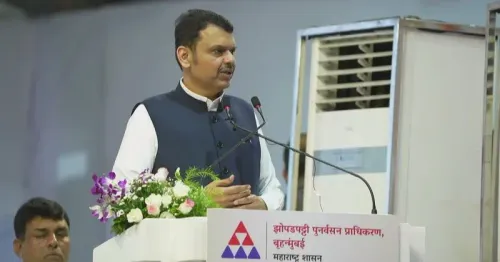
CM Fadnavis announced that the SRA has been directed to complete the entire project by July 2029, with the inauguration to be performed by Prime Minister Narendra Modi. 'The first phase of work on the Annabhau Sathe memorial has begun,' Fadnavis said. 'The government decided to build this grand memorial at the very place in Mumbai where he lived, and that plan gained momentum in 2024.' He was emphatic that no slum resident would be displaced without proper rehabilitation — a pointed assurance given the SRA's mandate over some of Mumbai's densest informal settlements.
Who was Annabhau Sathe — and why does the site matter
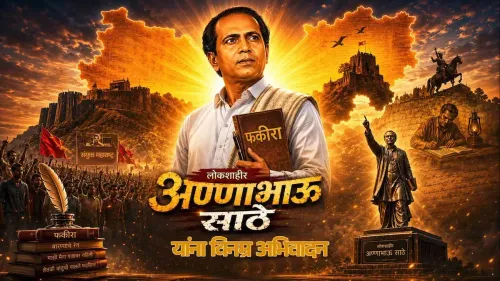
Annabhau Sathe (1920–1969) was a Marathi writer, poet, and activist whose literature gave voice to the marginalised, the labouring poor, and the dispossessed. His works were translated into 27 languages — including Russian, French, and Italian — a reach that Fadnavis cited as evidence of their universal resonance. Sathe's powadas (ballads) and prose were not merely literary; they were political instruments. Alongside Shahir Amar Sheikh, he mobilised ordinary youth onto the streets during the Samyukta Maharashtra movement, the mass agitation that eventually carved out the Marathi-speaking state in 1960. He also contributed to the Goa liberation struggle and India's independence movement.
'The suffering of the weak, the labouring, the neglected, and the marginalised was underscored through his literature,' Fadnavis said. 'His poetry gave sharper edge to the Samyukta Maharashtra movement.' The CM described the community as 'a mine of artists' and said the institute — known by the acronym ARTI — would work to bring youth into the mainstream through education, competitive exam preparation, and social upliftment programmes.
Pune's Lahuji Vastad Salve memorial: 65% done
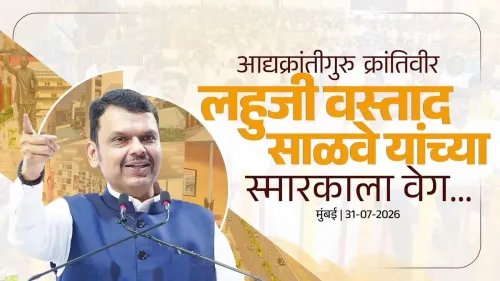
Fadnavis also flagged progress on a parallel project: the memorial for Aadya Krantigurukriantiveer Lahuji Vastad Salve in Pune, a 19th-century social reformer and revolutionary associated with caste upliftment and early resistance movements. That project is approximately 65% complete, the CM said, with completion expected soon.
A coalition moment, built for a broader audience
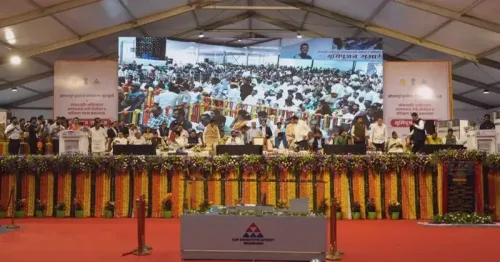
The ceremony drew a cross-section of the ruling alliance. Union Minister of State Dr. Ramdas Athawale, Legislative Council Deputy Speaker Sachin Ahir, Ministers Mangalprabhat Lodha, Adv. Ashish Shelar, and Sanjay Shirsat, MP Sanjay Patil, MLA Ameet Satam, and Mumbai Mayor Ritu Tawde were among the dignitaries present. The breadth of attendance — spanning the BJP, Shiv Sena, and allied formations — signals how the Sathe legacy functions as shared political capital for the Mahayuti coalition.
Maharashtra governments have long linked memorials to social reformers with urban redevelopment and educational upliftment schemes, using bodies like the SRA to execute cultural infrastructure alongside housing mandates. The Annabhau Sathe institute fits squarely in that tradition — but the scale, the Prime Ministerial inauguration target, and the explicit 2029 deadline give it unusual political weight heading into the next electoral cycle.
A poet who wrote for those with nothing now has a deadline, a cornerstone, and a Prime Minister's name attached to his memorial. Whether the SRA delivers on schedule will be the real test of that promise.
Point of View
The BJP-led alliance is effectively pre-booking an electoral narrative well ahead of the next assembly cycle. The SRA's dual role — slum rehabilitator and cultural infrastructure builder — also reflects the state's consistent strategy of bundling urban redevelopment with identity politics. The parallel Pune memorial for Lahuji Vastad Salve deepens that pattern, suggesting a deliberate multi-city, multi-community commemoration push rather than a one-off gesture.
NationPress
31 Jul 2026
Frequently Asked Questions
What is the Annabhau Sathe Research and Training Institute in Mumbai?
It is a memorial-cum-research institute being built by the Slum Rehabilitation Authority (SRA) in Mumbai at the site where Sahitya Ratna Lokshahir Annabhau Sathe once lived. The institute, abbreviated as ARTI, will focus on education, competitive exam preparation, and social upliftment for marginalised youth.
When will the Annabhau Sathe memorial in Mumbai be inaugurated?
CM Devendra Fadnavis announced that the SRA has been directed to complete the project by July 2029, after which Prime Minister Narendra Modi is expected to perform the inauguration. These are announced targets and subject to construction progress.
Who was Annabhau Sathe and why is he significant in Maharashtra?
Annabhau Sathe (1920–1969) was a Marathi writer, poet, and activist who championed the cause of marginalised communities. He played a key role in the Samyukta Maharashtra movement, the Goa liberation struggle, and India's independence movement. His works were translated into 27 languages including Russian, French, and Italian.
What is the role of the SRA in building the Annabhau Sathe memorial?
The Slum Rehabilitation Authority (SRA), the Mumbai civic body that oversees slum redevelopment and housing rehabilitation, has been tasked with constructing the institute. The government has also assured that all existing slum residents at the site will be properly rehabilitated before construction proceeds.
What is the status of the Lahuji Vastad Salve memorial in Pune?
CM Fadnavis stated that the memorial for Lahuji Vastad Salve in Pune is approximately 65% complete and is expected to be finished soon. Lahuji Vastad Salve was a 19th-century social reformer and revolutionary associated with caste upliftment in Maharashtra.