CM Fadnavis: Maharashtra sees decade-long gains in conviction rates
Synopsis
The Chief Minister's Office of Maharashtra on 10 July 2026 highlighted significant improvements in conviction rates and timely charge-sheet filing over the past decade, crediting sustained policing and prosecution reforms under Chief Minister Devendra Fadnavis.
Key Takeaways
The CMO of Maharashtra posted on 10 July 2026 citing significant improvement in conviction rates over the past decade.
The rate of charge-sheets filed within the stipulated time period has also increased, according to the official post.
A 2015 police modernisation programme under Fadnavis's first term introduced e-FIR systems and forensic upgrades to speed up investigations.
Maharashtra Police and state prosecution coordination cells have worked to reduce cases lapsing on procedural grounds.
The National Crime Records Bureau (NCRB) is the authoritative body expected to independently verify these figures in its next annual report.
A detailed data presentation is anticipated in the upcoming winter session of the Maharashtra legislature .
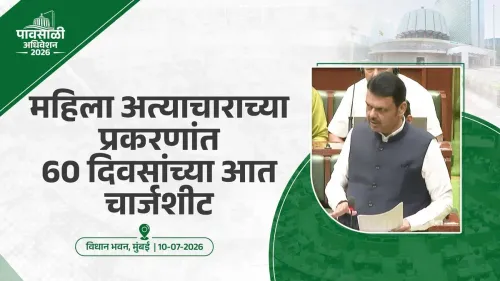
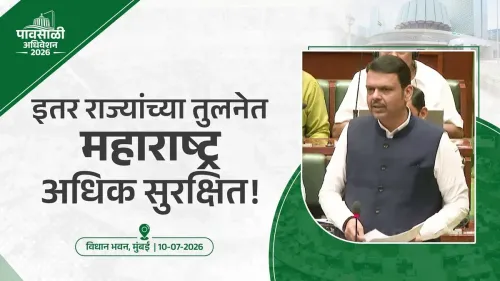
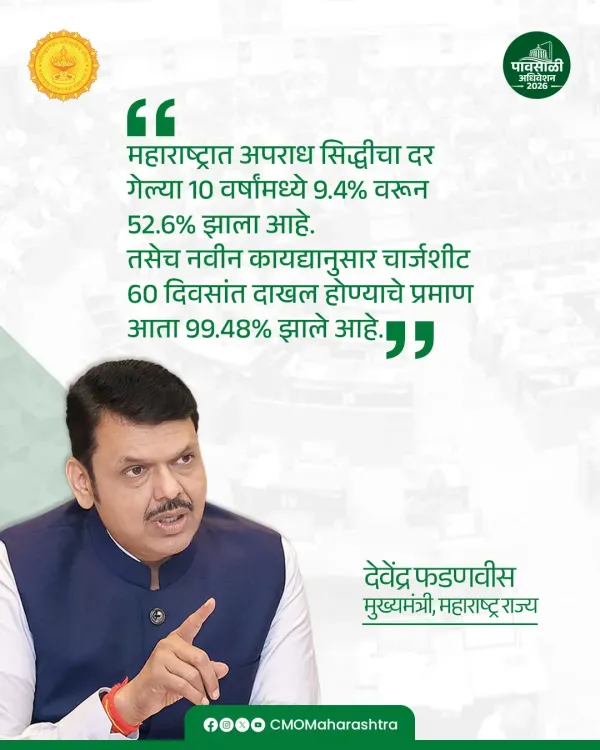
The Chief Minister's Office of Maharashtra on Friday, 10 July 2026, highlighted significant improvements in the state's criminal conviction rate and charge-sheet filing compliance over the past decade, attributing the progress to sustained policing and prosecution reforms under Chief Minister Devendra Fadnavis.
The post, shared from the official CMO handle and tagging @Dev_Fadnavis, stated in Marathi: 'अपराध सिद्धीच्या बाबतीत राज्यात गेल्या दशकभरात लक्षणीय सुधारणा झाली असून चार्जशीटदेखील निर्धारित कालावधीत दाखल होण्याचे प्रमाण वाढले आहे.' In English: 'There has been a significant improvement in conviction rates in the state over the last decade, and the rate of charge-sheets being filed within the stipulated time period has also increased.'
Context
Conviction rate and timely charge-sheet filing are two of the most closely watched metrics in criminal justice administration. A higher conviction rate signals that investigations are thorough enough to withstand judicial scrutiny, while timely charge-sheets prevent accused persons from securing default bail under the Code of Criminal Procedure. Maharashtra, as one of India's most populous and economically significant states, has long been a benchmark for policing outcomes. The CMO's framing anchors the improvement over a 'decade', a period that broadly covers Fadnavis's first term (2014–2019) and his return to the Chief Minister's chair from 2022 onwards. This decade-long lens is a deliberate administrative communication choice, signalling continuity of governance philosophy across tenures.Policy Backdrop
The groundwork for the current gains can be traced to a 2015 police modernisation programme launched during Fadnavis's first term, which introduced e-FIR systems and forensic infrastructure upgrades aimed at accelerating investigation timelines. These technology-driven interventions were designed to reduce the gap between crime registration and charge-sheet submission — a gap that had historically allowed cases to lapse or accused persons to walk free on procedural grounds. Maharashtra Police has also invested in prosecution coordination cells that work alongside the state judiciary to track pending trials and prioritise cases where witnesses are at risk of turning hostile. Successive home ministers across party lines have cited conviction-rate data as a core performance indicator in their annual reviews.Stakeholders and Impact
The most direct beneficiaries of improved conviction rates are crime victims and their families, for whom a guilty verdict represents the culmination of what is often a years-long legal ordeal. For Maharashtra Police, higher conviction rates validate investigative quality and can influence departmental promotions and commendations. For the state judiciary, a rising rate of timely charge-sheets means fewer bail-by-default situations and a more predictable trial calendar. Civil society groups monitoring prison overcrowding also watch these figures closely: faster charge-sheet filing can reduce the proportion of undertrial prisoners, who make up a significant share of Maharashtra's jail population. The National Crime Records Bureau (NCRB), which publishes annual 'Crime in India' reports with state-wise conviction and charge-sheet data, is the authoritative source against which such claims are typically benchmarked. The next NCRB report is expected to provide independently verifiable figures for the period in question.What's Next
The announcement is likely a precursor to a more detailed data presentation — possibly in the upcoming winter session of the Maharashtra legislature, where the home department traditionally tables crime statistics. Observers will watch for the release of the next NCRB 'Crime in India' report, which will provide independently verifiable conviction-rate and charge-sheet compliance figures for Maharashtra. If the data holds up to scrutiny, the Fadnavis administration is positioned to make criminal justice reform a centrepiece of its governance narrative ahead of future electoral cycles. The broader implication is a push to reframe policing not merely as a law-and-order function but as a measurable public-service delivery outcome.Point of View
The Fadnavis administration claims credit spanning both its tenures while sidestepping the intervening Maha Vikas Aghadi period. Conviction-rate data has become a standard reputational currency for state home departments across India, and Maharashtra's use of it follows a well-worn playbook. The absence of specific figures in the post is notable — it signals that the administration is building anticipation for a fuller data release, likely timed to the NCRB report or the legislature's winter session. If independently verified, the gains could meaningfully strengthen Fadnavis's law-and-order credentials heading into the next electoral cycle.
NationPress
10 Jul 2026
Frequently Asked Questions
Has Maharashtra's conviction rate improved in the last decade?
The Chief Minister's Office of Maharashtra stated on 10 July 2026 that there has been significant improvement in conviction rates over the past decade; independent verification is expected from the next NCRB 'Crime in India' report.
What is a charge-sheet and why does timely filing matter?
A charge-sheet is the formal document police file in court after completing an investigation; filing it within the stipulated period (typically 60 to 90 days) prevents accused persons from securing default bail under the Code of Criminal Procedure.
What is the NCRB and how does it track conviction rates?
The National Crime Records Bureau is a central government agency that publishes annual 'Crime in India' reports containing state-wise data on conviction rates, charge-sheet compliance, and other criminal justice metrics.
What police reforms did Devendra Fadnavis introduce in Maharashtra?
During his first term, Fadnavis launched a 2015 police modernisation programme that included e-FIR systems and forensic infrastructure upgrades designed to speed up investigations and improve charge-sheet quality.
What should I watch for next on Maharashtra's crime statistics?
The release of the next NCRB 'Crime in India' report and any home-department review of conviction statistics in the Maharashtra legislature's winter session will provide independently verifiable figures.