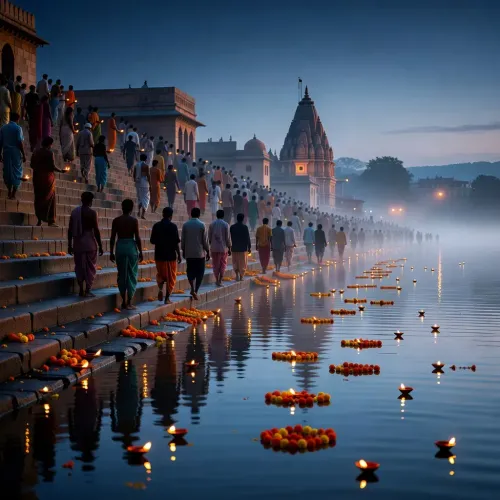
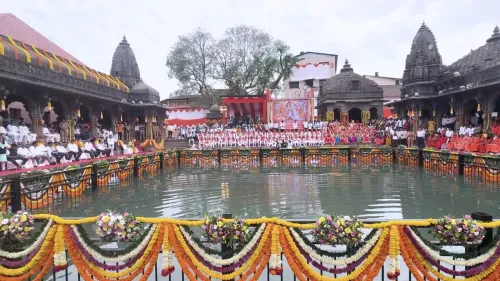
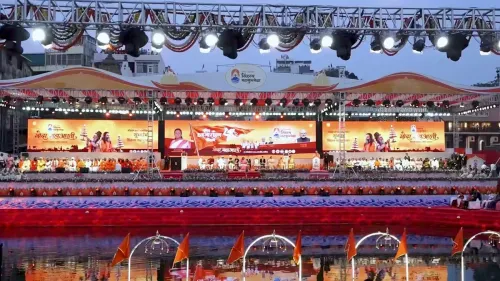
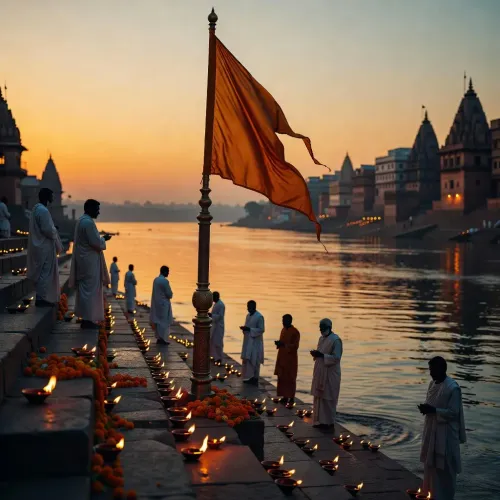
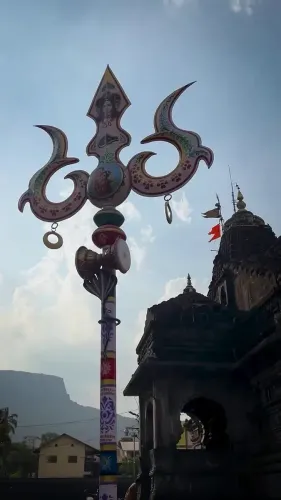
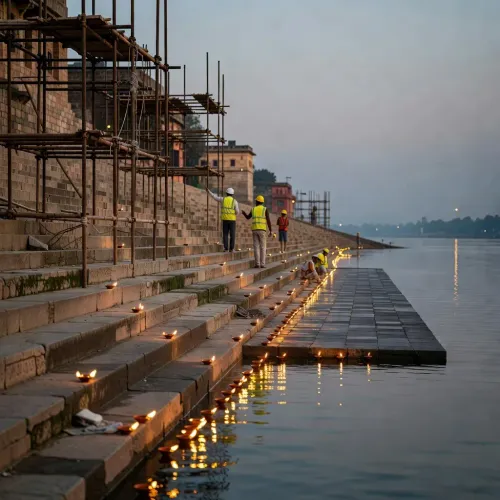
CM Fadnavis marks Nashik Simhastha Kumbh inauguration
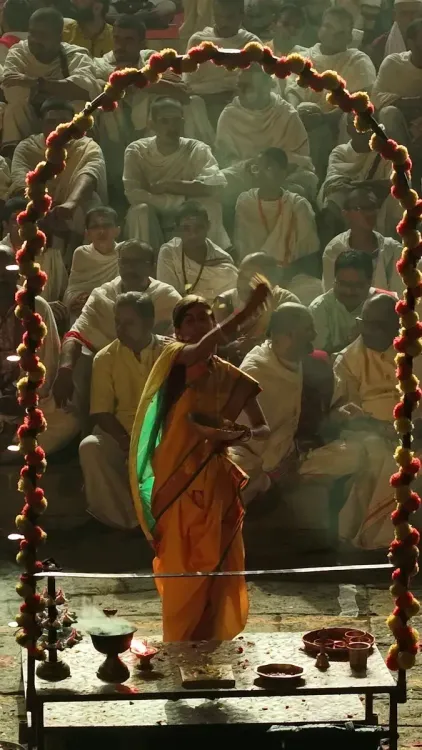
Synopsis
Maharashtra CM Devendra Fadnavis marked the inauguration of the Nashik-Trimbakeshwar Simhastha Kumbh Mela 2026, sharing personal glimpses from the opening ceremony and calling it a historic, once-in-twelve-years moment of divine fortune.
Key Takeaways
Maharashtra CM Devendra Fadnavis attended and publicly celebrated the inauguration of the Nashik-Trimbakeshwar Simhastha Kumbh Mela 2026 on 1 November 2026 .
The Simhastha Kumbh at Nashik-Trimbakeshwar follows a 12-year cycle ; the previous edition was held in 2015 .
The Kumbh Mela is a UNESCO-recognised intangible cultural heritage and one of the world's largest religious gatherings.
Trimbakeshwar , co-hosting the event, houses one of the twelve sacred Jyotirlinga Shiva temples.
The Nashik-Trimbakeshwar Kumbh Mela Authority (NTKMA) is the official body overseeing organisation of the festival.
Upcoming Shahi Snan (royal bath) procession dates and state pilgrim facilities are the key milestones to watch during the festival.
Some days, a chief minister steps out of the political arena and into history. Maharashtra Chief Minister Devendra Fadnavis on Sunday, 1 November 2026, shared a deeply personal tribute to the inauguration of the Nashik-Trimbakeshwar Simhastha Kumbh Mela, calling the occasion 'an unforgettable, historic moment' in his life and expressing profound gratitude at being a witness to the divine festival.
Posting in both English and Marathi, Fadnavis wrote: 'आयुष्यातील एक अविस्मरणीय, ऐतिहासिक क्षण…' — 'An unforgettable, historic moment in my life…' — and signed off with the Shaivite invocation Har Har Mahadev, tagging the official organising body @NTKMA_official (the Nashik-Trimbakeshwar Kumbh Mela Authority).
A festival on a 12-year clock
The Simhastha Kumbh Mela at Nashik-Trimbakeshwar is one of four editions of the Kumbh that rotate across India — the other sites being Prayagraj, Haridwar, and Ujjain — each on a strict 12-year cycle. The previous Nashik edition was held in 2015, making this 2026 gathering the first here in over a decade. Recognised by UNESCO as intangible cultural heritage of humanity, the Kumbh is the largest peaceful congregation of pilgrims on earth.
Trimbakeshwar, anchoring the festival alongside Nashik, is home to one of the twelve Jyotirlinga Shiva temples — sacred sites that draw devotees from across the subcontinent year-round. During a Simhastha year, that pull becomes extraordinary, drawing millions for the ritual Shahi Snan (royal bath) processions.
State machinery behind the sacred spectacle
For the Maharashtra government — and for Fadnavis personally as Chief Minister — the Simhastha Kumbh is as much a logistical mission as a spiritual one. State governments hosting a Kumbh edition are responsible for temporary infrastructure, crowd management, river-bank facilities, health services, and security across a multi-month event. The Nashik-Trimbakeshwar Kumbh Mela Authority coordinates the effort, and the Chief Minister's visible, emotion-forward presence at the inauguration signals the administration's intent to position this edition as a landmark event for Maharashtra.
Eyes will now turn to the schedule of Shahi Snan dates, the flow of pilgrim facilities along the Godavari river banks, and how the state manages the surge of millions of visitors across the weeks ahead. With his post, Fadnavis has set the tone — this Kumbh is not just governance; it is, in his own words, a matter of paramabhagya — supreme good fortune.
Point of View
Faith-forward post at the Simhastha Kumbh inauguration is consistent with the BJP's established strategy of associating governance with cultural and religious stewardship — a pattern visible across Kumbh editions in Prayagraj and Ujjain under BJP-led state governments. Hosting a landmark 12-year festival is a political asset: it demonstrates administrative capability at scale while deepening a bond with a vast, cross-cutting pilgrim constituency. For Fadnavis personally, the post reinforces his identity not merely as a technocratic administrator but as a culturally rooted Maharashtrian leader. The real test, however, will be operational — crowd safety, infrastructure delivery, and the smooth conduct of Shahi Snan processions will define the lasting legacy of this Kumbh edition.
NationPress
1 Nov 2026
Frequently Asked Questions
When did the Nashik Simhastha Kumbh Mela 2026 begin?
The Nashik-Trimbakeshwar Simhastha Kumbh Mela 2026 was inaugurated on 1 November 2026 , with Maharashtra CM Devendra Fadnavis attending the opening ceremony.
How often is the Kumbh Mela held at Nashik?
The Simhastha Kumbh Mela at Nashik-Trimbakeshwar is held every 12 years . The previous edition took place in 2015 , making the 2026 gathering the first in over a decade.
What is the Trimbakeshwar Simhastha Kumbh Mela?
The Trimbakeshwar Simhastha Kumbh Mela is a major Hindu pilgrimage festival held at Nashik and Trimbakeshwar in Maharashtra every 12 years. Trimbakeshwar is home to one of the twelve Jyotirlinga temples, making it a highly sacred site. The Kumbh Mela is recognised by UNESCO as intangible cultural heritage.
Which organisation manages the Nashik Kumbh Mela?
The Nashik-Trimbakeshwar Kumbh Mela Authority (NTKMA) is the official body responsible for organising and managing the Simhastha Kumbh Mela at Nashik and Trimbakeshwar.
What are the four Kumbh Mela sites in India?
The Kumbh Mela rotates among four cities: Prayagraj , Haridwar , Ujjain , and Nashik . Each site hosts the Kumbh on a 12-year cycle, though the exact timing at each location is determined by planetary positions.