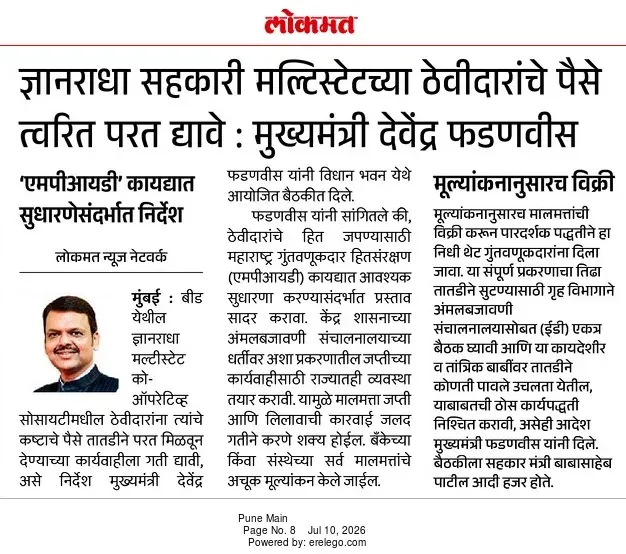
CM Fadnavis Orders Immediate Refund to Dnyanradha Depositors
Synopsis
The Chief Minister's Office of Maharashtra has directed CM Devendra Fadnavis to immediately return deposits to investors of Dnyanradha Sahakari Multistate Cooperative Society. The order highlights growing state pressure to resolve fund-recovery delays affecting cooperative depositors in Maharashtra.
Key Takeaways
The Chief Minister's Office of Maharashtra issued a directive on 10 July 2026 ordering immediate refund of deposits to Dnyanradha Sahakari Multistate Cooperative Society investors.
Chief Minister Devendra Fadnavis was directly addressed in the official post, indicating a top-level push for resolution.
Multistate cooperatives fall under dual oversight of the Central Registrar of Cooperative Societies and state authorities, complicating recovery efforts.
The 2019 PMC Bank crisis set a precedent for state-central coordination in protecting cooperative depositors in Maharashtra .
Possible next steps include referral to the RBI or Central Registrar for enforcement if administrative directives do not yield prompt results.
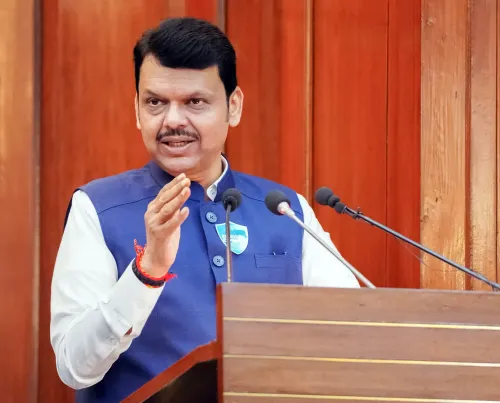
The Chief Minister's Office of Maharashtra, on Friday, 10 July 2026, directed Chief Minister Devendra Fadnavis to ensure the immediate return of funds to depositors of Dnyanradha Sahakari Multistate Cooperative Society, signalling the state government's intent to intervene in a case that has left investors in financial distress.
The official post, addressed to @Dev_Fadnavis, stated in Marathi: 'ज्ञानराधा सहकारी मल्टिस्टेटच्या ठेवीदारांचे पैसे त्वरित परत द्यावे' — meaning, 'The deposits of Dnyanradha Sahakari Multistate depositors must be returned immediately.' The directive underscores the urgency with which the Chief Minister's Office is treating the matter.
Context
Dnyanradha Sahakari Multistate Cooperative Society is a multistate cooperative entity whose depositors have been facing significant delays in recovering their funds. Multistate cooperatives, by their nature, fall under a dual regulatory framework — governed both by the state and by the Central Registrar of Cooperative Societies under the central government. This dual jurisdiction often complicates and slows down resolution efforts for affected depositors.
The directive from the Chief Minister's Office on 10 July 2026 signals that the state is prepared to use its administrative authority to push for faster resolution, even where central regulatory bodies hold primary oversight.
Policy Backdrop
Maharashtra has a long history of state intervention in cooperative financial sector crises. The 2019 PMC Bank crisis — which left lakhs of depositors unable to access their savings — established a critical precedent: that state and central authorities must act in coordination to protect public deposits and maintain confidence in cooperative institutions.
Such interventions typically proceed under the Maharashtra Cooperative Societies Act alongside central multistate cooperative regulations. The state government has, in past instances, escalated matters to the Reserve Bank of India or the Central Registrar when internal recovery mechanisms have proved insufficient.
Stakeholders and Impact
The primary stakeholders are the depositors of Dnyanradha Sahakari Multistate Cooperative Society — ordinary citizens, many of them from middle-income and rural backgrounds, who have entrusted their savings to the institution. Delays in fund recovery can cause severe financial hardship, particularly for those who depend on these deposits for daily expenses or retirement needs.
The broader cooperative sector in Maharashtra is also a stakeholder. Repeated failures in cooperative entities erode public trust in the sector, which plays a vital role in rural credit, agriculture, and small-scale savings mobilisation across the state.
What's Next
Observers will watch closely for concrete steps following this directive — including whether the state government initiates a formal referral to the Central Registrar of Cooperative Societies or coordinates with the RBI for enforcement action. The speed and transparency of the fund-recovery mechanism will determine whether depositor confidence in cooperative institutions can be restored.
If the state's intervention results in a structured refund timeline, it could set a template for handling similar multistate cooperative distress cases across Maharashtra and other states, reinforcing the principle that depositor protection must remain non-negotiable regardless of jurisdictional complexity.
Point of View
Given the large depositor base spread across urban and semi-urban constituencies. The invocation of this directive ahead of any formal regulatory action suggests the state is attempting to demonstrate responsiveness without waiting for the slower machinery of central oversight. Whether this translates into actual fund recovery or remains a political signal will be the real test of governance intent.
NationPress
10 Jul 2026
Frequently Asked Questions
What is the Dnyanradha Sahakari Multistate Cooperative Society issue?
Dnyanradha Sahakari Multistate Cooperative Society is a multistate cooperative whose depositors have been facing delays in recovering their funds. The Maharashtra CMO has now directed CM Devendra Fadnavis to ensure their deposits are returned immediately.
What did the Maharashtra CMO post about Dnyanradha cooperative?
On 10 July 2026, the Chief Minister's Office of Maharashtra posted on X directing CM Devendra Fadnavis to immediately return deposits to investors of Dnyanradha Sahakari Multistate Cooperative Society.
Who regulates multistate cooperative societies in India?
Multistate cooperative societies are regulated under a dual framework — by the Central Registrar of Cooperative Societies at the central level and by respective state governments under their cooperative societies acts.
What happened to PMC Bank depositors in Maharashtra?
The 2019 Punjab and Maharashtra Co-operative Bank crisis left lakhs of depositors unable to access savings, prompting state-central coordination for resolution. It set a precedent for how Maharashtra handles cooperative financial sector failures.
Can Maharashtra government force a multistate cooperative to refund deposits?
The state government can apply administrative and legal pressure and coordinate with the Central Registrar of Cooperative Societies or the RBI, but direct enforcement over a multistate cooperative ultimately involves central regulatory bodies as well.