CM Fadnavis Performs Eco-Friendly Ganesh Visarjan at Varsha
Synopsis
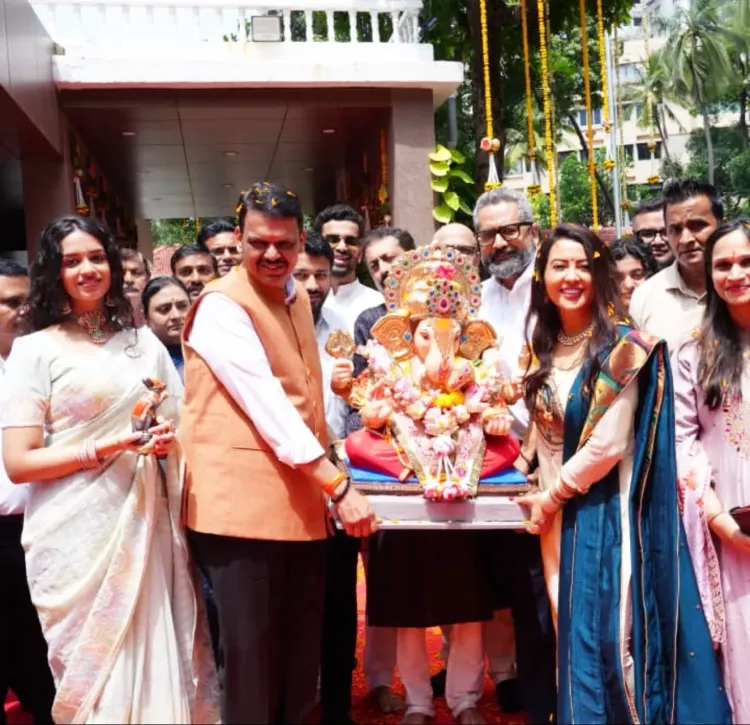
On 25 September 2026, Maharashtra Chief Minister Devendra Fadnavis performed an eco-friendly Ganesh Visarjan with family at the official Varsha residence in Mumbai, sharing a prayer for the state's people and framing the farewell as a moment of renewal and new beginnings.
Key Takeaways
Devendra Fadnavis performed Ganesh Visarjan on 25 September 2026 at his official residence, Varsha , in Mumbai.
The immersion was conducted using eco-friendly methods , consistent with Maharashtra's long-standing push to reduce festival-related pollution.
Fadnavis shared a traditional Marathi farewell verse and described feeling moved at the moment of parting.
He framed Visarjan not as separation but as a fresh start with new hopes and resolutions.
He offered a prayer for all obstacles and worries in the lives of Maharashtra's people to be removed.
The post ended with the traditional chant Ganpati Bappa Morya!
Pudhachya varshi lavkar ya! — invoking Ganesha's return next year.
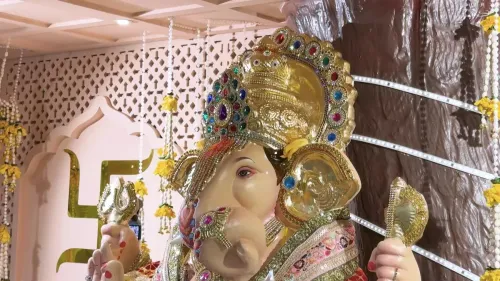
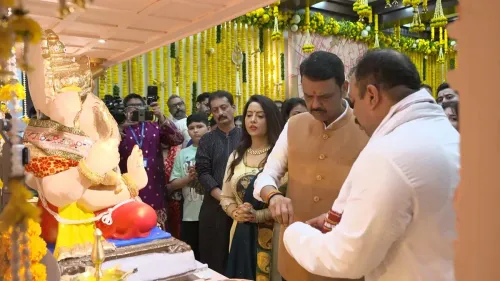
With a prayer on his lips and family by his side, Maharashtra Chief Minister Devendra Fadnavis bid farewell to Lord Ganesha on Friday, 25 September 2026, performing an eco-friendly immersion at his official residence, Varsha, in Mumbai — marking the close of one of Maharashtra's most beloved festivals.
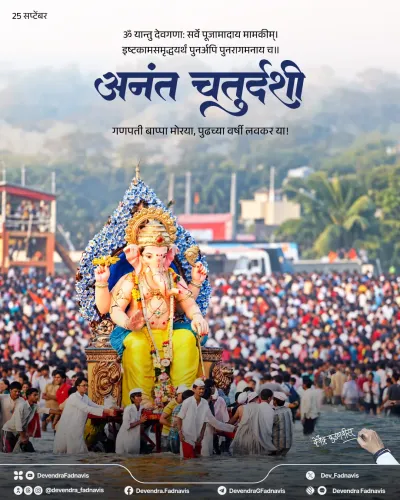
Sharing the moment on X in Marathi, Fadnavis began with a traditional parting verse: 'Nirop gheto Deva amha aadnya asavi, chukale amuche kahi tyachi kshamaa asavi' — 'We take your leave, O Lord, grant us your permission; forgive us if we erred in any way.' The lines, rooted in centuries of Maharashtrian devotional tradition, set the tone for a post that was personal, reflective, and quietly public in equal measure.
A farewell from Varsha, with family
The Chief Minister noted that the immersion was conducted with family members at Varsha, the official CM residence, using eco-friendly methods — a deliberate choice that mirrors Maharashtra's broader push to reduce the environmental footprint of Ganesh Chaturthi. Traditional plaster-of-Paris idols and chemical dyes have long been flagged as threats to rivers and coastlines; successive state administrations have actively promoted clay idols and designated immersion tanks as greener alternatives.
Fadnavis described his state of mind in the days leading up to Visarjan as one of deep absorption in devotion — 'Bappaachya bhaktit ramalele man' — and wrote that the moment of farewell moved him. Yet his framing was deliberately hopeful rather than elegiac: the immersion, he said, is not separation but 'a new beginning, with new hopes and new resolutions.'
Renewal over farewell — a message woven into the ritual
That reframing — Visarjan as arrival of possibility, not departure — is as old as the festival itself, but it carries particular resonance when voiced from the seat of Maharashtra's government. Fadnavis closed with a prayer that Bappa's grace and blessings remain upon all, and that every worry and obstacle in the lives of the people of Maharashtra be removed. The post ended with the signature chant: Ganpati Bappa Morya! Pudhachya varshi lavkar ya! — 'Lord Ganesha, come again soon next year!'
Maharashtra has the largest and most elaborate Ganesh Chaturthi celebrations in India, with the festival holding deep cultural and historical significance in the state. The tradition of public leaders sharing their Visarjan observances has become a fixture of the season, connecting governance with community ritual in a state where the two have always been intertwined.
As the idols return to the water and the city exhales, the Chief Minister's message is simple and certain: Bappa will return — and so will the resolve to serve.
Point of View
Performing Visarjan in a publicly documented, eco-friendly manner at his official residence is a calculated act of cultural signalling as much as personal devotion — it aligns him visibly with the state's environmental guidelines while affirming his roots in Maharashtra's Ganesha tradition. The framing of immersion as renewal rather than loss is politically astute: it projects optimism and forward momentum at a moment that could easily read as an ending. Over time, such posts have become a soft-power ritual for Maharashtra's leadership, blurring the line between personal faith and public persona in ways that resonate deeply with the state's electorate.
NationPress
25 Sept 2026
Frequently Asked Questions
Where did CM Devendra Fadnavis perform Ganesh Visarjan in 2026?
CM Devendra Fadnavis performed Ganesh Visarjan at Varsha, the official residence of the Maharashtra Chief Minister in Mumbai, on 25 September 2026.
What is eco-friendly Ganesh Visarjan?
Eco-friendly Ganesh Visarjan involves using clay or natural-material idols instead of plaster-of-Paris, and immersing them in designated tanks rather than rivers or the sea, to reduce water pollution.
What did Fadnavis say about Ganesh Visarjan?
Fadnavis said that Visarjan is not a separation but a new beginning — a fresh start with new hopes and new resolutions — and prayed that Bappa's blessings remain with all and that people's troubles be removed.
What is the significance of Ganesh Visarjan in Maharashtra?
Ganesh Visarjan is the ritual immersion of Lord Ganesha's idol marking the end of the Ganesh Chaturthi festival. Maharashtra has the country's largest and most elaborate celebrations, making it a defining cultural event for the state.
What does 'Ganpati Bappa Morya' mean?
'Ganpati Bappa Morya' is a traditional devotional chant meaning 'Lord Ganesha, my father,' used throughout the Ganesh Chaturthi festival in Maharashtra as an expression of devotion and farewell during Visarjan.