CM Fadnavis receives ₹2.5 lakh donation for drought relief
Synopsis
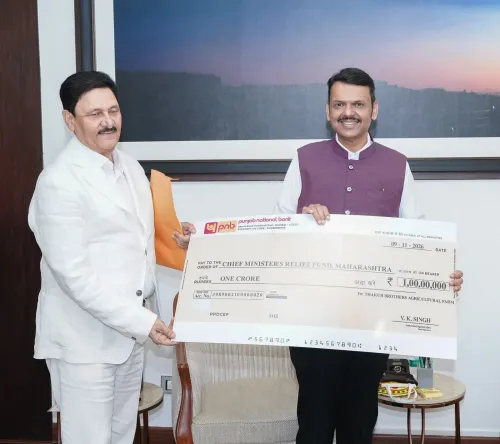
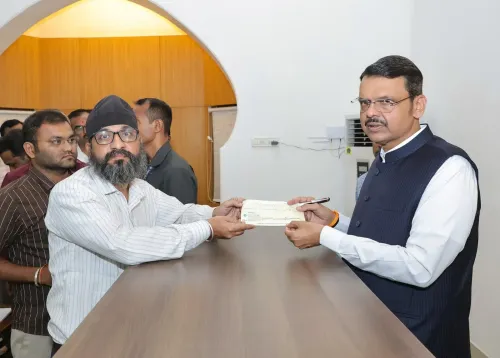
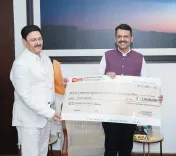
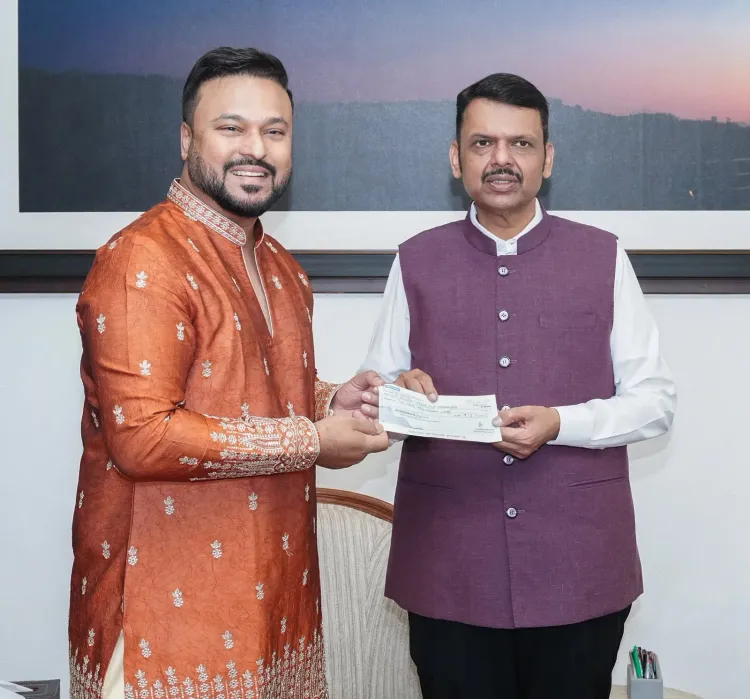
Tajinder Singh Tiwana donated ₹2,50,000 to Maharashtra's Chief Minister's Relief Fund for drought-hit farmers, presenting the cheque to CM Devendra Fadnavis in Mumbai on 9 November 2026.
Key Takeaways
Tajinder Singh Tiwana donated ₹2,50,000 to the Chief Minister's Relief Fund in Mumbai on 9 November 2026 .
The donation is designated specifically for drought-affected farmers in Maharashtra.
CM Devendra Fadnavis personally received the cheque and thanked the donor.
The Chief Minister's Relief Fund channels both government and private contributions toward immediate disaster relief.
Regions such as Marathwada and Vidarbha are chronically vulnerable to drought and are the primary beneficiaries of such relief.
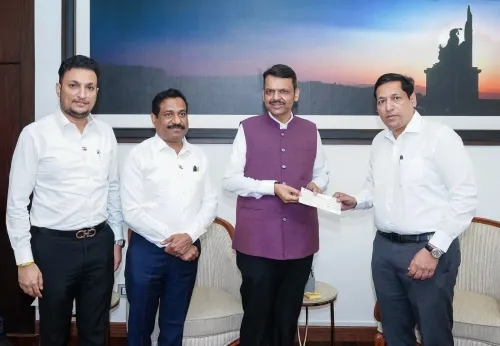
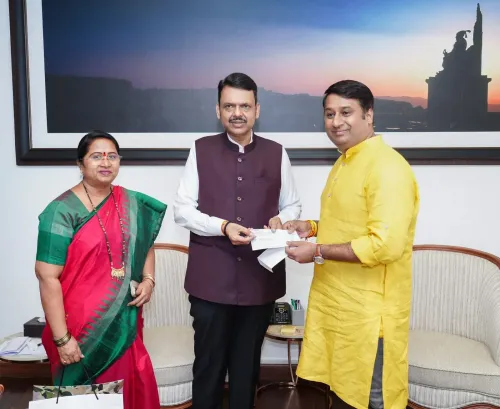
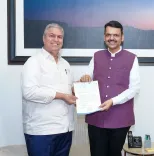
A private citizen stepped forward for Maharashtra's drought-hit farmers on Monday, 9 November 2026, when Tajinder Singh Tiwana handed over a cheque of ₹2,50,000 to Chief Minister Devendra Fadnavis in Mumbai for the Chief Minister's Relief Fund — the state's primary mechanism for channeling drought-relief support to vulnerable agricultural communities.
The Chief Minister's Office of Maharashtra confirmed the donation on X, noting that CM Fadnavis personally thanked Tiwana at the meeting. The gesture directs funds toward farmers reeling under drought conditions — a recurring crisis in regions such as Marathwada and Vidarbha, where rain failure can wipe out an entire season's income overnight.
What the CM Relief Fund does for farmers
The Chief Minister's Relief Fund has been maintained across successive Maharashtra governments as a standing instrument for disaster response. It serves as a conduit for both state allocations and private contributions, enabling the government to mobilise short-term support — seed replacement, subsistence assistance, and emergency water supply — without waiting for lengthier budgetary processes.
Individual donations to the fund are a longstanding feature of Maharashtra's disaster-response culture, with businesses, professionals, and civic groups periodically contributing during declared drought years. Tiwana's cheque of ₹2.5 lakh adds to that tradition.
Marathwada and Vidarbha: Maharashtra's drought heartland
Agriculture-dependent districts in Marathwada and Vidarbha bear the heaviest burden when monsoon rains underperform. Farmers in these belts often depend entirely on a single kharif (monsoon-season) crop, making a failed harvest an existential financial blow. Relief funds provide a first line of support while longer-term water-management and crop-insurance frameworks are activated.
CM Devendra Fadnavis — who has served multiple terms leading Maharashtra and has regularly overseen state responses to agricultural distress — accepted the cheque as part of an ongoing effort to aggregate relief resources from across civil society.
Every rupee that flows into the fund before disbursement announcements is a signal that the state's crisis response is not government's burden alone — and for farmers waiting in parched fields, that signal matters.
Point of View
While modest in absolute terms, serve a symbolic and practical function in Maharashtra's drought response architecture — they signal public solidarity and supplement state allocations during gaps in formal disbursement cycles. The gesture occurs under a government that has repeatedly faced scrutiny over the pace and adequacy of relief to Marathwada and Vidarbha farmers. For CM Fadnavis, publicising such contributions reinforces a narrative of whole-of-society crisis response rather than purely administrative action. Whether the fund translates contributions into timely, targeted disbursement to the most distressed districts remains the more consequential test.
NationPress
9 Nov 2026
Frequently Asked Questions
What is the Maharashtra Chief Minister's Relief Fund?
The Chief Minister's Relief Fund is a Maharashtra state mechanism that pools government allocations and private donations to deliver emergency relief — including to drought-affected farmers — without waiting for lengthy budget procedures.
Who is Tajinder Singh Tiwana and why did he donate?
Tajinder Singh Tiwana is the individual who presented a cheque of ₹2,50,000 to CM Devendra Fadnavis on 9 November 2026 in Mumbai, directing the donation toward drought-affected farmers via the CM Relief Fund.
How does the CM Relief Fund help drought-hit farmers in Maharashtra?
The fund provides short-term support such as subsistence assistance, seed replacement, and emergency water supply to farmers in drought-affected districts, particularly in Marathwada and Vidarbha.
Which parts of Maharashtra are most affected by drought?
Marathwada and Vidarbha are Maharashtra's most drought-vulnerable regions, where farmers depend heavily on a single monsoon-season crop and are acutely exposed to rain failure.
Can ordinary citizens donate to the Maharashtra CM Relief Fund?
Yes. The CM Relief Fund accepts contributions from individuals, businesses, and civic groups, and has historically received such donations during declared drought years as part of the state's civil-society-driven disaster response.