CM Fadnavis unveils Dattaji Meghe memorial in Nagpur
Synopsis
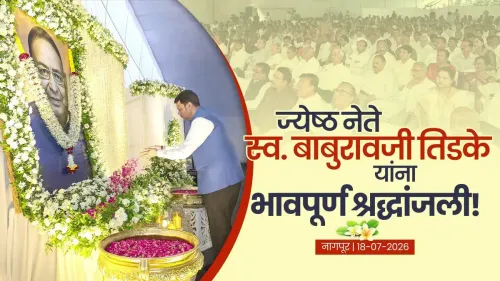
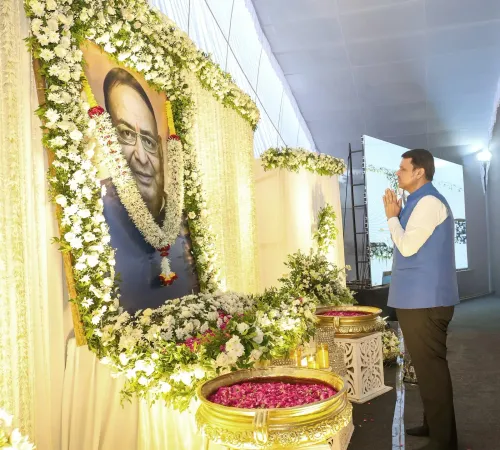
Maharashtra Chief Minister Devendra Fadnavis unveiled a memorial for late Vidarbha leader Dattaji Meghe in Nagpur on 12 November 2026, honouring a politician remembered for his contributions to education, cooperatives, and social welfare across the region.
Key Takeaways
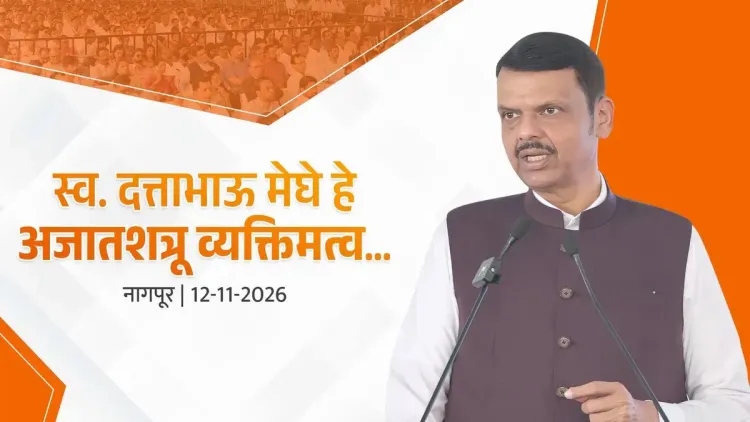
CM Devendra Fadnavis attended the unveiling of the Dattaji Meghe memorial in Nagpur on 12 November 2026 .
Dattaji Meghe , known as Loknete , was a veteran Maharashtra MP from the Vidarbha region.
His institutional legacy includes the Datta Meghe Institute of Medical Sciences , a major medical university in Nagpur.
CM Fadnavis described him as 'a leader who gave with both hands in every field' — in both Marathi and Hindi.
The memorial is in Nagpur , Maharashtra's winter capital and the political heartland of Vidarbha.
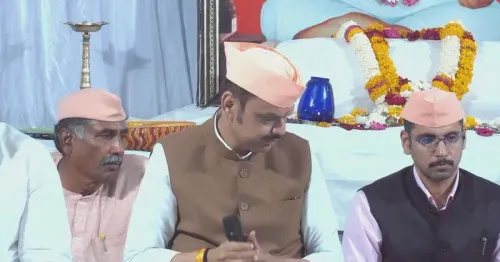
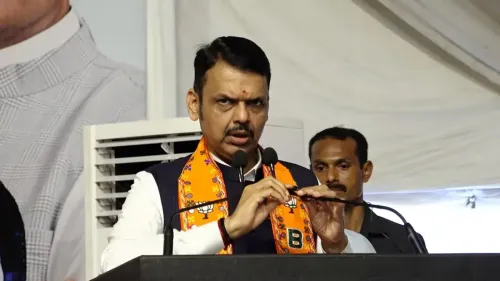
A city that shaped him now honours him in stone. Maharashtra Chief Minister Devendra Fadnavis attended the unveiling of a memorial dedicated to the late Dattaji Meghe — revered across Vidarbha as Loknete (People's Leader) — in Nagpur on Thursday, 12 November 2026, marking a moment of collective remembrance for the region's political and social memory.
Posting on X in Marathi and Hindi, CM Fadnavis captured the sentiment of the occasion with characteristic economy: 'स्व. दत्ताभाऊ मेघे हे प्रत्येक क्षेत्रात दोन्ही हातांनी भरभरून देणारे नेते होते' — 'Late Dattabhau Meghe was a leader who gave with both hands in every field.' The tribute was brief. The weight it carried was not.
Who was Dattaji Meghe, and why Nagpur still remembers
Dattaji Meghe, widely addressed as Dattabhau by those who knew him, was a veteran Maharashtra politician whose roots and reach were firmly planted in the Vidarbha region. He served multiple terms as a Member of Parliament and built a reputation that extended well beyond legislative floors — into cooperative institutions, schools, hospitals, and social welfare organisations that continue to serve the region today.
His most enduring institutional legacy is the Datta Meghe Institute of Medical Sciences in Nagpur — a large private medical and research university that stands as a tangible marker of his conviction that education and healthcare were the truest forms of public service. For many in Vidarbha, his name is not associated with political power so much as with access — to a doctor, to a college seat, to a cooperative loan.
Nagpur as the stage for Vidarbha's political memory
The choice of Nagpur for the memorial is itself significant. The city — Maharashtra's winter capital and the administrative heartland of Vidarbha — has long served as the region's symbolic centre, where political legacies are publicly inscribed. Maharashtra governments across party lines have periodically unveiled memorials and statues for senior regional figures, recognising contributions in education, cooperatives, and social welfare in a region that has historically felt economically distant from Mumbai's political gravity.
That CM Fadnavis — himself a Nagpur native and product of the city's political culture — presided over this unveiling adds a personal dimension to a formal state occasion. His presence signals not just institutional acknowledgement but regional continuity.
Dattaji Meghe's legacy now has a fixed address in Nagpur. Whether that address becomes a site of civic pride or quiet symbolism depends on what the city — and its leaders — choose to do with the memory next.
Frequently Asked Questions
Who was Dattaji Meghe?
Dattaji Meghe, widely known as Dattabhau Meghe or Loknete, was a veteran Maharashtra politician from the Vidarbha region who served multiple terms as a Member of Parliament and built institutions in education, cooperatives, and social welfare, including the Datta Meghe Institute of Medical Sciences in Nagpur.
Where was the Dattaji Meghe memorial unveiled?
The memorial was unveiled in Nagpur, Maharashtra's winter capital and the political and cultural centre of the Vidarbha region, on 12 November 2026.
What did CM Devendra Fadnavis say about Dattaji Meghe?
CM Fadnavis described late Dattaji Meghe as 'a leader who gave with both hands in every field,' posting the tribute in both Marathi and Hindi on X.
What is the Datta Meghe Institute of Medical Sciences?
The Datta Meghe Institute of Medical Sciences is a large private medical and research university in Nagpur, regarded as one of the most significant institutional legacies of late Dattaji Meghe's public service.
Why do Maharashtra governments unveil memorials for regional leaders?
Maharashtra governments across parties periodically unveil memorials and statues for senior regional figures to recognise their contributions in education, social service, and public life, and to reinforce regional identity — particularly in Vidarbha, which has historically sought greater political recognition within the state.