CM Fadnavis extends Eid al-Adha greetings to Maharashtra
Synopsis
Maharashtra Chief Minister Devendra Fadnavis extended Eid al-Adha greetings on 28 May 2026, posting 'Eid Mubarak' on X. The gesture reflects a standing tradition among Indian chief ministers of acknowledging major religious festivals as a signal of inclusive governance in a diverse state.
Key Takeaways
Devendra Fadnavis , Chief Minister of Maharashtra , posted Eid al-Adha greetings on 28 May 2026 .
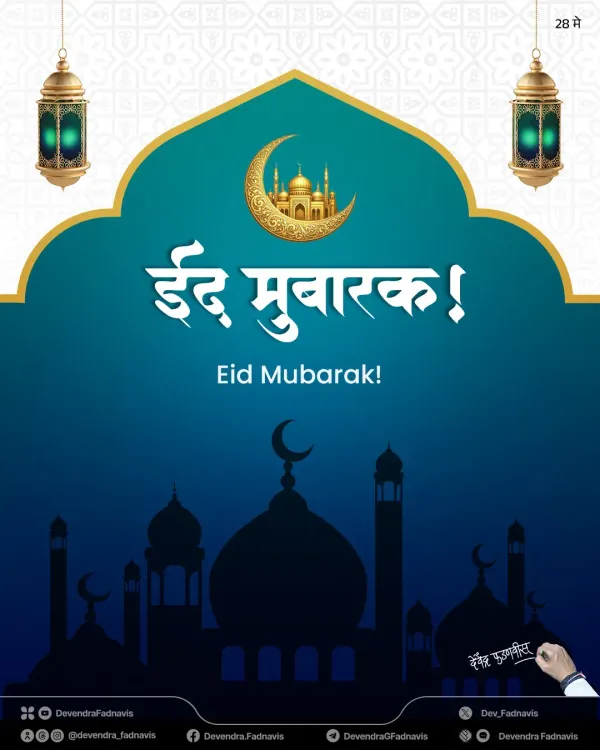
The message included 'ईद मुबारक!' ('Eid Mubarak!') in Hindi and an English greeting directed at all citizens.
Eid al-Adha , also called Bakrid , is one of Islam's two principal festivals, observed with prayers, sacrifice, and community sharing.
Maharashtra has one of India's largest Muslim populations, making the occasion significant for millions of residents.
The greeting aligns with a broad political tradition of Indian chief ministers issuing public wishes on major religious festivals to signal communal harmony.
The Fadnavis government's next major religious outreach is expected around Ganesh Chaturthi and Diwali .
Maharashtra Chief Minister Devendra Fadnavis extended warm wishes to the Muslim community on the occasion of Eid al-Adha, posting a greeting on Thursday, 28 May 2026 that reached citizens across the state and beyond.
In his post, Fadnavis wrote 'ईद मुबारक!' ('Eid Mubarak!') alongside the message '#EidAlAdha wishes to all!', addressing the broader public in a gesture of inclusive goodwill ahead of the festival.
Context
Eid al-Adha, also widely known as Bakrid, is one of the two principal festivals of Islam. It commemorates the willingness of Prophet Ibrahim to sacrifice his son in obedience to God and is observed with congregational prayers, animal sacrifice, and the sharing of food with family, neighbours, and those in need.
Maharashtra is home to one of India's largest Muslim populations, making the festival a significant occasion for millions of the state's residents. Public greetings from the Chief Minister carry both symbolic and administrative weight in a diverse, pluralistic state.
Policy Backdrop
Chief ministers across India's major political parties have maintained a consistent tradition of issuing public greetings on Eid al-Adha, Diwali, Christmas, Guru Nanak Jayanti, and other religious occasions. The practice is widely seen as a signal of the state government's commitment to communal harmony and inclusive governance.
For Fadnavis, who leads a coalition government in Mumbai, such messaging is directed at a broad and diverse electorate spanning Maharashtra's 36 districts, where religious pluralism is a social and political reality.
Stakeholders and Impact
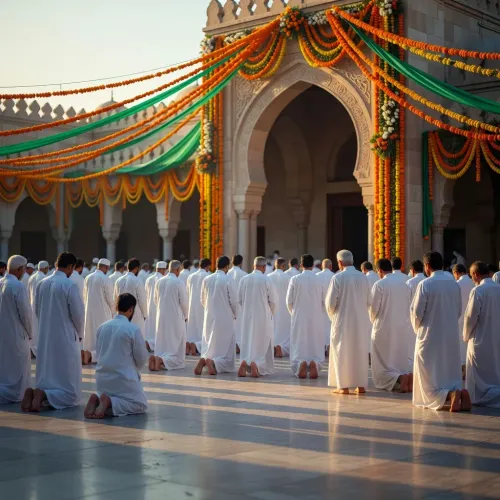
The greeting is addressed primarily to the Muslim community across Maharashtra and India at large. On a day marked by congregational prayers at mosques and public grounds, a public message from the Chief Minister reinforces the state administration's acknowledgement of the community's celebrations.
The post also carries a broader civic dimension: it signals to all communities that the state government recognises and respects the religious calendar of every major faith group in Maharashtra.
What's Next
With Eid al-Adha marking a key point in the religious calendar, attention will now turn to how the state government facilitates the festival's observance — including arrangements at major mosques and public spaces across Mumbai, Pune, Nagpur, and other cities.
Observers will also watch for similar outreach from the Fadnavis government around upcoming festivals such as Ganesh Chaturthi and Diwali, which will further define the administration's approach to inclusive governance in a multi-faith state.
Point of View
Particularly significant in Maharashtra where the Muslim community forms a substantial share of the electorate. For a BJP chief minister leading a coalition government in a diverse state, such gestures are part of a broader effort to project a governance identity that transcends single-community appeal. The post fits a nationwide pattern where the festival calendar functions as a soft-diplomacy tool between governments and religious communities. How consistently the administration follows through with substantive policy — on minority welfare, communal security, and equitable development — will ultimately determine whether such messaging carries lasting political weight.
NationPress
22 Oct 2026
Frequently Asked Questions
Why did CM Devendra Fadnavis post Eid al-Adha greetings?
Fadnavis extended Eid al-Adha wishes as part of the established tradition of Indian chief ministers publicly acknowledging major religious festivals to signal inclusive governance and communal harmony.
What is Eid al-Adha and why is it significant in Maharashtra?
Eid al-Adha, also called Bakrid, is one of Islam's two principal festivals, commemorating Prophet Ibrahim's willingness to sacrifice his son. Maharashtra's large Muslim population makes it one of the most widely observed festivals in the state.
When did CM Fadnavis post his Eid Mubarak message?
The Chief Minister posted his Eid al-Adha greetings on Thursday, 28 May 2026, at approximately 8:24 AM IST on X (formerly Twitter).
What did Devendra Fadnavis write in his Eid post?
He wrote '#EidAlAdha wishes to all!' in English and 'ईद मुबारक!' (Eid Mubarak!) in Hindi, addressing citizens across Maharashtra and the country.
Do BJP leaders typically send Eid greetings?
Yes. Chief ministers and senior leaders across all major Indian parties, including the BJP, routinely issue public greetings on Eid al-Adha, Eid ul-Fitr, and other religious festivals as a gesture of communal inclusivity.