CM Rekha Gupta Echoes Modi's Viksit Bharat Call
Synopsis
Delhi Chief Minister Rekha Gupta shared PM Modi's pledge to deliver a Developed India within 20 years, invoking Swami Vivekananda's timeless call to persevere. The post reinforces the Viksit Bharat @2047 vision as a generational commitment stretching from the Centre to the states.
Key Takeaways
Delhi CM Rekha Gupta shared PM Narendra Modi's speech on 21 November 2026 .
Modi pledged to build a Developed India within 20 years , committing to work 'with every ounce of our being.' The speech concluded with Swami Vivekananda's quote: 'Arise, awake, and stop not till the goal is reached.' The message reinforces the Viksit Bharat @2047 vision, first articulated publicly since 2023 , targeting developed-nation status at 100 years of Independence .
Gupta's amplification from Delhi signals coordinated BJP messaging from the Centre to the state level.
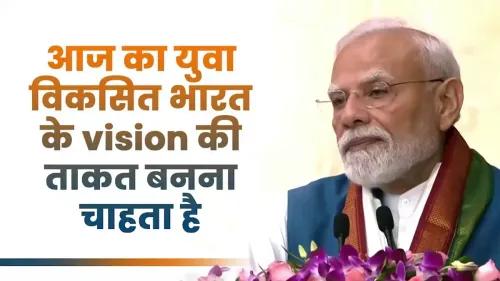
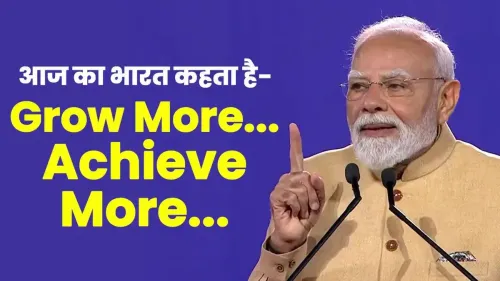
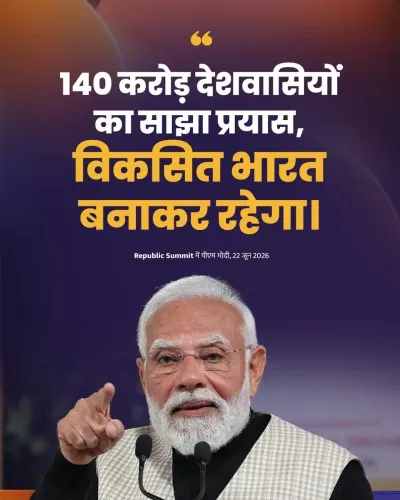
Delhi Chief Minister Rekha Gupta on Saturday, 21 November 2026, amplified a clarion call from Prime Minister Narendra Modi — a vow to build a developed India within 20 years, sealed with one of history's most stirring demands for action. The message was brief. The ambition was anything but.
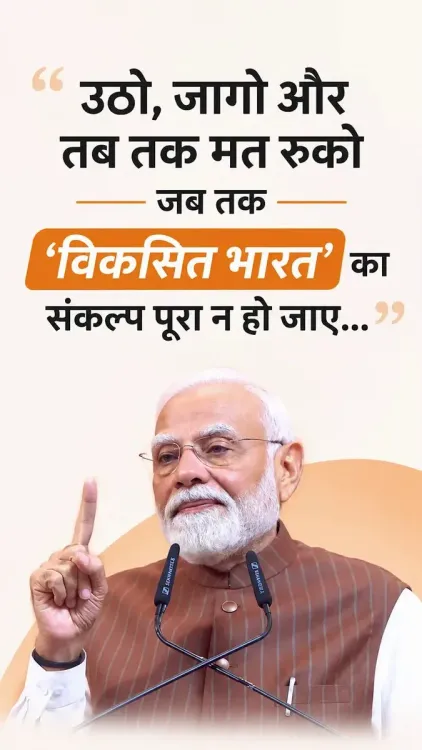
Sharing the Prime Minister's words, Gupta quoted Modi's pledge verbatim: '20 saal mein Viksit Bharat banakar rahenge, hum karke rahenge aur iske liye ji-jaan se jutenge' — 'We will build a Developed India in 20 years, we will get it done, and we will devote ourselves to it with every ounce of our being.' Modi closed his address by invoking Swami Vivekananda: 'Arise, awake, and stop not till the goal is reached.'
The 20-Year Clock on Viksit Bharat
The Viksit Bharat @2047 vision — targeting developed-nation status by the centenary of Indian independence — has anchored Prime Minister Modi's public addresses since 2023. The goal frames every major policy conversation around a single deadline: 100 years of Independence. Speaking from that stage, Modi recast that distant horizon as an urgent, near-term commitment: not 2047, but within the next 20 years.
The pivot in framing matters. '2047' can feel abstract; '20 years' feels like a generation's work — something parents can promise their children. It is precisely the kind of time-binding language designed to convert a policy target into a personal pledge.
Vivekananda's Words in a Policy Address
The choice to close with Swami Vivekananda is neither incidental nor new. The 19th-century monk's call — 'Utho, jaago aur tab tak mat ruko, jab tak lakshya prapt na ho jaye' — has been a recurring anchor for nationalist and reformist movements across India's modern history. Placing it at the end of a development-focused speech blurs the line between civic duty and spiritual resolve, a register that resonates deeply with India's youth demographic, the primary audience the Viksit Bharat campaign is designed to mobilise.
Chief Minister Gupta's decision to amplify the quote from Delhi — the national capital and a city the BJP recaptured after a long gap — adds a layer of political symbolism: the governing party's leadership, from the Centre to the state, projecting a unified development message.
India's next budget cycle, and the annual progress reports on Viksit Bharat-linked schemes, will be the first real tests of whether the pledge moves from the stage to the spreadsheet.
Point of View
And this post is a textbook example of that strategy in action. By recasting the 2047 deadline as a '20-year' personal pledge, Modi's messaging team shortens the psychological distance between citizen and national goal. Rekha Gupta's role as amplifier from Delhi — a city with high symbolic weight for the BJP — suggests the party is deliberately layering state-level voices onto central messaging to broaden reach. The Vivekananda invocation is a consistent rhetorical anchor, reinforcing the idea that development is not merely economic policy but a civilisational duty.
NationPress
21 Nov 2026
Frequently Asked Questions
What is the Viksit Bharat @2047 goal?
Viksit Bharat @2047 is Prime Minister Modi's vision to make India a fully developed nation by 2047, the centenary of Independence, through sustained economic growth, governance reform, and social development.
What did PM Modi say about building a developed India in 20 years?
PM Modi pledged that India will be built into a developed nation within 20 years, saying the country will 'get it done' and devote itself 'with every ounce of its being' to achieving that goal.
Why did PM Modi quote Swami Vivekananda in his speech?
Modi invoked Vivekananda's famous call — 'Arise, awake, and stop not till the goal is reached' — to frame India's development journey as a matter of national resolve and civic duty, not just policy.
Who is Rekha Gupta and why did she share Modi's speech?
Rekha Gupta is the Chief Minister of Delhi and a BJP leader. She shared PM Modi's words to amplify the Viksit Bharat development message from the state level, reinforcing coordinated party communication.
When did the Viksit Bharat campaign begin?
PM Modi has been publicly articulating the Viksit Bharat @2047 vision since at least 2023, featuring it in major addresses, budget cycles, and government scheme frameworks.