Labour Codes one year on: Mandaviya calls workers' welfare, industrial growth twin engines of progress
Synopsis
One year after India's Labour Codes took effect, Union Labour Minister Dr Mansukh Mandaviya convened a national conclave in Gandhinagar to take stock — and the headline number was striking: social security coverage has jumped from 25 crore in 2014 to 101 crore in 2026. With state-level rollout still uneven and trade unions watchful, the Chintan Shivir's recommendations could shape the next phase of one of India's most consequential labour reforms.
Key Takeaways
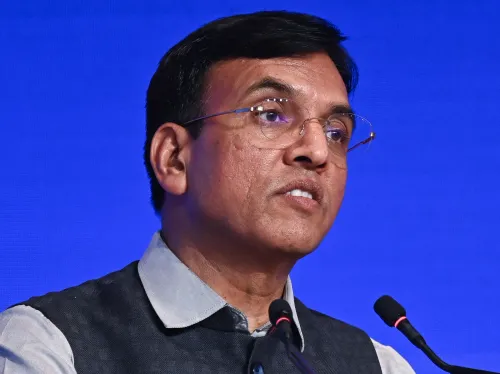
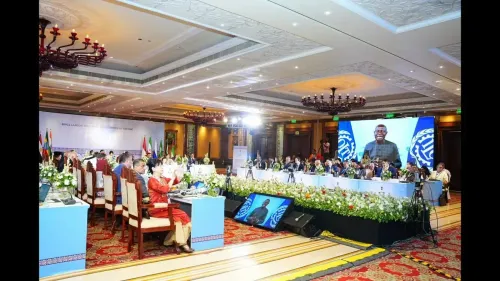
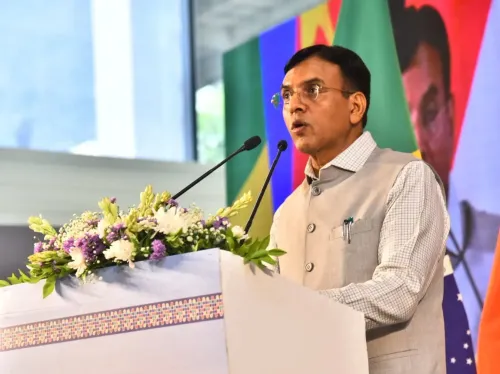
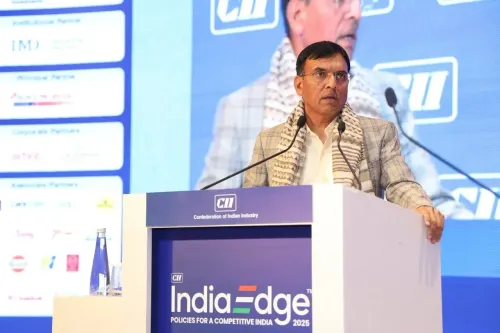
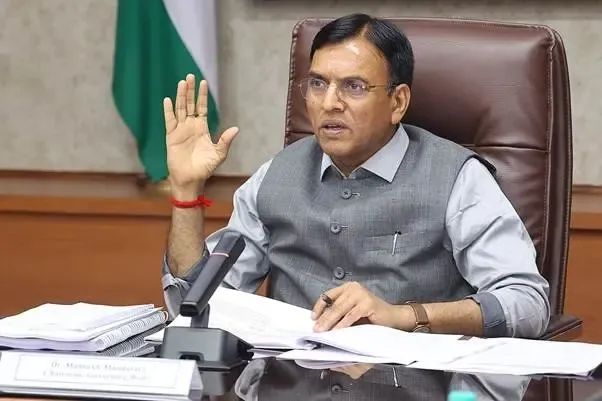
Union Labour Minister Dr Mansukh Mandaviya addressed the two-day Chintan Shivir in Gandhinagar, Gujarat on 21 November 2026 .
The conclave marks one year since the Labour Codes came into effect on 21 November 2025 .
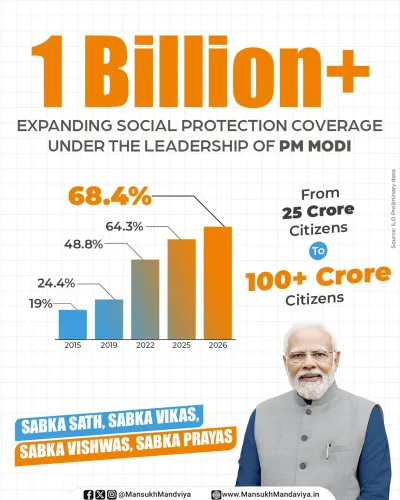
India's social security coverage has expanded from 25 crore in 2014 to 101 crore in 2026 , according to Mandaviya.
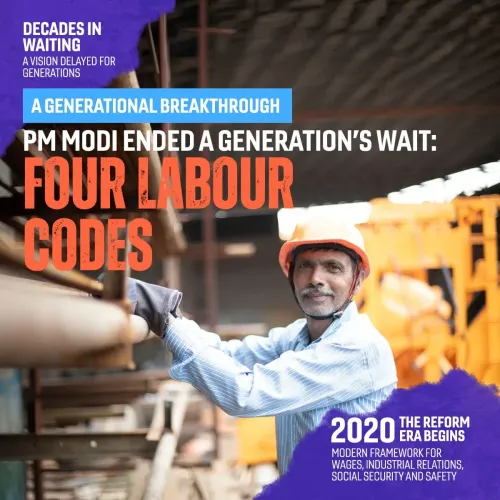
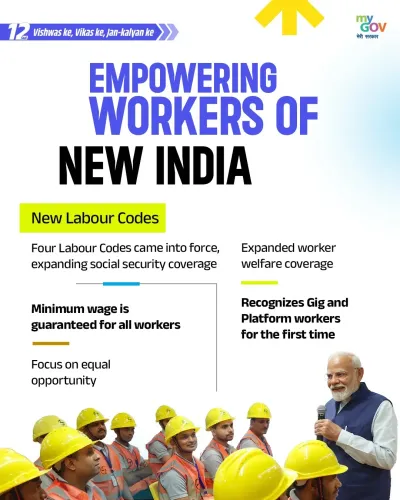
The Labour Codes consolidate 29 central labour laws into four codes, covering wages, industrial relations, social security, and occupational safety.
Gujarat Chief Minister Bhupendra Patel and Labour Secretary Dr Chandra Bhushan Kumar also addressed participants.
The minister called for collective action to advance the welfare of India's seven crore workers and flagged international employment opportunities as a priority.
Union Labour Minister Dr Mansukh Mandaviya on Saturday, 21 November 2026 declared that workers' welfare and industrial growth are the twin engines driving India's national progress, addressing the two-day 'Chintan Shivir' in Gandhinagar, Gujarat. The conclave, organised by the Ministry of Labour and Employment, marks exactly one year since the Labour Codes came into effect on 21 November 2025.
What Mandaviya Said at the Chintan Shivir
Speaking at the opening of the deliberative retreat, Dr Mandaviya emphasised that strengthening industries while safeguarding workers' interests is non-negotiable for India's development trajectory. He outlined how the Labour Codes consolidate provisions covering minimum wages, expanded social security, and fixed-term employment, while simultaneously reducing compliance burdens on businesses.
The minister drew attention to what he described as a landmark expansion of India's social security coverage — from 25 crore beneficiaries in 2014 to 101 crore in 2026 — a figure he presented as evidence of the government's sustained commitment to the workforce.
Global Opportunity and India's Demographic Edge
Dr Mandaviya also shifted focus to the international arena, highlighting the rising global demand for India's skilled workforce and the country's demographic advantage. He underscored the urgency of structured deliberations on international employment opportunities for Indian youth and the cross-border mobility of workers. The minister called upon all stakeholders to operate collectively in the spirit of Team India to advance the welfare of the country's seven crore workers.
Gujarat CM and Labour Secretary Weigh In
Gujarat Chief Minister Bhupendra Patel addressed delegates at the Chintan Shivir, affirming that the dignity, welfare and empowerment of workers are integral to India's nation-building mission. He pointed to what he described as transformative implementation efforts over the past year that have produced a stronger, more worker-centric labour ecosystem.
Dr Chandra Bhushan Kumar, Secretary (Labour and Employment), called for a fundamental shift in mindset among implementers for the Labour Codes to deliver on their promise. He stressed that focused deliberations are essential to meet responsibilities ahead and invited participants to share best practices from their respective states and Union Territories.
Background: The Labour Codes Framework
The Labour Codes — which consolidate 29 central labour laws into four codes covering wages, industrial relations, social security, and occupational safety — have been among the more contested reforms of recent years. While industry bodies broadly welcomed the rationalisation of compliance requirements, trade unions have at various points raised concerns about the dilution of worker protections, particularly around fixed-term employment and strike notice periods. The Chintan Shivir appears designed to surface on-ground implementation experience and build consensus among state governments, which must enact their own rules for the codes to take full effect.
What Comes Next
The two-day conclave in Gandhinagar is expected to produce a set of recommendations on implementation gaps, international labour mobility, and skill development priorities. With 21 November 2026 marking the first anniversary of the codes' commencement, the government is likely to use the event to signal a push for uniform state-level rollout — a process that remains uneven across the country.
Point of View
But it demands scrutiny — coverage enrolment and active benefit delivery are not the same metric. The Labour Codes' real test lies at the state level, where implementation rules remain inconsistently notified, leaving millions of workers in a regulatory grey zone. The Chintan Shivir's emphasis on 'mindset change' among implementers, as flagged by the Labour Secretary, is an inadvertent admission that administrative inertia remains the reform's biggest obstacle — not the legislation itself.
NationPress
21 Nov 2026
Frequently Asked Questions
What is the Labour Codes Chintan Shivir in Gandhinagar?
The Chintan Shivir is a two-day deliberative conclave organised by the Ministry of Labour and Employment in Gandhinagar, Gujarat, beginning 21 November 2026. It marks one year since India's Labour Codes came into effect and aims to review implementation, share best practices, and chart the road ahead for worker welfare.
What are India's Labour Codes?
India's Labour Codes consolidate 29 central labour laws into four codes covering wages, industrial relations, social security, and occupational safety and working conditions. They came into effect on 21 November 2025, aiming to simplify compliance for businesses while expanding protections such as minimum wages, fixed-term employment, and social security.
How has India's social security coverage changed under the Labour Codes era?
According to Labour Minister Dr Mansukh Mandaviya, India's social security coverage expanded from 25 crore beneficiaries in 2014 to 101 crore in 2026. The government attributes this growth to the progressive rollout of welfare schemes under successive administrations, with the Labour Codes framework intended to institutionalise these gains.
Who attended the Chintan Shivir and what was discussed?
The conclave was addressed by Union Labour Minister Dr Mansukh Mandaviya, Gujarat Chief Minister Bhupendra Patel, and Labour Secretary Dr Chandra Bhushan Kumar. Key themes included the first-year review of Labour Codes implementation, international employment opportunities for Indian youth, cross-border worker mobility, and sharing of best practices from states and Union Territories.
What happens after the Chintan Shivir concludes?
The two-day conclave is expected to produce recommendations on implementation gaps, skill development, and labour mobility. A key priority is pushing for more uniform state-level rules under the Labour Codes, whose full effect depends on individual state governments notifying their own implementing regulations — a process that has been uneven across India.