101 crore Indians under social security cover, ILO highlights milestone
Synopsis
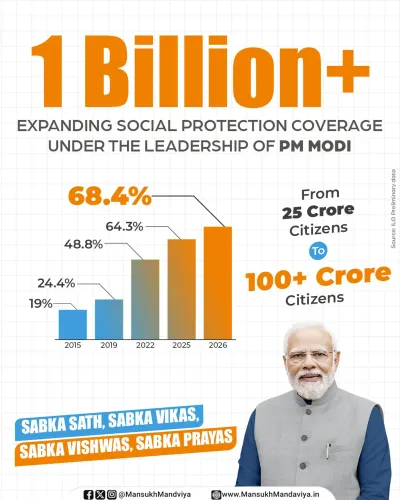
India has crossed the one-billion mark in social protection coverage, with the ILO formally recognising that 101 crore people — over 68% of the population — are now under at least one social security scheme. Labour Minister Mandaviya used the occasion to signal structural reforms to ESIC and EPFO, including private-hospital integration and UPI-based provident fund withdrawals.
Key Takeaways
India's social protection systems now cover 101 crore people , or over 68 per cent of the population, as of 31 July 2025 .
The International Labour Organization (ILO) has formally recognised India crossing the one-billion social protection coverage mark.
Employment elasticity has risen sharply — every 1% GDP growth now generates 1.11% employment growth , up from 0.008% twelve years ago.
Labour Minister Dr Mansukh Mandaviya signalled that well-run private hospitals may be designated as ESIC facilities under upcoming reforms.
EPFO is moving to fully digital claims with automatic UAN-linked account transfers; UPI-based withdrawals are under consideration.
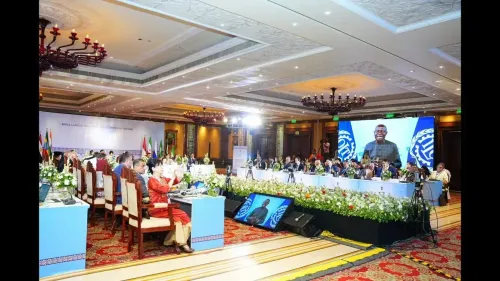
The milestone was announced at the 4th Global Industrial Relations Summit in New Delhi , organised by AIOE in association with FICCI .
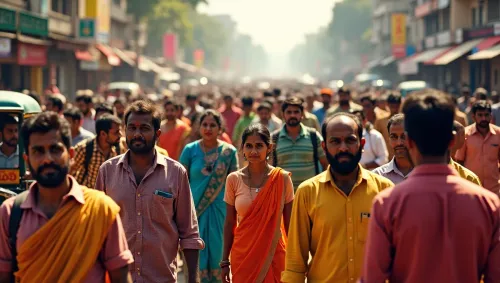
India's social protection systems now cover approximately 101 crore people — more than 68 per cent of the country's population — a landmark achievement formally recognised by the International Labour Organization (ILO), the government announced on Friday, 31 July. The figure, which crosses the one-billion mark, positions India among the world's most expansive social security ecosystems.
What the Government Said
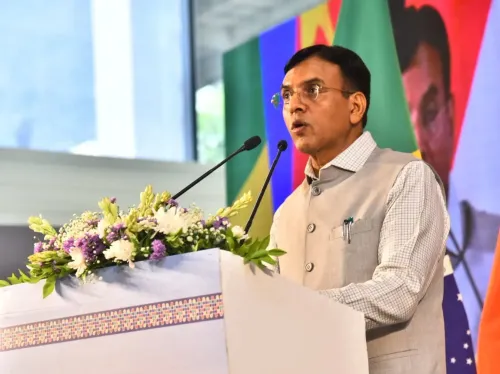
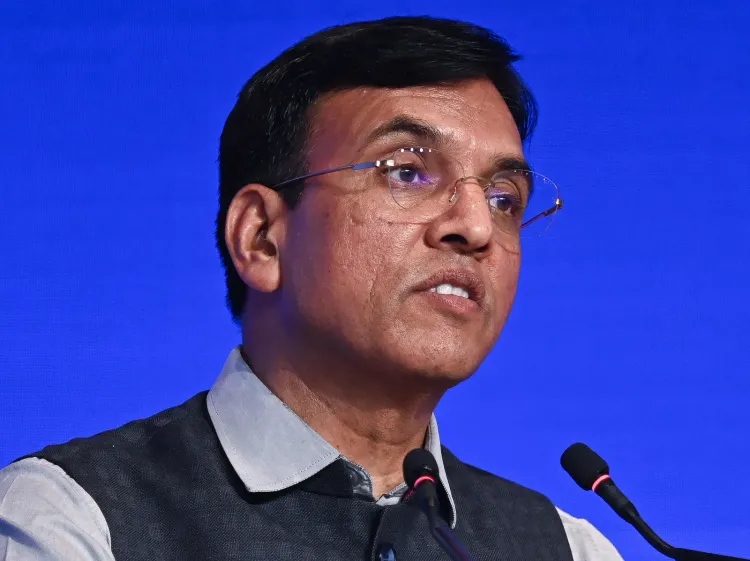
Labour Minister Dr Mansukh Mandaviya made the announcement while addressing the 4th Global Industrial Relations Summit in New Delhi, organised by the All India Organisation of Employers (AIOE) in association with FICCI. He stressed that a balanced development model must simultaneously advance worker welfare and social security while ensuring ease of doing business for employers.
The minister underlined that harmonious industrial relations require continuous coordination among governments, industry, employers, workers, and trade unions, so that economic development and employment generation advance together. He also highlighted the growing role of self-help groups and cooperative models — particularly women-led initiatives — in expanding livelihood opportunities and promoting women's empowerment.
Employment Elasticity Improves Sharply
Citing a significant shift in employment generation, Dr Mandaviya said that every 1 per cent increase in GDP now generates 1.11 per cent employment growth. This marks a dramatic improvement from just 0.008 per cent employment growth per unit of GDP growth recorded twelve years ago — a figure that underscores the structural transformation in India's labour market.
ESIC and EPFO Reforms on the Horizon
The minister also flagged upcoming reforms to two flagship labour institutions. On the Employees' State Insurance Corporation (ESIC), he indicated that well-run private hospitals could be designated as ESIC facilities, signalling a move away from the corporation being the sole provider of care under its own scheme. On the Employees' Provident Fund Organisation (EPFO), he pointed to a full shift to digital claims and automatic transfer of accounts on a single UAN, with UPI-based withdrawal currently under consideration.
ILO Validates India's Social Protection Reach
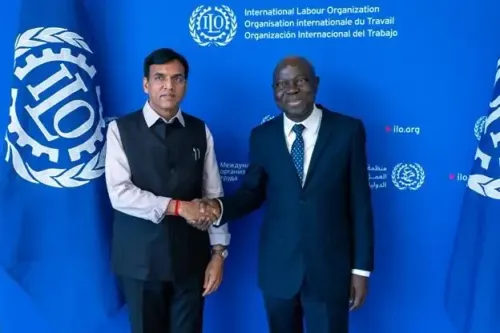
Michiko Miyamoto, Director of the ILO Decent Work Technical Support Team (DWT) for South Asia and Country Office for India, confirmed that according to ILO estimates, India had crossed the threshold of one billion people covered under at least one social protection criterion. She underscored that this achievement would play a key role in propelling India's economic growth in the period ahead.
This comes amid a broader global push to expand social floors, with the ILO having long advocated universal social protection as a driver of both equity and productivity. India's progress on this front — achieved through a combination of schemes spanning health insurance, provident fund, pension, and direct benefit transfers — reflects a multi-layered approach rather than a single programme.
What Comes Next
With ESIC and EPFO reforms in the pipeline and employment elasticity trending upward, the government appears to be pivoting toward quality and delivery efficiency in social security, not just coverage breadth. Industry bodies and trade unions will be watching whether the proposed private-hospital integration under ESIC and UPI-linked EPFO withdrawals are operationalised within the current financial year.
Point of View
But coverage and quality are not the same thing. Many of India's social security schemes operate on thin eligibility thresholds — being counted under 'at least one criterion' can mean access to a scheme that delivers minimally. The more telling reform signals came in the same speech: ESIC's potential opening to private hospitals and EPFO's UPI-linked withdrawal proposal suggest the government recognises that delivery infrastructure, not just enrolment numbers, is the next frontier. The employment elasticity jump — from 0.008% to 1.11% per unit of GDP growth — is striking and warrants independent verification, but if sustained, it would represent one of the more consequential structural shifts in India's labour market in a generation.
NationPress
14 Sept 2026
Frequently Asked Questions
How many Indians are now covered under social security?
Approximately 101 crore people — over 68 per cent of India's population — are now covered under the country's social protection systems, according to the government. The International Labour Organization (ILO) has independently confirmed that India has crossed the one-billion mark for coverage under at least one social protection criterion.
What did Labour Minister Dr Mansukh Mandaviya announce at the Global Industrial Relations Summit?
Dr Mandaviya announced India's 101 crore social security coverage milestone and outlined upcoming reforms to ESIC and EPFO. These include designating well-run private hospitals as ESIC facilities and moving EPFO to fully digital claims with UPI-based withdrawals under consideration.
What is India's employment elasticity and why does it matter?
Employment elasticity measures how much employment grows for every unit of GDP growth. India's figure has risen to 1.11 per cent employment growth per 1 per cent GDP increase, compared to just 0.008 per cent twelve years ago — indicating that economic growth is now generating significantly more jobs than before.
What reforms are planned for ESIC and EPFO?
For ESIC, the government is considering designating well-run private hospitals as ESIC facilities, reducing dependence on the corporation's own infrastructure. For EPFO, the shift to fully digital claims and automatic account transfers on a single UAN is underway, with UPI-based provident fund withdrawals currently under consideration.
What role did the ILO play in recognising India's social security milestone?
Michiko Miyamoto, Director of the ILO Decent Work Technical Support Team for South Asia and Country Office for India, confirmed at the summit that ILO estimates place India above the one-billion threshold for social protection coverage. She noted this achievement would be a key driver of India's economic growth going forward.