CM Rekha Gupta Hails ABVP's Big Win in Odisha Student Polls
Synopsis
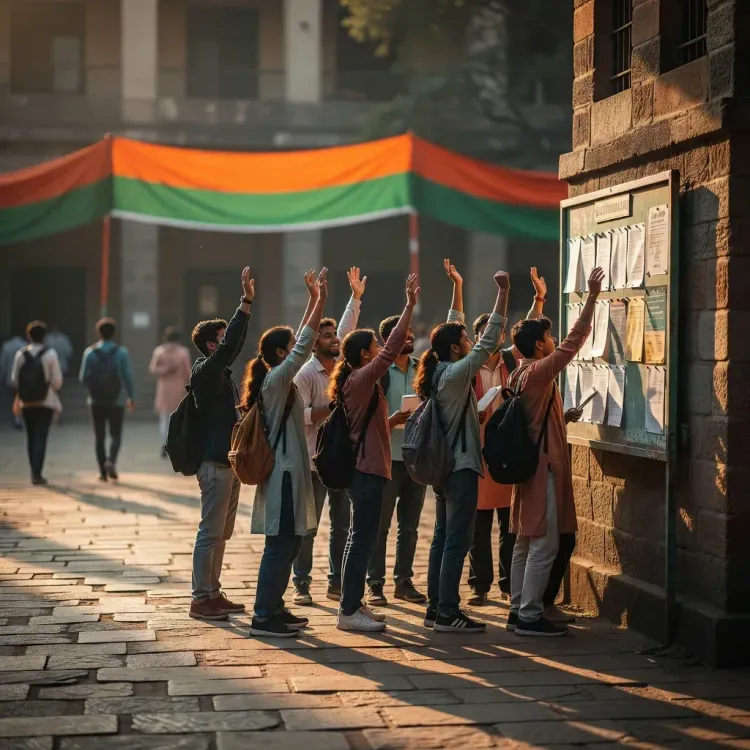
Delhi Chief Minister Rekha Gupta on October 16 celebrated ABVP's victory in Odisha student union elections, framing the result as youth endorsement of PM Narendra Modi's leadership and a rejection of what she called a 'regime change' agenda on campuses.
Key Takeaways
ABVP won Odisha student union elections, prompting national BJP leaders to claim it as a youth mandate for PM Narendra Modi .
Delhi CM Rekha Gupta posted on X on October 16, 2026 , congratulating ABVP's 'victorious youth comrades' in Odisha.
Gupta accused unnamed rivals of running an 'anarchy and regime change' agenda in the name of youth, calling the ABVP win a 'resounding answer' to them.
ABVP is the student wing affiliated with the RSS and is closely aligned with the BJP's political and ideological ecosystem.
The BJP has used student-union victories since 2014 to reinforce a narrative of youth support for nationalist, development-focused governance.
Odisha has emerged as a BJP stronghold following the party's sweep of the state assembly in 2024 , making this campus result symbolically significant.
Student union elections in Odisha have handed the Akhil Bharatiya Vidyarthi Parishad (ABVP) a sweeping victory — and Delhi Chief Minister Rekha Gupta wasted no time reading the result as a national verdict. In a post on X on Friday, October 16, 2026, she declared the wins proof that India's youth stands firmly behind Prime Minister Narendra Modi's leadership and nationalist ideology.
Gupta's post, originally in Hindi, put it plainly: 'युवा शक्ति का भरोसा आदरणीय प्रधानमंत्री श्री नरेंद्र मोदी जी के नेतृत्व और राष्ट्रवादी विचारधारा पर है' — 'The confidence of youth power rests in the leadership of respected Prime Minister Narendra Modi and nationalist ideology.' She also offered a pointed rebuke to rival forces, calling the result a 'resounding answer' to those who she accused of running an agenda of 'anarchy and regime change in the name of youth.'
ABVP's Odisha sweep and what it signals
The ABVP, the student wing affiliated with the Rashtriya Swayamsevak Sangh (RSS), has long been the electoral muscle of the BJP ecosystem on Indian campuses. A strong showing in Odisha — an eastern state that has increasingly become a BJP stronghold after the party swept the state assembly elections in 2024 — carries symbolic weight beyond the campus gates. For national BJP leaders, student-union results function as a barometer of grassroots ideological reach, particularly among first-time voters.
Gupta's framing is deliberate: she ties a state-level campus result directly to the Prime Minister's national image, reinforcing the BJP's decade-long strategy of presenting youth support as organic validation of the Modi brand. Since 2014, the party has consistently deployed nationalist and development-oriented messaging to court India's vast young electorate.
The 'Regime Change' barb — who is the target?
The phrase 'Regime Change' — used in English inside an otherwise Hindi post — is notable. It is a term that has circulated in Indian political discourse as a charge against foreign-funded or opposition-backed student movements that the BJP and its allies accuse of destabilising elected governments. By invoking it here, Gupta signals that the Odisha campus contest is being read in New Delhi not as a local skirmish but as a frontline in a broader ideological battle. She did not name any specific organisation or individual as the source of this agenda.
Student politics in India has historically served as an early-warning system for shifts in national sentiment — from the JP Movement of the 1970s to the campus protests that preceded the 2019 citizenship-law debate. A visible ABVP surge in Odisha, if borne out by the full results, would extend a pattern of the organisation consolidating its presence in states where the BJP has recently expanded its political footprint.
Congratulations — and a campaign message wrapped in one
Gupta closed her post with warm congratulations to 'all victorious youth comrades of ABVP', but the subtext was unmistakably electoral. The post arrives at a moment when student and youth mobilisation is a priority for the BJP ahead of upcoming assembly cycles. Every campus win, the party calculates, is a recruitment ground and a proof-point — both for party workers and for the broader electorate watching from afar.
The next question is whether opposition student organisations respond, and whether similar contests in other states over the coming weeks produce a countervailing narrative — or reinforce the one Rekha Gupta is already writing.
Point of View
Low-cost signal-boosting mechanism ahead of larger electoral cycles, making Odisha's result less a footnote and more a talking point the party will carry forward. Watch for whether opposition student organisations contest the narrative — their response, or silence, will tell its own story.
NationPress
16 Oct 2026
Frequently Asked Questions
What did ABVP win in Odisha in 2026?
ABVP, the RSS-affiliated student organisation, won student union elections held in Odisha in October 2026, prompting congratulations from senior BJP leaders including Delhi CM Rekha Gupta.
Who is ABVP and which party is it linked to?
ABVP stands for Akhil Bharatiya Vidyarthi Parishad. It is a student organisation affiliated with the RSS and is closely aligned with the BJP's ideological and political ecosystem.
What did Delhi CM Rekha Gupta say about the Odisha student union results?
Gupta said the ABVP victory proved that youth support rests with PM Narendra Modi's leadership and nationalist ideology, and called it a 'resounding answer' to those she accused of pushing a 'regime change' agenda on campuses.
What is the 'Regime Change' agenda Rekha Gupta referred to?
Gupta used the phrase 'Regime Change' — in English — to describe what she characterised as an effort by unnamed forces to destabilise elected governments by mobilising students under false pretexts. She did not name any specific group or individual.
Why do BJP leaders highlight student union election wins?
Since 2014, BJP leaders have used student-union victories as proof of youth support for PM Modi and nationalist ideology. Campus results are treated as a grassroots barometer and a recruitment opportunity ahead of larger state and national elections.