CM Rekha Gupta Meets Farmer Reps, Vows MSP Wheat Buy Revival
Synopsis
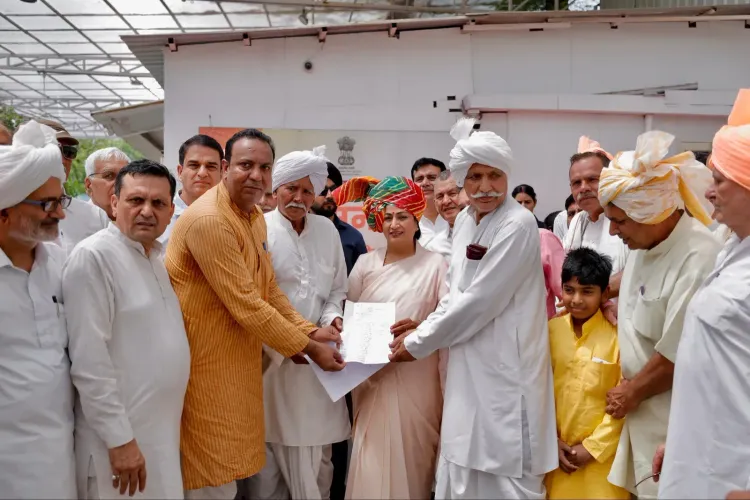
Delhi Chief Minister Rekha Gupta met a farmer delegation at Mukhyamantri Janseva Sadan on 24 May 2026, welcoming their support for resumed MSP wheat procurement and solar energy promotion on farmland, while directing officials to ensure time-bound resolution of agricultural grievances under PM Modi's national farm welfare framework.
Key Takeaways
Delhi CM Rekha Gupta met a farmer delegation at Mukhyamantri Janseva Sadan on 24 May 2026 to discuss agricultural problems and regional needs.
Officials were directed to ensure sensitive and time-bound resolution of all farmer-related issues.
Farmer representatives welcomed the resumption of MSP-based wheat procurement by the Delhi government.
Promotion of solar energy on farmland was highlighted as a key initiative, aligned with the central PM-KUSUM scheme .
CM Gupta credited PM Narendra Modi 's leadership for the government's commitment to farmer welfare, agricultural empowerment, and village development.
The initiatives were framed under the #ViksitDelhi hashtag, linking them to the broader Viksit Bharat 2047 national vision.
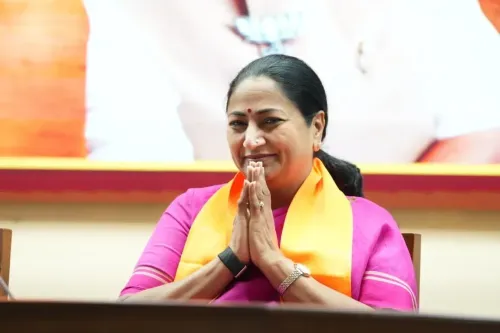
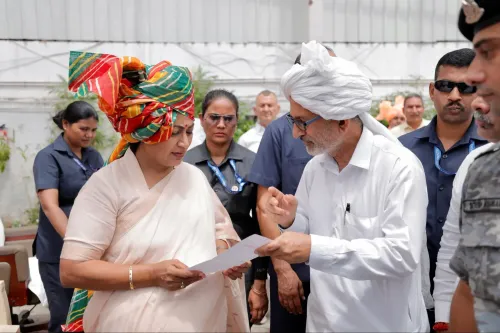
Delhi Chief Minister Rekha Gupta met a delegation of farmers at the Mukhyamantri Janseva Sadan on Sunday, 24 May 2026, holding detailed discussions on agricultural challenges, farming-related issues, and region-specific needs. She directed officials to ensure sensitivity and time-bound resolution of all matters related to farmer welfare.
Context
Posting in Hindi on X, CM Gupta stated that farmer representatives at the meeting welcomed three key moves by the Delhi government: the resumption of wheat procurement at Minimum Support Price (MSP), promotion of solar energy on farmland, and various other decisions taken in the interest of farmers. She credited the direction of Prime Minister Narendra Modi for the thrust of these initiatives, writing — 'Aadaraniya Pradhanmantri Shri @narendramodi ji ke netritva mein' (Under the respected leadership of Prime Minister Shri Narendra Modi) — that the Delhi government is working with full commitment toward farmer welfare, agricultural empowerment, and holistic village development.
Policy Backdrop
The MSP mechanism is an assured-price framework for crops such as wheat, operated primarily through central agencies. A resumption of wheat procurement at MSP by the Delhi government would be significant for farmers in the capital's peripheral agricultural villages, who interact with both central and local procurement systems. Solar energy promotion on farmland aligns with the PM-KUSUM scheme, a central initiative launched in 2019 to solarise agricultural pumps and promote renewable energy adoption, which has been progressively extended to urban-periphery farming areas including those around Delhi. The broader income-support architecture for farmers also includes the PM-KISAN scheme, launched in 2019, which provides annual direct transfers to landholding farmers across the country.
Stakeholders and Impact
Delhi, as the National Capital Territory, has a relatively small but politically significant farming community concentrated in its rural and semi-rural periphery. For these farmers, assured MSP-based procurement of wheat — a key rabi crop — provides price stability that open-market sales cannot guarantee. The push for solar installations on agricultural land offers an additional income stream and reduces dependence on conventional power for irrigation, directly lowering input costs. Officials have been explicitly directed by CM Gupta to resolve farmer grievances in a time-bound manner, signalling an intent to move beyond consultative meetings toward actionable outcomes.
What's Next
Attention will now turn to the rollout timelines for solar installations on Delhi farmland and any adjustments to local wheat procurement volumes in the next rabi marketing season. The #ViksitDelhi hashtag used by CM Gupta situates these agricultural measures within the wider Viksit Bharat 2047 vision, which links farm modernisation to overall national development goals. Whether the Delhi government formalises these commitments through a dedicated agricultural policy document or budgetary allocation will be a key marker of follow-through.
Point of View
Though few in number, carry symbolic weight. By explicitly anchoring local farm decisions to PM Modi's national vision, CM Gupta reinforces vertical alignment between state and central leadership — a pattern consistent with BJP-governed states seeking to present a unified welfare narrative. The dual focus on MSP procurement and solar adoption mirrors the Centre's own two-track strategy of price assurance and input-cost reduction. The directive for time-bound official action adds an accountability dimension that will be tested in the months ahead.
NationPress
10 Oct 2026
Frequently Asked Questions
What did Delhi CM Rekha Gupta discuss with farmers on 24 May 2026?
CM Rekha Gupta held detailed discussions with a farmer delegation at Mukhyamantri Janseva Sadan on agricultural challenges, farming-related issues, and region-specific needs, and directed officials to ensure time-bound resolution of farmer grievances.
Has the Delhi government resumed MSP wheat procurement?
Farmer representatives at the meeting welcomed the Delhi government's decision to resume wheat procurement at Minimum Support Price (MSP), though specific operational timelines and volumes are yet to be formally announced.
What is the PM-KUSUM scheme and how does it relate to Delhi farmers?
PM-KUSUM is a central government scheme launched in 2019 to solarise agricultural pumps and promote renewable energy on farmland. The Delhi government's push for solar energy in agriculture aligns with this national framework, aiming to lower input costs for farmers in Delhi's rural periphery.
What is Viksit Delhi and how does it connect to farmer welfare?
Viksit Delhi is a development vision hashtag used by the Delhi government that situates local initiatives — including agricultural welfare measures — within the broader Viksit Bharat 2047 national development goal championed by PM Narendra Modi.
What is MSP and why does it matter for Delhi wheat farmers?
Minimum Support Price (MSP) is a government-assured price for crops like wheat, protecting farmers from market price volatility. For farmers in Delhi's peripheral agricultural villages, MSP-based procurement provides price stability that open-market sales cannot guarantee.