CM Hemant Soren Calls for Stronger Sports Training in Jharkhand
Synopsis
Chief Minister Hemant Soren has directed Jharkhand to strengthen its sports training system and ensure rural and tribal athletes receive better opportunities to represent the state at national and international competitions.
Key Takeaways
CM Hemant Soren called for a stronger sports training infrastructure in Jharkhand on 6 July 2026 .
The directive specifically targets talented athletes from rural areas , who are to be given better opportunities for competitive exposure.
The goal is to enable more athletes to represent Jharkhand at national and international competitions .
Jharkhand has historically strong roots in sports like hockey and archery , particularly among tribal communities.
The central Khelo India scheme, active since 2017 , provides a framework for state-level talent identification and training support.
Budget provisions for new or upgraded training centres and performance at Khelo India Games will be key indicators of follow-through.
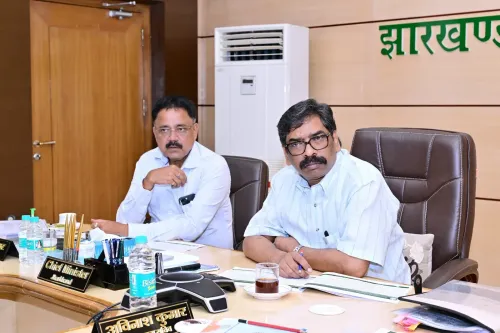
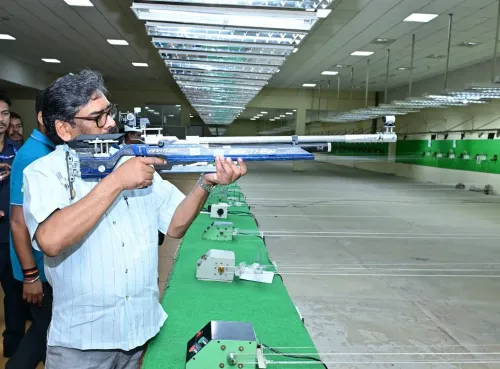
The Chief Minister's Office of Jharkhand on Monday, 6 July 2026, shared a directive from Chief Minister Hemant Soren calling for a strengthened sports training infrastructure in the state, with a specific emphasis on providing better opportunities to talented athletes from rural areas so they can represent Jharkhand at national and international competitions.
Context
Speaking on the matter, CM Soren stated — 'राज्य की खेल प्रतिभाओं को आगे बढ़ाने के लिए प्रशिक्षण व्यवस्था को और सुदृढ़ बनाया जाए' — ('The training system should be further strengthened to advance the sporting talents of the state'). He added that talented players from rural areas must be given better opportunities so they can represent the state at national and international competitions. The remarks signal a policy intent to widen the sports talent pipeline beyond urban centres.
Jharkhand is home to a substantial rural and tribal population with deep roots in sports such as hockey and archery. The state has historically produced athletes who have gone on to compete at the highest levels, yet structural gaps in training access — particularly in remote districts — have long been cited as a barrier to realising the state's full sporting potential.
Policy Backdrop
At the national level, the Khelo India scheme, launched in 2017, was designed precisely to address such gaps by strengthening grassroots sports talent identification and training infrastructure across states, including Jharkhand. The scheme supports the creation of sports academies, athlete scholarships, and competitive exposure at the state and national level.
Several Indian states have pursued targeted measures to expand sports training beyond urban centres, tapping talent pools in rural and tribal belts. This approach is broadly seen as complementary to national efforts to raise India's medal tallies at multi-sport events by widening the base of identified athletes. CM Soren's directive mirrors similar state-level drives that link sports access to youth development and regional representation.
Stakeholders and Impact
The primary beneficiaries of such a push would be rural youth and tribal athletes across Jharkhand's districts, many of whom currently lack access to professional coaching, quality infrastructure, or competitive pathways. Better-equipped training centres and structured talent identification programmes could meaningfully alter the trajectory for young athletes who might otherwise go unnoticed by state selectors.
Beyond individual athletes, a stronger sports ecosystem has wider implications for youth employment and community development in a state where a significant share of the population lives in rural and forested regions. Representation at national and international competitions also carries symbolic weight for tribal communities who have long sought greater visibility in mainstream institutions.
What's Next
Attention will now turn to whether the directive translates into concrete budget provisions for new or upgraded training centres in the upcoming state financial cycle. Observers will also watch Jharkhand's athlete contingents at forthcoming Khelo India Games and national championships as a measure of whether the training push yields results on the ground. The alignment between state intent and actual infrastructure investment will be the key indicator to track in the months ahead.
Point of View
However, lies in whether this statement of intent is backed by budget allocations and institutional follow-through, rather than remaining a rhetorical signal. Analysts will watch whether the Jharkhand government's spending on sports infrastructure in the next budget cycle reflects the urgency implied in the Chief Minister's remarks.
NationPress
6 Jul 2026
Frequently Asked Questions
What did CM Hemant Soren say about sports training in Jharkhand?
CM Hemant Soren directed that the sports training system in Jharkhand be strengthened and that talented athletes from rural areas be given better opportunities to compete at national and international levels.
Which athletes will benefit from Jharkhand's new sports push?
The primary beneficiaries are rural and tribal youth across Jharkhand who currently lack access to professional coaching and competitive pathways.
What is the Khelo India scheme and how does it relate to Jharkhand?
Khelo India is a central government scheme launched in 2017 to promote grassroots sports talent and infrastructure. Jharkhand is among the states that participate in the programme for talent identification and training support.
What sports are traditionally strong in Jharkhand?
Jharkhand has deep roots in hockey and archery, particularly among its tribal communities, and has produced athletes who have competed at the national level.
What should we watch for after CM Soren's sports directive?
Key indicators will include state budget provisions for new or upgraded training centres and the size and performance of Jharkhand's contingents at upcoming Khelo India Games and national championships.