CM Hemant Soren Leads Jatra Shobha Yatra on World Indigenous Peoples' Day
Synopsis
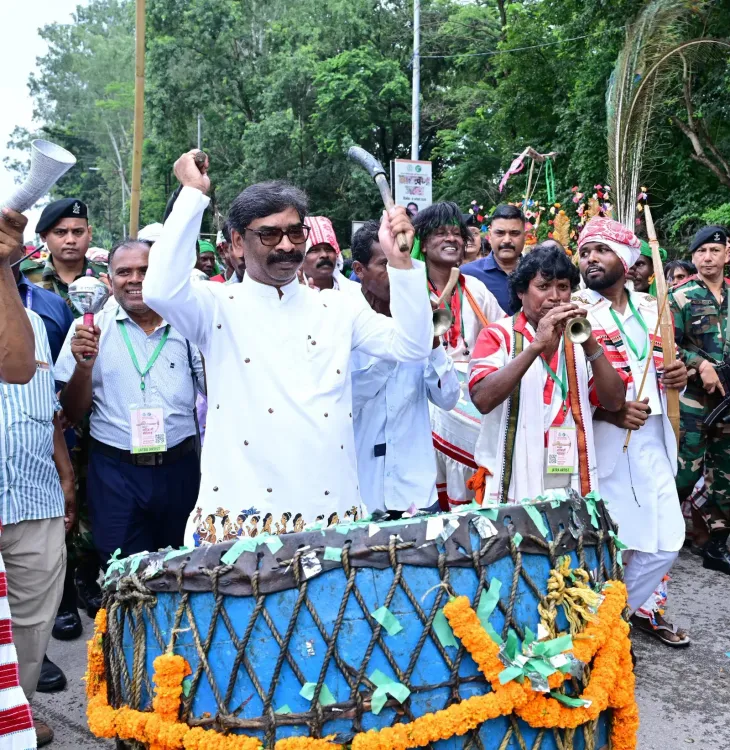
On World Indigenous Peoples' Day, 9 August 2026, Jharkhand Chief Minister Hemant Soren joined the Jatra Shobha Yatra procession, celebrating the art, mander drumming, and traditional dance of the state's 32 recognised tribes at Adivasi Mahotsav 2026.
Key Takeaways
9 August 2026 : Jharkhand observed World Indigenous Peoples' Day with the grand Jatra Shobha Yatra cultural procession.
Chief Minister Hemant Soren personally participated in the procession, paying tribute to Adivasi heritage.
The event celebrated the living traditions of 32 recognised tribal communities of Jharkhand.
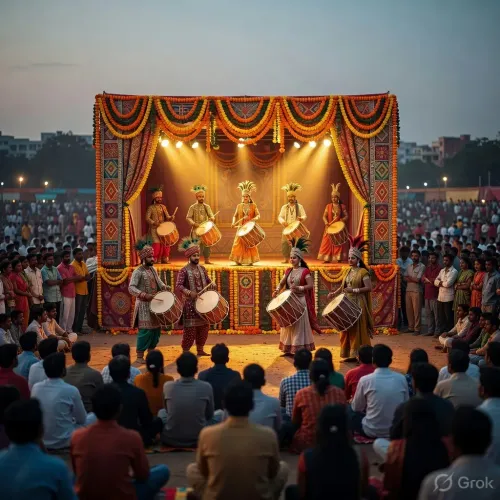
The mander drum and traditional tribal dances were central to the procession's cultural display.
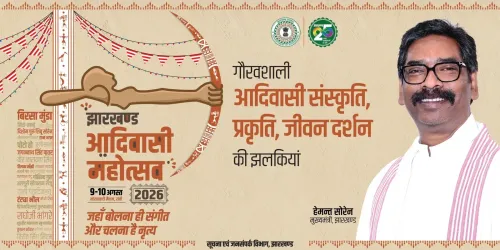
The event is part of the broader Adivasi Mahotsav 2026 campaign, with further state-level events expected.
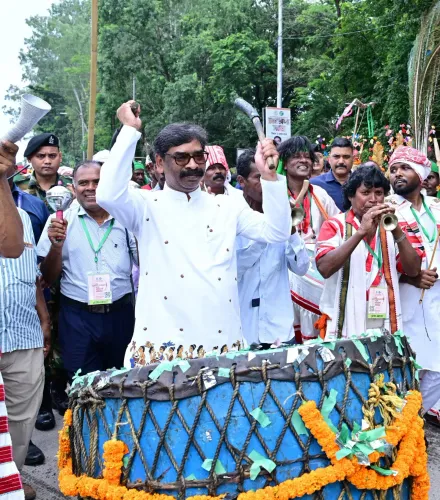
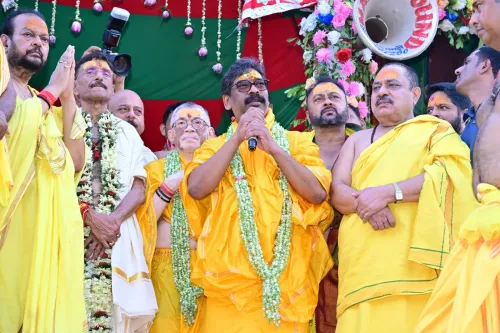
The beat of the mander drum filled the streets of Jharkhand on 9 August 2026 as the state marked World Indigenous Peoples' Day with a spectacular cultural procession that brought together the art, dance, and living traditions of 32 tribal communities. Chief Minister Hemant Soren stepped into the heart of it — joining the grand Jatra Shobha Yatra (Cultural Heritage Procession) and paying tribute to the state's deep Adivasi roots.
The Chief Minister's Office shared the moment on X, describing how '32 janjaatiyon ki atoot kala, mandar ki goonj aur paramparik nritya se saraabor hua Jharkhand' — Jharkhand was immersed in the unbreakable art of 32 tribes, the resonance of the mander, and traditional dance. Soren's participation in the Adivasi Mahotsav 2026 procession was framed as a formal salute to the state's rich cultural heritage.
What the Jatra Shobha Yatra represents
Jharkhand, carved out as a separate state in 2000, is home to more than 30 constitutionally recognised Scheduled Tribes — one of the highest concentrations of indigenous communities in any Indian state. The annual procession tradition, sustained since the state's formation, serves as a living showcase of tribal identity: folk instruments, ceremonial attire, and dance forms that predate modern administrative boundaries. The mander — a double-headed drum central to Santali and other tribal musical traditions — is more than an instrument here. It is a cultural anchor, its rhythm marking everything from harvest festivals to community gatherings. Hearing it echo through a state capital on the UN-designated day for indigenous peoples carries a pointed symbolism.Soren's tribal-welfare positioning
Hemant Soren of the Jharkhand Mukti Morcha (JMM) has consistently built his political and governance identity around Adivasi rights and recognition. Appearing personally in the Shobha Yatra — rather than sending a representative — reinforces that positioning on one of its most visible annual stages. Jharkhand governments across parties have used public tribal festivals to assert state identity, but for Soren, whose party's founding purpose is rooted in the Adivasi movement, the optics carry additional weight. The hashtags #JharkhandseJohar and #AdivasiMahotsav2026 signal that the state is treating this not as a one-day observance but as part of a broader cultural campaign — with follow-up events under the Adivasi Mahotsav umbrella likely in the months ahead. For 32 tribes whose art forms often struggle for mainstream visibility, a Chief Minister marching in step with the mander is, at minimum, a statement. Whether it translates into sustained cultural policy will be the measure that matters.Point of View
But it also reflects a broader pattern across Jharkhand's political spectrum of using tribal cultural events to assert state legitimacy. The Adivasi Mahotsav framing elevates a single-day observance into a sustained campaign, suggesting the government is building cultural visibility as a policy signal ahead of potential legislative or budgetary moves on tribal welfare. Internationally, World Indigenous Peoples' Day has gained traction as a platform for governments to make rights commitments — Jharkhand's street-level procession keeps the focus on cultural celebration rather than policy announcement, leaving substantive follow-through as the open question.
NationPress
9 Aug 2026
Frequently Asked Questions
What is World Indigenous Peoples' Day and when is it observed?
World Indigenous Peoples' Day is observed every year on 9 August , designated by the United Nations to highlight the rights, cultures, and contributions of indigenous communities around the world.
What is the Jatra Shobha Yatra in Jharkhand?
The Jatra Shobha Yatra is a cultural heritage procession organised in Jharkhand to celebrate the art forms, music, and traditional dances of the state's tribal communities, held as part of Adivasi Mahotsav observances.
How many tribal communities are recognised in Jharkhand?
Jharkhand has 32 notified Scheduled Tribes , one of the highest concentrations of recognised indigenous communities in any Indian state.
Who is Hemant Soren and what is his connection to Adivasi issues?
Hemant Soren is the Chief Minister of Jharkhand and a leader of the Jharkhand Mukti Morcha (JMM) , a party founded on the principles of Adivasi rights and the movement for a separate tribal homeland.
What is the mander drum significance in Jharkhand tribal culture?
The mander is a double-headed drum central to Santali and other tribal musical traditions in Jharkhand, used in festivals, ceremonies, and community gatherings as a cultural symbol of Adivasi identity.