India needs independent aviation safety board and DGCA overhaul: Expert

Synopsis
The Federation of Indian Pilots' founding president says the DGCA has been run by bureaucrats with no aviation background for decades — and India still lacks an independent safety board. With air traffic booming, Minoo Wadia's call for structural reform is the most direct challenge to India's aviation oversight model in years.
Key Takeaways
Minoo Wadia , founding president of the Federation of Indian Pilots and former Air India pilot, called for a full overhaul of the DGCA on 9 August .
He said India needs two urgent reforms: an independent aviation safety board and a complete restructuring of the DGCA's office.
Wadia alleged the DGCA historically had no aviators in its ranks — only bureaucrats — hampering its ability to regulate a technical field.
The Federation of Indian Pilots has written to the Prime Minister and the Ministry of Civil Aviation multiple times seeking these reforms.
Wadia also contextualised the Phuket-Delhi flight turbulence as a routine aviation phenomenon linked to cumulonimbus and clear-air conditions.
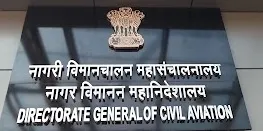
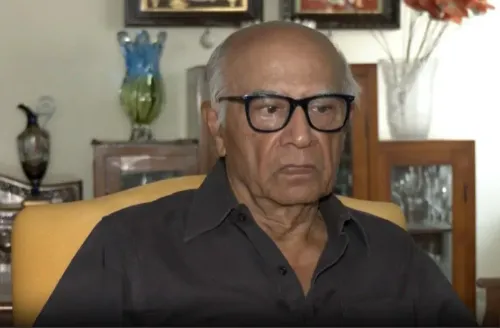
India must establish an independent aviation safety board and carry out a fundamental overhaul of the Directorate General of Civil Aviation (DGCA) to meet the growing demands of the country's air travel sector, Federation of Indian Pilots founding president and former Air India pilot Minoo Wadia said on Sunday, 9 August. Wadia, speaking in an interview, argued that structural deficiencies at the aviation regulator have long been flagged but remain unaddressed.
A Decades-Old Concern
According to Wadia, concerns about the DGCA's structure and functioning are not new — they have been raised repeatedly with successive governments over several decades. The Federation of Indian Pilots has written to the Prime Minister and the Ministry of Civil Aviation on multiple occasions seeking substantive reforms.
'We have written to the Prime Minister, to the Ministry, that there are two essential things which are required for safety on air. One is an independent safety board, and secondly, is total revamping of the office of the DGCA,' Wadia said.
The Core Problem: Bureaucrats Running a Technical Regulator
Wadia traced the origin of the Federation of Indian Pilots to a fundamental gap he observed when he transitioned from the Indian Air Force to Air India — the near-total absence of aviation professionals within the DGCA.
'Earlier in those days, when I came from the Air Force and joined Air India, there was not a single aviator in the whole office of the DGCA. The DGCA was only full of bureaucrats. So my question is, why are we blaming them? How do you expect them to understand about aviation if they're all bureaucrats?' Wadia said.
He argued that aviation is a highly technical field requiring regulators with deep domain knowledge and hands-on operational expertise — qualities that a purely administrative cadre cannot provide. While acknowledging that some incremental changes have occurred over the years, Wadia said the overall structure and institutional attitude of the DGCA have not evolved sufficiently to keep pace with India's rapidly expanding aviation sector.
Turbulence Context: What the Phuket-Delhi Incident Reveals
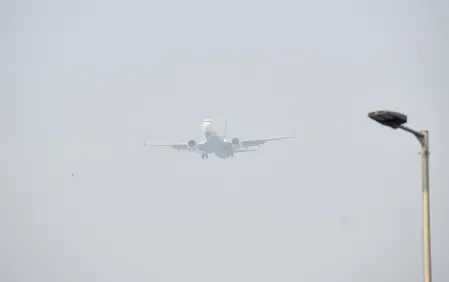
Wadia also addressed the turbulence reported during a Phuket-Delhi flight, placing it in a broader technical context. He said turbulence is a routine occurrence in aviation worldwide and can originate from a range of weather conditions.
Severe turbulence is commonly associated with cumulonimbus cloud formations, while clear-air turbulence can strike even in the absence of visible clouds. 'Anywhere you fly in the world, turbulence is a very common phenomenon. There are different types of turbulence. Most of the time, it's from the clouds, which are vertical, which I call nimbostratus clouds or cumulonimbus clouds,' he stated.
Notably, this comes at a time when India's civil aviation sector is among the fastest-growing in the world, making robust regulatory oversight more critical than ever. The demand for a dedicated, independent safety investigation body — separate from the DGCA — mirrors models adopted in the United States (NTSB) and several European nations.
What Needs to Change
Wadia's call centres on two pillars: first, creating a statutorily independent aviation safety board insulated from the Ministry of Civil Aviation; and second, restructuring the DGCA to induct qualified aviation professionals into senior regulatory roles. Without these changes, critics argue, India's aviation oversight will continue to lag behind international safety benchmarks even as passenger numbers surge.
Whether the government will act on these long-standing recommendations remains to be seen, but the renewed spotlight on aviation safety — triggered in part by recent turbulence incidents — has lent fresh urgency to the debate.
Point of View
Which is itself the indictment. If the Federation of Indian Pilots has been writing to Prime Ministers and Civil Aviation Ministers across multiple governments without result, the problem is not awareness but political will. India's aviation passenger numbers are on course to make it the world's third-largest market, yet its regulatory architecture still reflects an era when bureaucratic hierarchy trumped technical competence. The absence of an independent accident investigation body — one that reports neither to the Ministry nor the DGCA — means that every safety inquiry carries an inherent conflict of interest. That is a structural risk the country's growth trajectory can no longer afford to ignore.
NationPress
23 Sept 2026
Frequently Asked Questions
What is the independent aviation safety board that Minoo Wadia is calling for?
It would be a statutorily independent body, separate from the DGCA and the Ministry of Civil Aviation, tasked solely with investigating aviation safety incidents and making recommendations — similar to the NTSB in the United States. Wadia argues such a board is essential to remove conflicts of interest from safety oversight in India.
What are the main problems Wadia identifies with the DGCA?
Wadia says the DGCA has historically been staffed by bureaucrats with no aviation background, making it structurally ill-equipped to regulate a highly technical industry. He argues the overall attitude and structure of the regulator have not evolved sufficiently despite India's aviation boom.
Has the Federation of Indian Pilots formally raised these concerns before?
Yes. According to Wadia, the Federation of Indian Pilots has written to the Prime Minister and the Ministry of Civil Aviation on multiple occasions over several decades, seeking an independent safety board and a full DGCA overhaul. The reforms have not been implemented.
What did Wadia say about the Phuket-Delhi flight turbulence?
Wadia said turbulence is a routine and common phenomenon in aviation worldwide. He explained it can arise from cumulonimbus cloud formations or clear-air conditions and should not be treated as an anomaly, though it underscores the need for robust safety protocols.
Why does India need aviation regulatory reform now?
India is one of the fastest-growing civil aviation markets in the world, with passenger numbers rising sharply. Experts argue that the current regulatory structure — without an independent safety board and with limited technical expertise in the DGCA — is inadequate for the scale and complexity of modern Indian aviation.