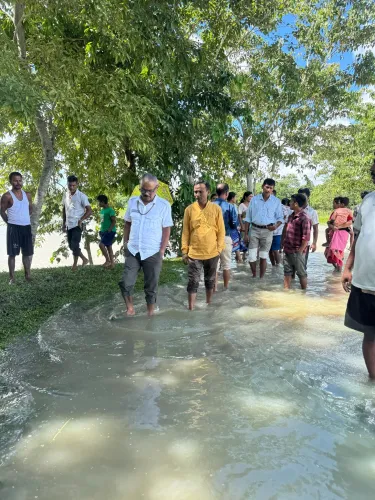
CM Himanta Announces Flood Rehab Plan for Upper Assam

Synopsis
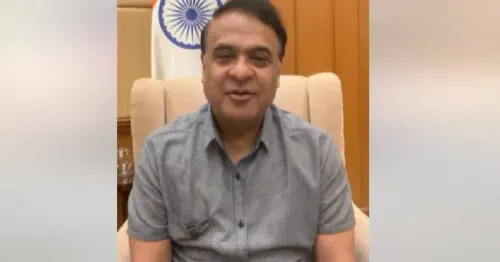
Chief Minister Himanta Biswa Sarma has announced a large-scale flood rehabilitation plan for Upper Assam as floodwaters recede, with minister-led teams to oversee district-level relief delivery following recent Assam Legislative Assembly proceedings.
Key Takeaways
CM Himanta Biswa Sarma announced a large-scale flood rehabilitation plan for Upper Assam on 27 July 2026 .
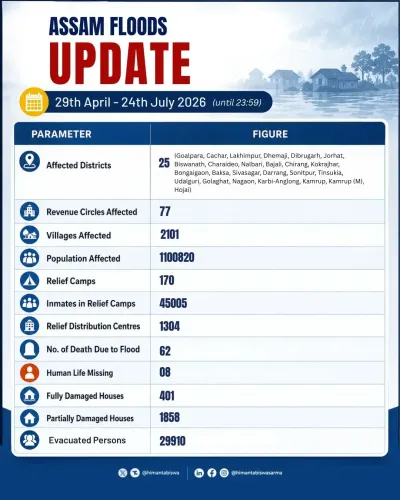
The plan follows receding floodwaters that inundated districts including Dibrugarh , Tinsukia , and Sivasagar .
The announcement was made after deliberations in the Assam Legislative Assembly , with ministers to lead ground-level oversight teams.
Key stakeholders include flood-affected families , farmers, and district administrations across Upper Assam.
The Brahmaputra Board , established in 1980 , remains the nodal body for long-term flood control in the region.
Specific funding figures and district-wise allocations are yet to be officially disclosed.
The Chief Minister's Office of Assam announced on Monday, 27 July 2026 that Chief Minister Dr Himanta Biswa Sarma has unveiled a large-scale flood rehabilitation plan covering Upper Assam districts as floodwaters begin to recede following this year's monsoon inundation.
Context
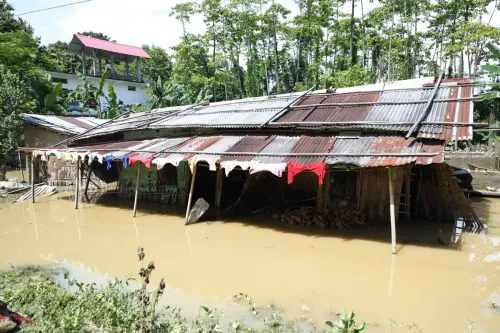
Upper Assam — encompassing districts such as Dibrugarh, Tinsukia, and Sivasagar — is among the most flood-prone zones in the country, routinely submerged by overflow from the Brahmaputra and its tributaries every monsoon season. This year's flooding has displaced communities, damaged standing crops, and strained local infrastructure across the region. The rehabilitation announcement follows deliberations in the Assam Legislative Assembly, signalling that the plan carries legislative backing and cross-departmental coordination.
Policy Backdrop
Assam's struggle with annual flooding is one of the most persistent governance challenges in northeastern India. The Brahmaputra Board, constituted in 1980, was mandated to coordinate flood control and erosion management across the Brahmaputra valley, yet seasonal displacement and agricultural loss remain recurring realities. Successive state governments have responded with post-monsoon rehabilitation packages, and the current administration under CM Himanta Biswa Sarma — in office since May 2021 — has continued this pattern of minister-led district oversight. The decision to deploy ministers directly to affected areas reflects an effort to accelerate ground-level accountability in fund disbursal and relief delivery.
Stakeholders and Impact
The primary beneficiaries of the rehabilitation plan are flood-affected families, smallholder farmers, and rural communities across Upper Assam. District administrations will be the key implementing bodies, working alongside minister-led teams tasked with on-ground coordination. Farmers who have lost crops and households whose homes have been damaged or destroyed stand to receive direct assistance under the plan, though specific components and funding allocations are yet to be officially detailed.
What's Next
Attention will now turn to the implementation timelines for minister-led oversight teams and the pace of fund disbursal to district administrations. Any supplementary budget proposals in the next Assam Legislative Assembly session could provide a clearer picture of the financial scale of the rehabilitation effort. The broader question of long-term flood mitigation — including upstream siltation management and embankment reinforcement — is likely to resurface as the administration transitions from emergency relief to structural rehabilitation.
Point of View
Accountable delivery over centralised bureaucratic disbursal — a political calculus shaped by the electoral sensitivity of flood-affected constituencies in Upper Assam. By anchoring the plan to recent Assembly proceedings, the government is also pre-empting opposition criticism by framing relief as a legislatively endorsed commitment rather than an executive afterthought. The move fits a broader pattern across Indian states of deploying senior political figures as on-ground monitors to compress the gap between announcement and implementation. Whether the plan translates into durable outcomes will depend on how quickly funds reach district administrations before the next monsoon cycle begins.
NationPress
27 Jul 2026
Frequently Asked Questions
What is the Assam flood rehabilitation plan announced by CM Himanta Biswa Sarma?
CM Himanta Biswa Sarma announced a large-scale flood rehabilitation plan for Upper Assam districts on 27 July 2026, with minister-led teams to oversee relief and recovery efforts as floodwaters recede.
Which districts in Upper Assam are affected by the 2026 floods?
Upper Assam districts regularly impacted by Brahmaputra flooding include Dibrugarh, Tinsukia, and Sivasagar, all of which are expected to be covered under the rehabilitation plan.
What is the role of the Brahmaputra Board in Assam flood management?
The Brahmaputra Board was constituted in 1980 to plan and coordinate flood control and erosion management across the Brahmaputra valley, and remains the key body for long-term mitigation efforts in Assam.
How will the Assam flood rehabilitation plan be implemented?
The plan involves minister-led oversight teams deployed to affected districts to coordinate fund disbursal and relief delivery, following deliberations in the Assam Legislative Assembly.
Who are the main beneficiaries of the Upper Assam flood relief package?
Flood-affected families, smallholder farmers who lost crops, and households with damaged infrastructure across Upper Assam are the primary beneficiaries of the rehabilitation plan.