CM Himanta: Assam Flood Power Outages Down 30%
Synopsis
Assam Chief Minister Himanta Biswa Sarma announced a 30% reduction in electricity-deprived consumers as flood waters recede, with authorities conducting safety assessments before restoring transformers to the grid.
Key Takeaways
Assam CM Himanta Biswa Sarma reported a 30% decline in consumers without electricity as of 30 July 2026 .
Authorities are conducting continuous safety assessments as water levels recede before reconnecting transformers.
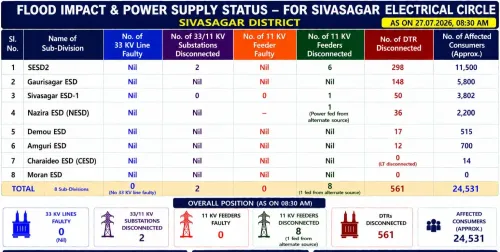
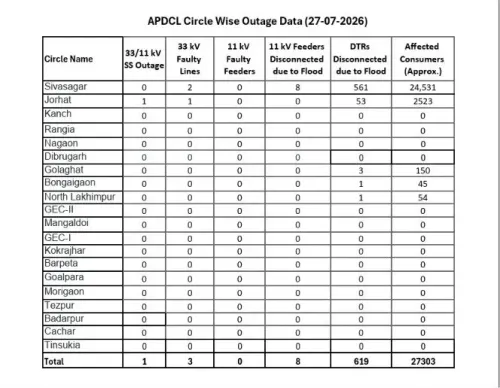
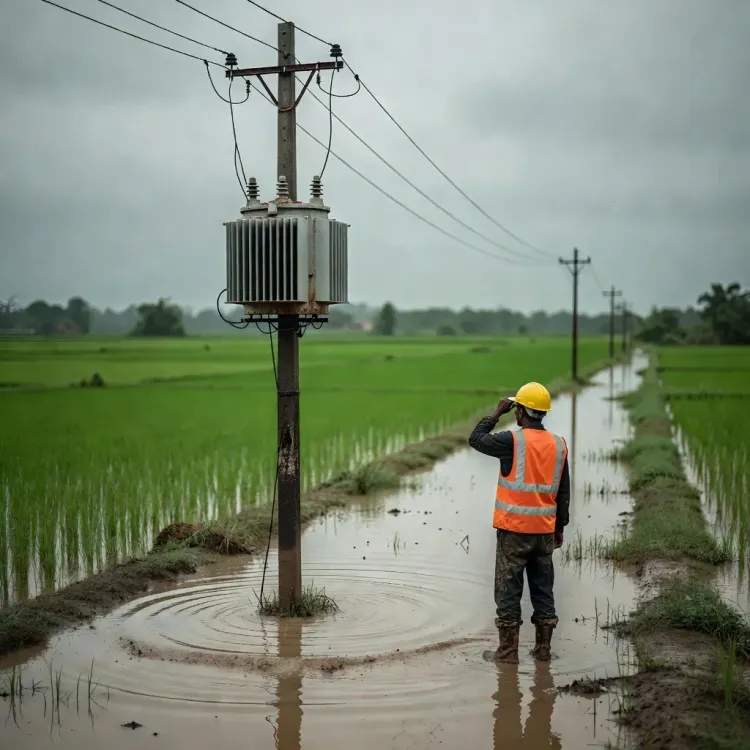
Transformer submersion during monsoon flooding is the primary cause of electricity disruption in Assam .
The state follows established post-flood restoration protocols that prioritise safety over speed of reconnection.
Further updates on transformer restoration numbers and flood relief packages are expected as the Brahmaputra valley drains.
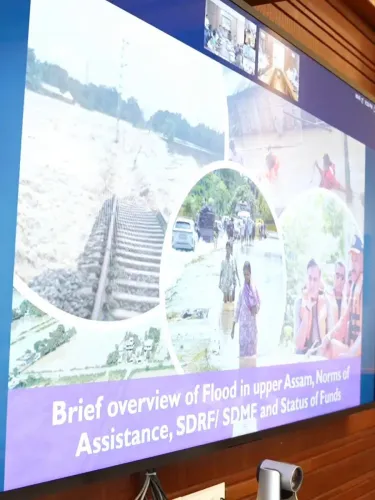
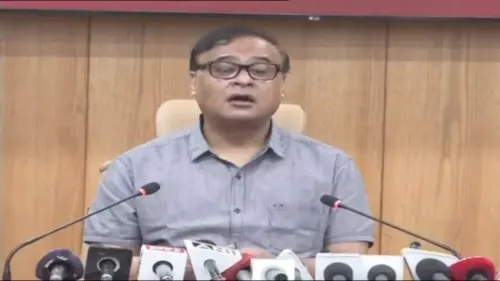
A 30 percent drop in electricity-deprived consumers — that is the headline Assam Chief Minister Himanta Biswa Sarma delivered on Thursday, 30 July 2026, as the state's flood response shifts from crisis management to careful, safety-first restoration.
Posting on X amid the ongoing #AssamFloods, the Chief Minister confirmed that water levels are receding and that authorities are conducting continuous safety assessments before reconnecting transformers to the grid. 'Consumers without electricity have declined by a further 30%,' he wrote, adding that more transformers will be restored 'wherever it is safe to do so.'
Why transformers, not power lines, are the bottleneck
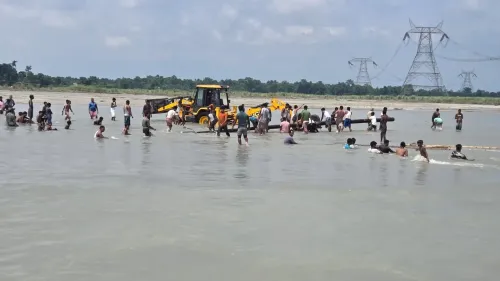
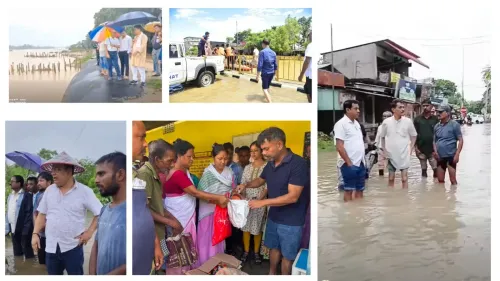
Assam's annual monsoon flooding — driven by the Brahmaputra and its tributaries — routinely submerges ground-level distribution transformers across rural and semi-urban areas. Reconnecting a flooded transformer before the surrounding land is fully dry risks electrocution of residents and equipment failure. The state's phased approach — assess first, restore second — reflects hard lessons from past flood seasons, where premature reconnection caused accidents. This is why the Chief Minister's update is as much about what has not been switched back on as what has. The 30 percent reduction in power-cut households signals meaningful progress, but the language of 'continuously assessing' signals that the final stretch of restoration will be the most cautious.A predictable crisis, a tested playbook
For Assam, this is not a novel emergency — it is an annual reckoning. The state government has established post-flood restoration protocols that sequence safety checks, transformer inspections, and phased grid reconnection. What changes year to year is the scale of inundation and the speed of the recession. Flood-affected households — particularly in rural belts — lose electricity not just for lighting but for water pumps, medical equipment, and mobile charging that underpins communication during a disaster. Every percentage point drop in power-cut consumers is a concrete quality-of-life gain for thousands of families. The Chief Minister's public update also serves a governance signalling function: it tells affected residents that restoration is active, sequenced, and safety-driven — not stalled. Watch for the next official update on the total number of transformers restored and any announcement of a state or central government flood relief package as water levels continue to fall across the Brahmaputra valley.Point of View
But the 30% power-restoration figure gives it concrete traction. The emphasis on safety-conditioned reconnection reflects institutional learning from past flood seasons, and the public communication itself is a deliberate act of accountability signalling to flood-hit constituencies. The broader pattern — predictable disaster, tested playbook, incremental restoration — raises the persistent policy question of whether Assam's distribution infrastructure can be flood-proofed rather than merely flood-recovered. Progress on that structural front will define the longer arc of the state's disaster resilience story.
NationPress
30 Jul 2026
Frequently Asked Questions
What is the current status of electricity restoration in Assam floods 2026?
As of 30 July 2026 , Assam Chief Minister Himanta Biswa Sarma confirmed that consumers without electricity have declined by 30% , with restoration ongoing wherever safety assessments clear the way.
Why are transformers the main problem during Assam floods?
Ground-level distribution transformers are submerged during Brahmaputra flooding. Reconnecting them before the area is fully dry risks electrocution and equipment damage, so authorities conduct safety checks before restoring power.
How does Assam restore electricity after floods?
The Assam government follows a phased post-flood protocol: assess safety conditions as water recedes, inspect transformers, then reconnect them to the grid in a sequenced manner to protect residents and infrastructure.
Who is responsible for flood disaster management in Assam?
The Assam state government, led by Chief Minister Himanta Biswa Sarma , oversees disaster response including electricity restoration, coordinating with state power utilities and disaster management authorities.
When will full power be restored in Assam after the 2026 floods?
No specific date has been announced. CM Sarma stated that restoration will continue 'wherever it is safe to do so' as water levels recede, suggesting a gradual, safety-dependent timeline.